
fb

‘These are life-or-death elections’: Why your X matters and how undecided voters can assess their choices

With South Africans heading to the polls on Wednesday, 4 November, Rivonia Circle Director Tessa Dooms says voters must look beyond party politics and understand the role of local councillors .

By Mapaballo Borotho
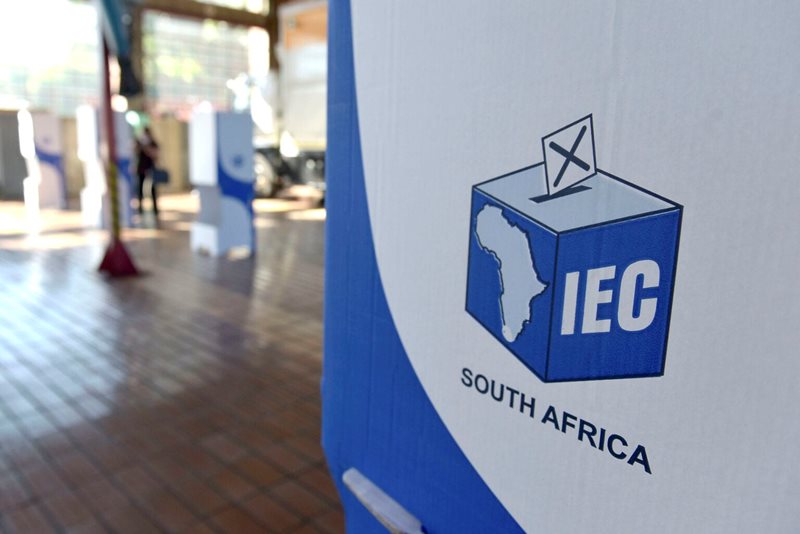
With South Africans heading to the polls on Wednesday, 4 November, Rivonia Circle Director Tessa Dooms says voters must look beyond party politics and understand the role of local councillors 
Image @IEC

South Africans are heading to the polls on Wednesday, 4 November 2026, to make their mark in the local elections.

As voters prepare to cast their ballots, understanding the role of local government and the people they are electing is more important than ever.

Local elections determine who is responsible for providing basic services such as water, electricity, sanitation and housing to you.

Rivonia Circle Director Tessa Dooms has described these elections as “life-or-death” elections, saying the issues at stake affect the daily lives and wellbeing of all South Africans.

“The things that are on the line are life-or-death issues. They are about safety, water, housing, sanitation and about basic things that ordinary South Africans depend on daily,” said Dooms.
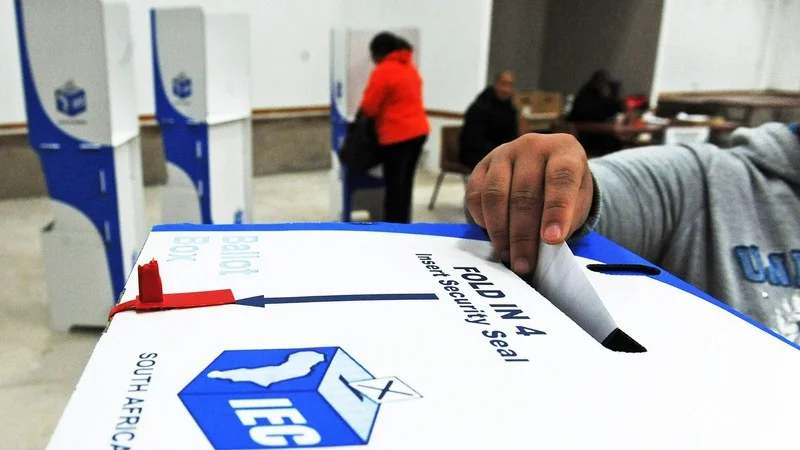
Voter apathy and hesitation remain among some South Africans, particularly in communities that have experienced poor service delivery and unmet promises.

However, service delivery does not affect only underprivileged communities. It affects everyone, making it important for South Africans to participate in the democratic process – a right that was once far-fetched for many Black South Africans.

Water and electricity are not the only issues affecting the country. The safety of women, children and other vulnerable people remains a major concern. This as last month, more than 10 women were reportedly killed in the City of Ekurhuleni, with the incidents raising fears of a possible serial killer among some communities.

At the same Gauteng’s three metros have been grappling with ongoing power and water outages. In Bronkhorstspruit, Tshwane, residents reportedly fell ill after consuming contaminated water.

These challenges cannot be resolved overnight. However, the vote cast tomorrow will help determine who is elected to address them and find solutions that affect communities across the country.

Why your ward councillor matters?

Dooms says voters have a great deal to consider when they enter the voting booth, beginning with understanding the role of a ward councillor.

“When voting, we have to understand what councillors do before we get to what the executive and mayors do, since we do not get to decide on them,” she said.

“The first thing you need to think about is: who is going to be your fighter in the city? I call councillors your paid political activists. These people are paid R50,000 a month to be an activist on your behalf. They have to look after your human rights.”

A ward councillor’s role includes representing residents and raising their concerns with the municipality. This can involve following up on service-delivery issues, such as water shortages, burst pipes and electricity outages.

When a water pipe bursts, residents can turn to their ward councillor to raise the issue with the relevant authorities. When electricity outages occur, councillors are expected to represent residents’ concerns and seek information about the response.

Dooms says councillors also have access to information and responsibilities that ordinary residents may not have.

“Ward councillors have the power to vote in mayors, they get priority access to information, they have the right to criticise anything that does not benefit citizens. They also have information about who sits on the tender committee.

Councillors may not be able to tell us when the water issue will be fixed, but they should know what time and when the water tankers are coming and how they are going to distribute water to residents.”

Dooms emphasises that councillors are elected to serve their communities and should be accountable to residents, rather than only to the political parties they represent.

What should voters consider when it comes to coalitions?

With all three major Gauteng metros currently governed by coalition arrangements, coalitions are likely to remain part of the political landscape after the 4 November elections.

Dooms says coalition governments should not automatically be viewed as a bad thing.

“A majority for one party is more detrimental than a coalition because no one gets to oppose their decisions, even when they are not beneficial. This is also a good time to ask parties what they are planning to do with their votes, even if they are in a coalition.”

She says South Africa could experience significant political shifts if more people participate in the elections. Her advice to voters is to turn out in numbers that political parties may not be expecting and “shock the system”.

Still undecided? Here’s how to assess your choices

For voters who are still unsure which party or candidate best represents their views, Dooms says it is important to consider the issues that matter most to them and assess what political parties are proposing to do about them.

Voters can also visit za.smartvote.org to compare their views with party positions and identify which manifesto may align most closely with their ideologies.

As South Africans prepare to cast their ballots, Dooms’ message is clear: understand the responsibilities of the people you are electing, consider the issues affecting your community and make your vote count.

Listen to the full podcast conversation on why voting matters and how undecided voters can assess their choices.

READ NEXT:

Don't miss out on the latest local news, interviews and competitions.

Interests

More articles

QUICK LINKS

UpComing Shows

DownLoad Our Mobile App

Privacy Policy

THIS PRIVACY STATEMENT FORMS PART OF KAYA 959’S TERMS OF USE POLICY. IF YOU DO NOT AGREE WITH ANY TERM OF THIS PRIVACY STATEMENT, YOU MUST CEASE YOUR ACCESS OF THIS WEBSITE IMMEDIATELY. 

POPIA Act – To promote the protection of personal information processed by public and private bodies; to introduce certain conditions so as to establish minimum requirements for the processing of personal information; to provide for the establishment of an Information Regulator to exercise certain powers and to perform certain duties and functions in terms of this Act and the Promotion of Access to Information Act, 2000; to provide for the issuing of codes of conduct; to provide for the rights of persons regarding unsolicited electronic communications and automated decision making; to regulate the flow of personal information across the borders of the Republic; and to provide for matters connected therewith.

RECOGNISING THAT—

  • section 14 of the Constitution of the Republic of South Africa, 1996, provides that everyone has the right to privacy;
  • the right to privacy includes a right to protection against the unlawful collection, retention, dissemination and use of personal information;
  • the State must respect, protect, promote and fulfil the rights in the Bill of Rights;

AND BEARING IN MIND THAT—

  • consonant with the constitutional values of democracy and openness, the need for economic and social progress, within the framework of the information society, requires the removal of unnecessary impediments to the free flow of information, including personal information;

AND IN ORDER TO—

  • regulate, in harmony with international standards, the processing of personal information by public and private bodies in a manner that gives effect to the right to privacy subject to justifiable limitations that are aimed at protecting other rights and important interests,
  1. Definitions and Interpretation

1.1.“Personal Information” means information relating to an identifiable, living, natural person and where it is applicable, identifiable, existing juristic person, including all information as defined in the Protection of Personal Information Act 4 of 2013. 

1.2  Parliament assented to POPIA on 19 November 2013. The commencement date of section 1, Part A of Chapter 5, section 112 and section 113 was 11 April 2014. The commencement date of the other sections was 1 July 2020 (with the exception of section 110 and 114(4). The President of South Africa has proclaimed the POPI commencement date to be 1 July 2020.

 
1.3. “Processing” means the creation, generation, communication, storage, destruction of personal information as more fully defined in the Protection of Personal Information Act 4 of 2013.  

1.4. “You” or the “user” means any person who accesses and browses this website for any purpose. 

1.4. “Website” means the website of the KAYA 959 at URL www.kaya959.co.za or such other URL as KAYA 959 may choose from time to time.   

  1. Status and Amendments

2.1. KAYA 959 respects your privacy. This privacy policy statement sets out KAYA 959’s information gathering and dissemination practices in respect of the Website. 

2.2. This Privacy Policy governs the processing of personal information provided to KAYA 959 through your use of the Website. 

2.3. Please note that, due to legal and other developments, KAYA 959 may amend these terms and conditions from time to time.  

  1. Processing of Personal Information

3.1. By providing your personal information to KAYA 959 you acknowledge that it has been collected directly from you and consent to its processing by KAYA 959. 

3.2. Where you submit Personal Information (such as name, address, telephone number and email address) via the website (e.g. through completing any online form) the following principles are observed in the processing of that information: 

3.2.1. KAYA 959 will only collect personal information for a purpose consistent with the purpose for which it is required. The specific purpose for which information is 
collected will be apparent from the context in which it is requested. 

3.2.2. KAYA 959 will only process personal information in a manner that is adequate, relevant and not excessive in the context of the purpose for which it is processed. 

3.2.3. Personal information will only be processed for a purpose compatible with that for which it was collected, unless you have agreed to an alternative purpose in writing or KAYA 959 is permitted in terms of national legislation of general application dealing primarily with the protection of personal information. 

3.2.4. KAYA 959 will keep records of all personal Information collected and the specific purpose for which it was collected for a period of 1 (one) year from the date on which it was last used. 

3.2.5. KAYA 959 will not disclose any personal information relating to you to any third party unless your prior written agreement is obtained or KAYA 959 is required to do so by law. 

3.2.6. If personal information is released with your consent KAYA 959 will retain a record of the information released, the third party to which it was released, the reason for the release and the date of release, for a period of 1 (one) year from the date on which it was last used. 

3.2.7. KAYA 959 will destroy or delete any personal information that is no longer needed by KAYA 959 for the purpose it was initially collected, or subsequently processed. 

3.3. Note that, as permitted by the Electronic Communications and Transactions Act 25 of 2002, KAYA 959 may use personal information collected to compile profiles for statistical purposes. No information contained in the profiles or statistics will be able to be linked to any specific user.    

  1. Collection of anonymous data

4.1. KAYA 959 may use standard technology to collect information about the use of this website. This technology is not able to identify individual users but simply allows KAYA 959 to collect statistics. 

4.2. KAYA 959 may utilise temporary or session cookies to keep track of users’ browsing habits. A cookie is a small file that is placed on your hard drive in order to keep a record of your interaction with this website and facilitate user convenience. 

4.2.1. Cookies by themselves will not be used to identify users personally but may be used to compile identified statistics relating to use of services offered or to provide KAYA 959 with feedback on the performance of this website. 

4.2.2. The following classes of information may be collected in respect of users who have enabled cookies: 

4.2.2.1. The browser software used; 

4.2.2.2. IP address; 

4.2.2.3. Date and time of activities while visiting the website; 

4.2.2.4. URLs of internal pages visited; and 

4.2.2.5. referrers. 

4.3. If you do not wish cookies to be employed to customize your interaction with this website it is possible to alter the manner in which your browser handles cookies. Please note that, if this is done, certain services on this website may not be available. 

  1. Security

5.1. KAYA 959 takes reasonable measures to ensure the security and integrity of information submitted to or collected by this website, but cannot under any circumstances be held liable for any loss or other damage sustained by you as a result of unlawful access to or dissemination of any personal information by a third party. 

  1. Links to other websites

6.1. KAYA 959 has no control over and accepts no responsibility for the privacy practices of any third party websites to which hyperlinks may have been provided and KAYA 959 strongly recommends that you review the privacy policy of any website you visit before using it further. 

  1. Queries

7.1. If you have any queries about this privacy policy please contact us by emailing [email protected]