
fb

The 50% + 1 benchmark: Scenarios that will shape South Africa’s major metros

By Zuko Komisa

When voters walk out of the polling booths, the election is often framed as complete. Results are tallied, percentage bars fill television graphics, and declarations of victory echo across media stages. Yet, across South Africa’s key metropolitan councils from Johannesburg and Tshwane to Ekurhuleni and Nelson Mandela Bay the official ballot count marks only the beginning, not the end, of the battle for governance.

With single-party majorities rapidly giving way to fragmented council floors, post-election politics has transformed into a game of high-stakes arithmetic. Enter the Coalition Calculator: an interactive data module designed to unpack the complex mechanics of municipal councils and empower citizens to test every scenario before final coalition deals are struck behind closed doors.

The Mechanics: How Municipal Councils Work

Understanding why local coalition math gets so intricate starts with how municipal seats are calculated. Local governments operate on a mixed electoral system combining Ward Councillors, elected on a first-past-the-post basis, with Proportional Representation (PR) Councillors drawn from party lists based on overall vote share.

To pass budgets, elect a Mayor, choose a Speaker, and approve Integrated Development Plans (IDPs), a governing block must secure an absolute majority of 50% + 1 of the total seats. When no single party reaches this threshold, the council is deemed “hung,” placing executive authority in limbo until formal coalition agreements or confidence-and-supply arrangements take shape.
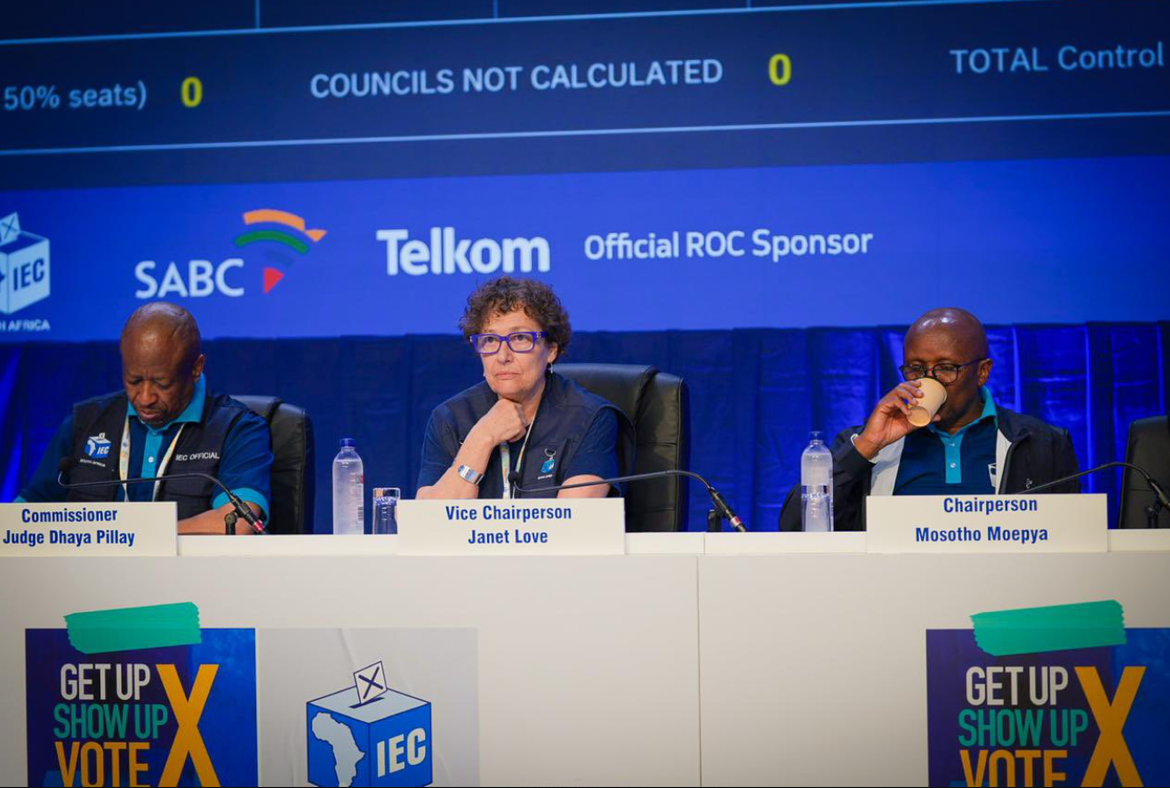
The battleground: High-stakes municipal governance

South Africa’s metropolitan municipalities govern millions of residents and control multi-billion rand budgets. Over the past decade, hung councils have expanded dramatically across the country. In major metros, minor parties holding just one or two seats frequently become kingmakers, shifting the entire balance of power. Unstable coalitions carry direct, real-world consequences for citizens, leading to collapsed quorums, delayed budget approvals, and disrupted delivery of essential services like water supply, refuse collection, and road maintenance.

How the calculator works: Simulating council Ddynamics

The interactive Coalition Calculator bridges the gap between raw vote tallies and real-world council management. The tool enables voters to select any contested metro, examine exact seat distributions between ward and PR allocations, and manually combine party seat counts to see if they meet the required majority threshold. Citizens can easily explore pathways ranging from grand coalitions between major parties to multi-party alliances anchored by smaller regional factions.

Testing potential scenarios: Key metro battlegrounds

In key battlegrounds, the threshold numbers tell the story clearly:

  • City of Johannesburg: A fragmented 270-seat council requires 136 seats for a majority, forcing complex multi-party arrangements between major blocs and smaller parties.
  • City of Tshwane: A 214-seat council sets the magic number at 108 seats, where razor-thin margins give minor parties immense influence over municipal policy.
  • Ekurhuleni: With 224 total seats, reaching the 113-seat threshold demands disciplined coalition cohesion to maintain administrative stability.

Why transparency matters: Unlocking council realities

When coalition negotiations occur out of public view, voters can feel disconnected from the resulting administration. The Coalition Calculator brings complete transparency to council floor realities, offering clear insight into why specific political partnerships emerge and what it truly takes to establish stable local government.

READ NEXT:

Don't miss out on the latest local news, interviews and competitions.

Interests

More articles

QUICK LINKS

UpComing Shows

DownLoad Our Mobile App

Privacy Policy

THIS PRIVACY STATEMENT FORMS PART OF KAYA 959’S TERMS OF USE POLICY. IF YOU DO NOT AGREE WITH ANY TERM OF THIS PRIVACY STATEMENT, YOU MUST CEASE YOUR ACCESS OF THIS WEBSITE IMMEDIATELY. 

POPIA Act – To promote the protection of personal information processed by public and private bodies; to introduce certain conditions so as to establish minimum requirements for the processing of personal information; to provide for the establishment of an Information Regulator to exercise certain powers and to perform certain duties and functions in terms of this Act and the Promotion of Access to Information Act, 2000; to provide for the issuing of codes of conduct; to provide for the rights of persons regarding unsolicited electronic communications and automated decision making; to regulate the flow of personal information across the borders of the Republic; and to provide for matters connected therewith.

RECOGNISING THAT—

  • section 14 of the Constitution of the Republic of South Africa, 1996, provides that everyone has the right to privacy;
  • the right to privacy includes a right to protection against the unlawful collection, retention, dissemination and use of personal information;
  • the State must respect, protect, promote and fulfil the rights in the Bill of Rights;

AND BEARING IN MIND THAT—

  • consonant with the constitutional values of democracy and openness, the need for economic and social progress, within the framework of the information society, requires the removal of unnecessary impediments to the free flow of information, including personal information;

AND IN ORDER TO—

  • regulate, in harmony with international standards, the processing of personal information by public and private bodies in a manner that gives effect to the right to privacy subject to justifiable limitations that are aimed at protecting other rights and important interests,
  1. Definitions and Interpretation

1.1.“Personal Information” means information relating to an identifiable, living, natural person and where it is applicable, identifiable, existing juristic person, including all information as defined in the Protection of Personal Information Act 4 of 2013. 

1.2  Parliament assented to POPIA on 19 November 2013. The commencement date of section 1, Part A of Chapter 5, section 112 and section 113 was 11 April 2014. The commencement date of the other sections was 1 July 2020 (with the exception of section 110 and 114(4). The President of South Africa has proclaimed the POPI commencement date to be 1 July 2020.

 
1.3. “Processing” means the creation, generation, communication, storage, destruction of personal information as more fully defined in the Protection of Personal Information Act 4 of 2013.  

1.4. “You” or the “user” means any person who accesses and browses this website for any purpose. 

1.4. “Website” means the website of the KAYA 959 at URL www.kaya959.co.za or such other URL as KAYA 959 may choose from time to time.   

  1. Status and Amendments

2.1. KAYA 959 respects your privacy. This privacy policy statement sets out KAYA 959’s information gathering and dissemination practices in respect of the Website. 

2.2. This Privacy Policy governs the processing of personal information provided to KAYA 959 through your use of the Website. 

2.3. Please note that, due to legal and other developments, KAYA 959 may amend these terms and conditions from time to time.  

  1. Processing of Personal Information

3.1. By providing your personal information to KAYA 959 you acknowledge that it has been collected directly from you and consent to its processing by KAYA 959. 

3.2. Where you submit Personal Information (such as name, address, telephone number and email address) via the website (e.g. through completing any online form) the following principles are observed in the processing of that information: 

3.2.1. KAYA 959 will only collect personal information for a purpose consistent with the purpose for which it is required. The specific purpose for which information is 
collected will be apparent from the context in which it is requested. 

3.2.2. KAYA 959 will only process personal information in a manner that is adequate, relevant and not excessive in the context of the purpose for which it is processed. 

3.2.3. Personal information will only be processed for a purpose compatible with that for which it was collected, unless you have agreed to an alternative purpose in writing or KAYA 959 is permitted in terms of national legislation of general application dealing primarily with the protection of personal information. 

3.2.4. KAYA 959 will keep records of all personal Information collected and the specific purpose for which it was collected for a period of 1 (one) year from the date on which it was last used. 

3.2.5. KAYA 959 will not disclose any personal information relating to you to any third party unless your prior written agreement is obtained or KAYA 959 is required to do so by law. 

3.2.6. If personal information is released with your consent KAYA 959 will retain a record of the information released, the third party to which it was released, the reason for the release and the date of release, for a period of 1 (one) year from the date on which it was last used. 

3.2.7. KAYA 959 will destroy or delete any personal information that is no longer needed by KAYA 959 for the purpose it was initially collected, or subsequently processed. 

3.3. Note that, as permitted by the Electronic Communications and Transactions Act 25 of 2002, KAYA 959 may use personal information collected to compile profiles for statistical purposes. No information contained in the profiles or statistics will be able to be linked to any specific user.    

  1. Collection of anonymous data

4.1. KAYA 959 may use standard technology to collect information about the use of this website. This technology is not able to identify individual users but simply allows KAYA 959 to collect statistics. 

4.2. KAYA 959 may utilise temporary or session cookies to keep track of users’ browsing habits. A cookie is a small file that is placed on your hard drive in order to keep a record of your interaction with this website and facilitate user convenience. 

4.2.1. Cookies by themselves will not be used to identify users personally but may be used to compile identified statistics relating to use of services offered or to provide KAYA 959 with feedback on the performance of this website. 

4.2.2. The following classes of information may be collected in respect of users who have enabled cookies: 

4.2.2.1. The browser software used; 

4.2.2.2. IP address; 

4.2.2.3. Date and time of activities while visiting the website; 

4.2.2.4. URLs of internal pages visited; and 

4.2.2.5. referrers. 

4.3. If you do not wish cookies to be employed to customize your interaction with this website it is possible to alter the manner in which your browser handles cookies. Please note that, if this is done, certain services on this website may not be available. 

  1. Security

5.1. KAYA 959 takes reasonable measures to ensure the security and integrity of information submitted to or collected by this website, but cannot under any circumstances be held liable for any loss or other damage sustained by you as a result of unlawful access to or dissemination of any personal information by a third party. 

  1. Links to other websites

6.1. KAYA 959 has no control over and accepts no responsibility for the privacy practices of any third party websites to which hyperlinks may have been provided and KAYA 959 strongly recommends that you review the privacy policy of any website you visit before using it further. 

  1. Queries

7.1. If you have any queries about this privacy policy please contact us by emailing [email protected]