
Inside the Kaya 959 Book Club: Why reading still matters in 2026
Katlego Sekhu
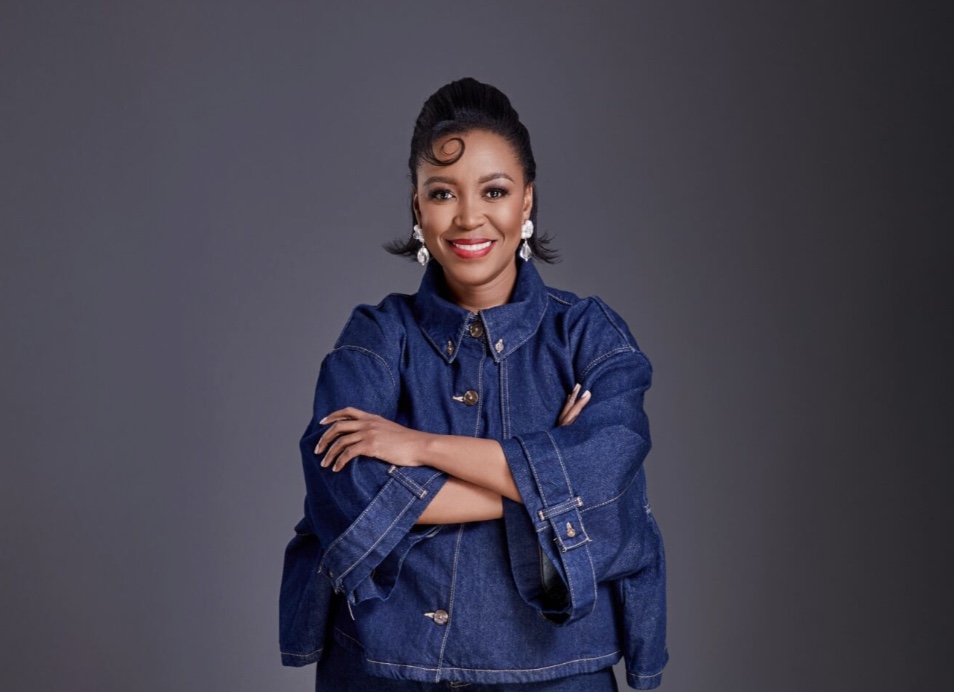
In November 2025, Point of View with Phemelo Motene launched its first-ever Book Club, with South African author and brand strategist Thebe Ikalafeng as its inaugural guest.
The second session followed with Kutlwano Masote, who reflected on his memoir Imperfect Harmony.
At its core, the Kaya 959 Book Club is an extension of something host Phemelo has always held close: a deep love for books and the role they have played in shaping how she sees the world.
Speaking about where that love began, Phemelo shared that English was one of her favourite subjects in high school.
“I found it engaging. There was a lot of film and poetry. I found it enriching.”
If she had to single out one book that left a lasting impression, she says it would be The Diary of Anne Frank.
“I was young, and it had an effect on me. This was someone who cared about the things I cared about. I was interested in politics, and a lot of what was in that book spoke to my interests.”
She credits much of that curiosity to the teachers she had at the time.
“I was fortunate to have the teachers that I had.”
Why reading matters more than ever in 2026
“Reading has helped me,” Phemelo shares. “I think literature goes a long way in helping you become a critical thinker. One of the things you realise when you engage with good writing is just how many perspectives exist.”
For her, good writing demands more than passive consumption. “Good writers make you think hard and deep, not just look at things on the surface. You are constantly required to interrogate.”
That interrogation often leads to deeper self-reflection.
“It has pushed me to ask: is there another way to see this? Personally, it has also helped a lot in building empathy.”
Reading, she explains, is one of the few practices that consistently pulls you outside of yourself.
“You are able to step into the shoes of others. Empathy is so important in the world, especially now when we are so self-absorbed. When you are reading, you step outside of yourself. It forces you to deeply consider other people’s life experiences.”
Why reading offers something other media cannot
While she acknowledges the value of other forms of media, Phemelo believes reading offers something distinct.
“What reading does is actively exercise your imagination. It is not visual, so you have to create the images in your head. You become part of the creation of the story.”
Although the author sets the scene, the reader completes it.
“That participation is vital. We could all be reading the same book, but what we take away from it could be completely different.”
In a time where technology, and increasingly AI, can do so much on our behalf, she believes exercising the mind is more important than ever.
“There is a part of you that is forced to imagine. Even radio has become visual now. Books still allow you to use your imagination and to escape.”
That escape, she adds, is one of the greatest gifts a book can offer.
“You can travel the world one page at a time.”
Making reading more appealing to young people
For Phemelo, the issue is not a lack of talent or stories.
“We have incredible writers. Our literary space is not reliant on other countries. There is a reading culture here that is sustaining itself.”
What is missing, she believes, is consistent visibility and celebration.
“I wish we had more platforms that celebrated this. I would love for our writers to be seen and rewarded. Many authors are writing purely for the joy of it, and we are blessed to have that level of commitment.”
Representation, she says, is central to why this matters.
“People need to see themselves in their own stories. For too long, other nations told our stories, and often they missed the nuance. They missed the unspoken things that simply are.”
South African stories, she believes, carry a depth that cannot be outsourced.
“There is so much about us that is layered. When others tell our stories, so much can be lost.”
Writing also becomes an act of reclamation.
“There have been many instances where we were written out of history books. When we write our own stories, we get to show the world that we have always been here.”
Why the Kaya 959 Book Club was born
With the world feeling increasingly overwhelming, the Book Club was created as a deliberate pause.
“There is so much going on, and I wanted people to experience life through pages. To experience other people’s imaginations and life stories. To pause for a moment and enjoy the pleasure of storytelling.”
She is equally passionate about giving writers the space they deserve.
“There is so much incredible work out there that we do not talk about enough, celebrate enough, or give space to. I wanted to create that space for writers. It really is a labour of love.”
Her hope for the Book Kaya 959 Club is simple, yet expansive.
“Can we not celebrate writers in some way? I want them to have a bigger platform.”
And, in true Phemelo fashion, she adds: “I do not think I could ever do enough. That is just how I am. It is also about giving the audience a moment to pause and enjoy this art form.”
Read Next: Unveiling the softer side of Sizwe Dhlomo



![[WATCH PODCAST] Mr. Mercedes drops highly anticipated project, joining forces with Thabo Smol and Spice Drums](https://www.kaya959.co.za/wp-content/uploads/2026/10/KAYA-959-THUMBNAILS-79-100x100.png)
![[WATCH PODCAST] Tumisho Masha commands the screen as colonel Jack Phatudi in M-Net’s new must-watch series](https://www.kaya959.co.za/wp-content/uploads/2026/10/KAYA-959-THUMBNAILS-78-100x100.png)