New research reveals how combining teacher-led lessons with digital simulations could transform STEM outcomes in disadvantaged South African schools.
Zuko Komisa
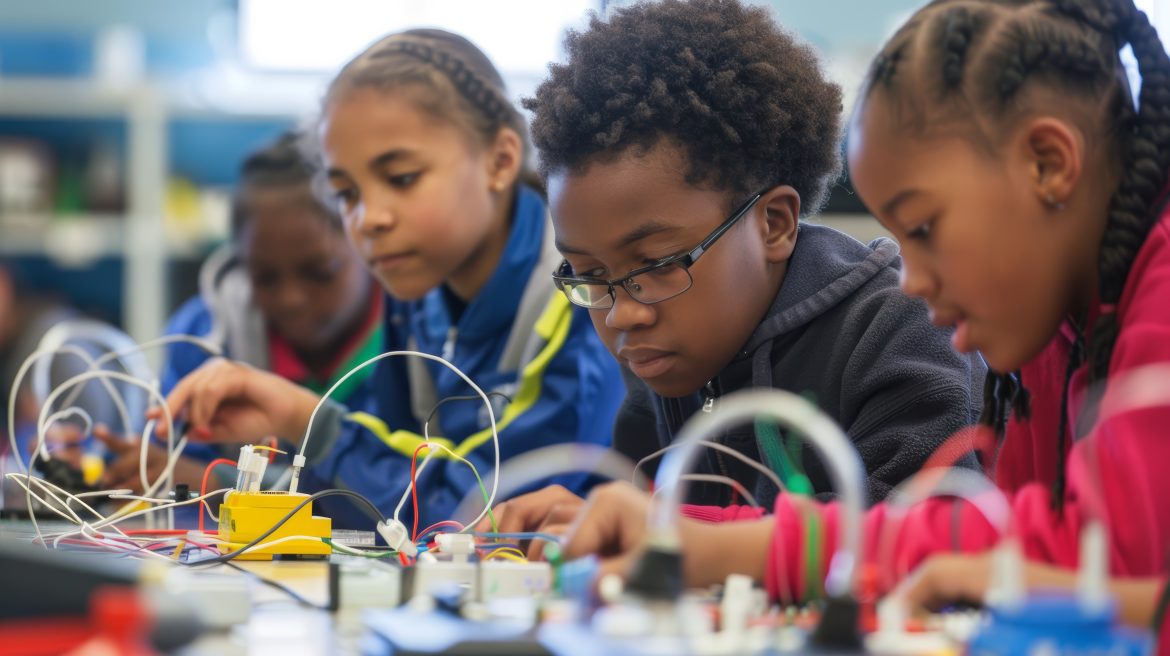
A collaborative study by the University of Johannesburg (UJ) and Michigan State University has revealed a transformative path for STEM education in South Africa.
The research suggests that schools, even those in severely disadvantaged communities, can significantly boost performance in science, technology, engineering, and mathematics.
The core of this breakthrough is a scalable teaching model that integrates traditional teacher-led guidance with interactive computer simulations.
This “blended” approach allows pupils to visualise complex concepts, bridging the gap between theoretical textbooks and practical understanding.
Kaya Biz with Gugulethu spoke with Mfuphi Teboho Moloi, a PhD candidate at the University of Johannesburg, who shared more about the study.
According to Moloi, the study proves that high-level STEM outcomes are not exclusive to well-resourced private institutions. He shared how, by implementing these digital tools, the researchers have provided a blueprint for narrowing the educational divide and equipping South African youth with essential skills for the modern economy.
Listen to the full conversation here:
READ NEXT: How to successfully re-enter the workforce after long-term unemployment
![[WATCH PODCAST] Kabelo Mabalane teams up with The Arrows for infectious comeback track ahead of 10th studio album](https://www.kaya959.co.za/wp-content/uploads/2026/10/KAYA-959-THUMBNAILS-1170x658.png)

![[WATCH PODCAST] Kabelo Mabalane teams up with The Arrows for infectious comeback track ahead of 10th studio album](https://www.kaya959.co.za/wp-content/uploads/2026/10/KAYA-959-THUMBNAILS-100x100.png)