Thabo Mokwele on why South Africa’s trust crisis is not just a government problem, but a human one.
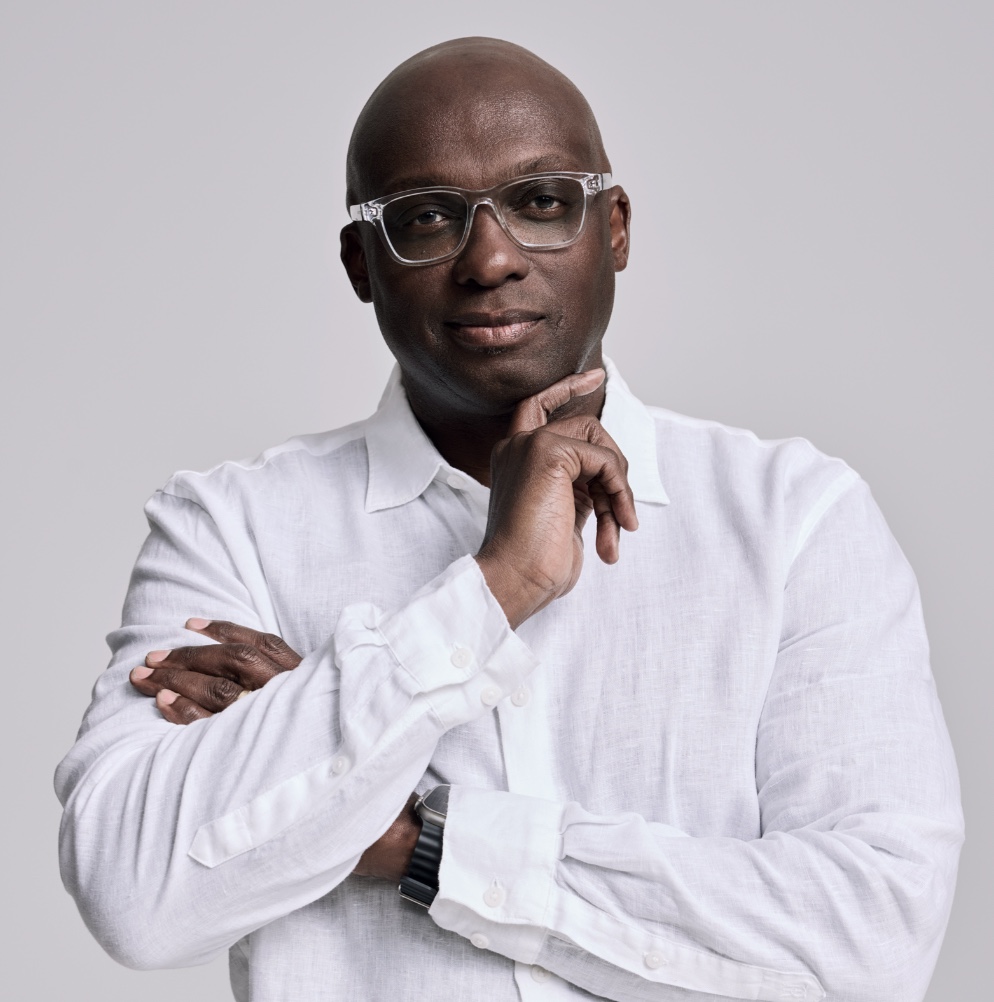
By Thabo Mokwele
Trust is the only currency we spend every day without checking our balance.
Think about it.
You step into a lift with strangers. You tap your bank card and expect the money to land where it’s supposed to. You buy something online and trust it will arrive. You leave your child at school believing they’ll return safely. You drive through a green traffic light assuming someone else will stop at the red one.
None of these decisions are guaranteed. They are acts of trust.
We rarely notice them because trust works like oxygen, it’s invisible when it’s present and impossible to ignore when it’s gone.
Lately, though, something feels different.
We speak about broken governments, failing institutions and unreliable people as if they are separate problems. I don’t think they are. I think they’re symptoms of the same disease.
We are living through a Trust Deficit.
Trust Isn’t Certainty
One of the biggest misunderstandings about trust is believing it’s the same as certainty. It is not.
Certainty says, “I know what will happen.”
Trust says, “I don’t know, but I’m willing to believe.”
Every meaningful relationship begins there.
Friendship. Marriage. Business. Leadership. Even democracy.
The moment certainty becomes a requirement, trust disappears. That’s why trust is both powerful and fragile. It’s a decision to become vulnerable in the hope that someone else will honour that vulnerability.
Which raises an uncomfortable question. Who did we stop trusting first?
The First Institution We Govern Is Ourselves
Most conversations begin with, “Can I trust them?”
I think a telling question is: Can I trust myself?
Can I trust myself to keep promises I make when nobody is watching?
Can I trust myself to leave situations I know are unhealthy?
Can I trust myself to apologise without defending my ego?
Before we’re citizens, employees or partners, we’re custodians of our own integrity.
And integrity is simply trust practised privately.
An observation about trust with relation to others is that people who constantly break promises to themselves often struggle to trust others. Every broken promise becomes evidence that promises are negotiable.
Trust starts much closer to home than we care to admit.
Trust Is Built in Teaspoons
There’s something life teaches all of us eventually, that Trust isn’t built through grand speeches. It’s built through boring consistency.
You said you’d call. You called.
You borrowed money. You paid it back.
You made a mistake. You owned it.
These moments seem insignificant until you add them together. That’s how trust compounds.
Which is why I’ve come to believe this:
Trust is built in teaspoons and destroyed in buckets. And One lie can empty years of deposits.
One betrayal can make someone question everything that came before it.
Why Modern Society Runs on Borrowed Trust
Now zoom out. Most of the people who shape your daily life are strangers.
You’ve probably never met the engineer who designed the bridge you drive across.
You don’t know the pharmacist who stocked your medication.
You’ve never shaken hands with the person protecting your banking system.
Yet society functions because we trust the institution behind the individual.
That’s institutional trust.
And here’s what is fascinating. Institutions don’t manufacture trust. They borrow it.
Every honest bank transaction strengthens trust.
Every successful medical procedure strengthens trust.
Every fair court ruling strengthens trust.
But every scandal, every corruption case and every broken promise withdraws from the same account.
When trust disappears, society becomes expensive.
You need more contracts. More security. More surveillance. More proof. More lawyers. More bureaucracy.
Distrust creates friction. Trust removes it.
Government Isn’t the Whole Story
It’s easy to point fingers at government whenever trust comes up. And yes, governments carry an enormous responsibility because citizens hand them something incredibly valuable: Power.
But I think focusing only on government lets the rest of us off the hook too easily. Because trust doesn’t collapse only from the top down. It also erodes from the bottom up.
Every time we normalise dishonesty.
Every time we excuse broken promises.
Every time we say, “Everyone does it.”
Cynicism quietly becomes culture. And that’s far more dangerous than disappointment. Disappointed people still care.
Cynical people stop believing change is possible.
Trust is the Missing Ingredient in Generosity
Here’s where trust becomes deeply personal. We often assume people donate because they’re generous. I don’t think generosity alone explains it.
Think about the last time someone asked you to donate or contribute to a cause.
Maybe it was at church.
Maybe it was for a school fundraiser.
Maybe it appeared at the till during checkout while you were buying esentials at a pharmacy or ordering food online.
What did your mind ask first? Not, “Can I afford it?” Chances are your mind asked, “Can I trust this?”
Will the money reach the people it’s supposed to help?
Will someone misuse it?
Will it actually make a difference?
Trust often arrives before generosity.
In South Africa, that’s especially interesting because we’ve always had a culture of giving. Ubuntu, stokvels, family support and community fundraising all tell the same story.
We are not strangers to generosity. We are strangers to giving without confidence. And that’s an important distinction.
When trust is high, generosity flows. When trust is low, even kind people hesitate.
South Africa’s Trust Puzzle
I’ve noticed something uniquely South African. Many of us trust people more than systems.
We’ll believe a recommendation from a cousin before an advertisement.
We’ll trust someone who knows someone before an official statement.
Maybe our trust hasn’t disappeared. Maybe it has relocated. From systems. To relationships.
South Africans may tell you they no longer trust government. They may question institutions, companies, charities and even the people asking them for money.
Yet our generous make-up survives this cynicism.
Someone is still paying a cousin’s registration fee. Someone is sending money home. Someone is buying groceries for an unemployed sibling. Someone is contributing towards a funeral, school uniform, church building, medical bill or neighbour in trouble.
Perhaps we haven’t stopped giving. Perhaps we’ve changed who we trust enough to give to and through.
That distinction matters.
Much of what we call philanthropy (generosity) is measured through institutions: donations to NGOs, foundations, charities and marketing-related causes. But there is another economy of generosity operating quietly beneath it—person to person, household to household, WhatsApp group to WhatsApp group.
And trust is often the invisible infrastructure holding that philanthropy economy together.
I know you.
I know your mother.
I know the child who needs the school fees.
I can see where my R500 went.
The shorter the distance between the giver and the outcome, the less trust has to be outsourced.
This should concern institutions seeking public generosity. Because the question may no longer be simply:
“How do we persuade people to give?”
It may be:
“Why should people trust us enough to let us stand between their generosity and the person who needs it?”
That is a much harder question. And perhaps businesses should be asking it too.
We increasingly encounter opportunities to give while doing ordinary things, buying groceries, paying online, ordering food, checking out from an online store. A few rand added here. A donation button there.
Technology has made giving easier. But convenience is not trust.
A frictionless donation button can move money in seconds; it cannot manufacture confidence in where that money is going.
The future of generosity may therefore belong not to the organisation that asks most effectively, but to the one that can make the journey from my pocket to somebody else’s life visible, credible and traceable.
Perhaps one of our mistakes is imagining that institutional trust and personal trust are separate problems.
They aren’t.
The trust deficit of a society is accumulated through millions of small human transactions.
Promises kept. Promises broken.
Truth told. Truth edited.
Money accounted for. Responsibility avoided.
Kindness reciprocated. Power abused.
Trust is Human
We often say that trust must be earned. That is true.
But trust must also be cultivated.
Every interaction becomes either a deposit or a withdrawal.
In our homes. In our businesses. In our institutions. In our government. And in our communities.
The challenge facing modern society is not simply that trust has declined. It is that distrust is becoming normal.
If trust is indeed the invisible infrastructure upon which society depends, then rebuilding it may be one of the most important tasks of our time.
So before asking, “Who can I trust?”, perhaps we should begin with a more uncomfortable question:
“Am I the kind of person, leader, institution or citizen that can be trusted?”
Because before trust becomes institutional, economic or political, it is profoundly human.
Read more from Thabo Mokwele in his book, Pause: Are You Making the Right Choices?