Zuko Komisa
- Football folklore suggests that winning the World Cup automatically secures the Ballon d’Or in the same cycle.
- Data shows that since the Ballon d’Or opened to non-European players in 1995, only 57% of World Cup winners went on to claim the award.
- While a World Cup triumph heavily boosts a player’s chances, sustained club and international form across the entire season remains the deciding factor.
As the 2026 World Cup reaches its climax, the tournament’s standout performers are making their final, high-stakes bids for football’s ultimate prize.
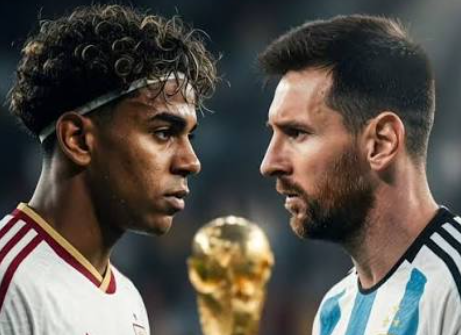
This Sunday’s blockbuster World Cup final between Spain and Argentina adds a poetic chapter to this debate, as teenage sensation Lamine Yamal faces Lionel Messi, nearly two decades after a famous charity photoshoot of Messi holding a baby Yamal captured the world’s imagination.
History shows that a stellar World Cup campaign often propels a player into Ballon d’Or contention.
However, an analysis of recent tournaments reveals that lifting the World Cup trophy does not make individual coronation a certainty.
Historically, legends like Bobby Charlton (1966), Paolo Rossi (1982), and Lothar Matthäus (1990) completed the prestigious double.
The relationship between the two accolades became more complex after 1995, when the Ballon d’Or eligibility expanded globally. Zinédine Zidane (1998), Ronaldo (2002), and Fabio Cannavaro (2006) maintained the trend, but the pattern broke during the dominance of Lionel Messi and Cristiano Ronaldo.
In 2010 and 2014, Messi and Ronaldo secured the Ballon d’Or through sensational club performances, beating out World Cup winners like Andrés Iniesta, Xavi, and Manuel Neuer.
Even in 2018, Croatia’s Luka Modrić claimed the award despite losing the World Cup final to France.
It was only after Argentina’s 2022 triumph that Messi restored the trend by claiming the 2023 Ballon d’Or.
Ultimately, the statistics show that since 1995, only four out of seven World Cup-winning years have produced a matching Ballon d’Or recipient.
The data delivers a clear verdict on what it takes to win football’s ultimate individual honour:
“Yes, winning the World Cup helps, but it does not guarantee a Ballon d’O
READ NEXT: Gold standard: Inside the secrets of the iconic FIFA World Cup trophy




![[WATCH PODCAST] Mr. Mercedes drops highly anticipated project, joining forces with Thabo Smol and Spice Drums](https://www.kaya959.co.za/wp-content/uploads/2026/10/KAYA-959-THUMBNAILS-79-100x100.png)
![[WATCH PODCAST] Tumisho Masha commands the screen as colonel Jack Phatudi in M-Net’s new must-watch series](https://www.kaya959.co.za/wp-content/uploads/2026/10/KAYA-959-THUMBNAILS-78-100x100.png)