

By: Natasha Archary
With the first case of Monkeypox reported in South Africa, panic has started to sweep across the country. Much like with Covid-19 prevention is better than cure and it’s better to be prepared with the facts on the virus.
The first cases were reported globally in May and the viral infection spreads at an alarming rate.
Monkeypox is a disease that’s harboured by certain animals, such as large rodents and can transmit from animals to humans.
While symptoms are similar to smallpox, the virus is not related to chickenpox and can be fatal.
Transmission
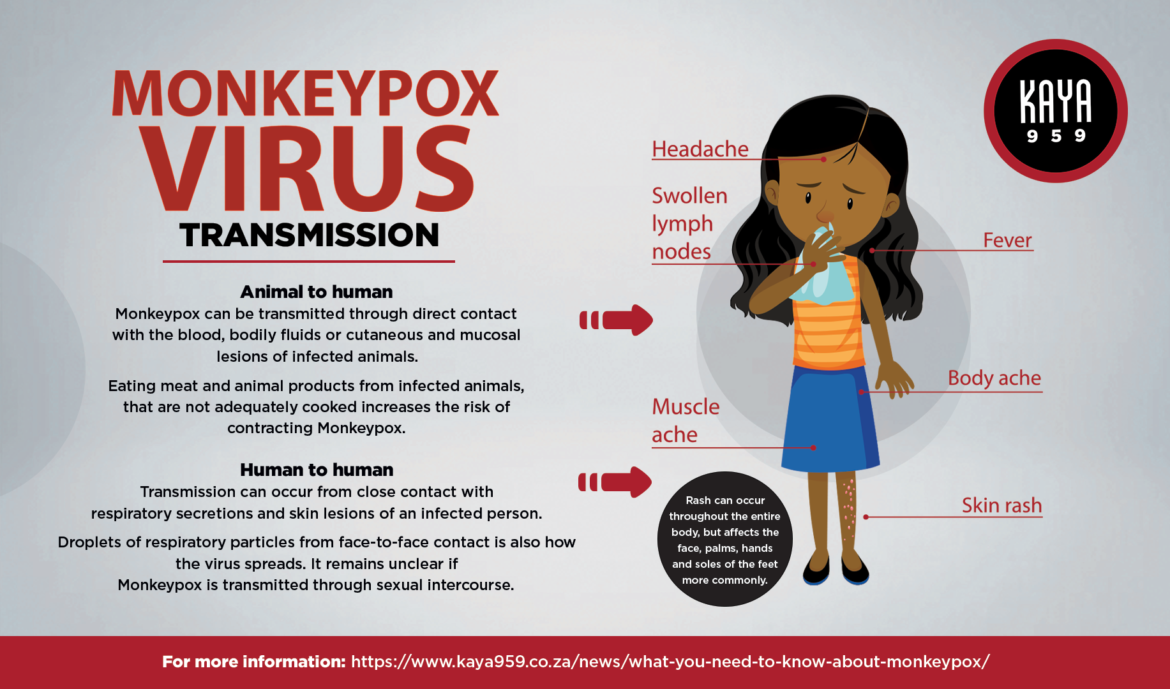
Animal to human – Monkeypox can be transmitted through direct contact with the blood, bodily fluids or cutaneous and mucosal lesions of infected animals.
The virus has been linked to animals such as rope squirrels, tree squirrels, dormice, Gambian pouched rats, and various species of monkeys.
Eating meat and animal products from infected animals, that are not adequately cooked increases the risk of contracting Monkeypox.
Human to human – Transmission can occur from close contact with respiratory secretions and skin lesions of an infected person.
Droplets of respiratory particles from face-to-face contact is also how the virus spreads. It remains unclear if Monkeypox is transmitted through sexual intercourse.
Signs and symptoms
The onset of symptoms is usually between 6 to 13 days, but it can range from 5 to 21 days.
Infection is divided into two periods, namely the invasion period and the skin eruption or rash that breaks out.
During the invasion period, the symptoms include:
- fever
- headache
- swelling of the lymph nodes
- back pain
- muscle aches
- lack of energy/fatigue
The skin eruption can occur throughout the entire body, predominantly however, the rash affects the face, palms, hands and soles of the feet.
In more severe cases the rash can spread to oral mucous membranes, genitalia, and cause conjunctiva of the eye and cornea.
The rash can include lesions that are flat, slightly raised, filled with a clear or yellow fluid.
Treatment
The National Institute for Communicable Diseases says most human cases does not require specific treatment and the disease usually resolves on its own.
Doctors may prescribe medication to treat pain, fever and other discomforts. The rash isn’t generally itchy but may become itchy if the lesions rupture and as they heal.
It is advisable to seek medical attention, keep hydrated and to avoid picking at the blisters, scratching or popping them to prevent further spread and other bacterial infections.
Also read: Eskom protests puts country at risk of more loadshedding

![[WATCH PODCAST] Mr. Mercedes drops highly anticipated project, joining forces with Thabo Smol and Spice Drums](https://www.kaya959.co.za/wp-content/uploads/2026/10/KAYA-959-THUMBNAILS-79-100x100.png)
![[WATCH PODCAST] Tumisho Masha commands the screen as colonel Jack Phatudi in M-Net’s new must-watch series](https://www.kaya959.co.za/wp-content/uploads/2026/10/KAYA-959-THUMBNAILS-78-100x100.png)