
Twelve years after Madiba’s passing, a new generation is reshaping Mandela Day through everyday acts of service and intentional impact.
Mapaballo Borotho
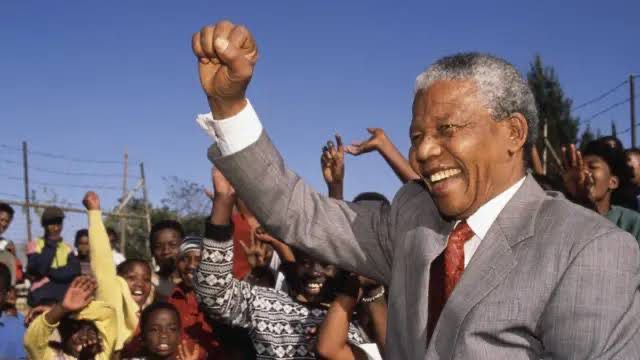
Celebrated every year on 18 July, Mandela Day is a call to action for people across the world to make a difference in their communities, just as Nelson Mandela sacrificed 27 years of his life fighting for a democratic, equal South Africa.
But instead of giving up decades, South Africans are asked to give just 67 minutes of their time – one minute for every year Mandela spent in public service.
Twelve years since Madiba’s passing, the question remains: are South Africans still heeding the call? Are we still honouring his legacy – not only with words but with meaningful action, especially among the country’s youth?
As much as it may not sound like something ‘ama2000’ would say, Gen Z actually believes in giving back. Many of them are passionate about continuing Mandela’s legacy – just in their own, intentional ways.
Kaya 959 spoke to students born between 2000 and 2004 from institutions across the country about what Mandela Day means to them.
Kedumetse Mphahlele, from the Tshwane University of Technology, spends her Mandela Day cleaning around her community.
It’s crucial to keep honouring Nelson Mandela for his selfless sacrifices and commitment to fighting apartheid and promoting democracy. Celebrating Mandela Day motivates us to continue his mission – to build a more just and equitable society.
For Kutlwano Ramohapi, a student from the University of South Africa (UNISA), Mandela Day is not just symbolic – it’s a lifestyle.
I’ll spend my 67 minutes doing something meaningful, like donating essentials at nursery homes. Celebrating Mandela is very crucial – his selflessness inspires me to be a better citizen and make a positive impact.
Nelson Mandela is cemented in history as one of the most influential leaders of all time. He was among the key ANC comrades who fought to dismantle apartheid and went on to become South Africa’s first democratically elected president in 1994.
And although this generation didn’t witness the liberation struggle or his presidency firsthand, they understand the magnitude of his legacy, and they are committed to carrying it forward.
“I joined a community engagement group at the University of Johannesburg, even though it’s not related to the field I’m studying. It’s cool because we get to assist where we can,” said Takatso Borotho, an engineering student at UJ.
“We usually spend time at old age homes – keeping the elderly company, cleaning for them – and sometimes we visit mental institutions to lend a hand. Even though Mandela Day is important, I think kindness goes a long way every day.”
This generation faces a sobering reality: an unemployment rate hovering around 60%, a murder rate at its highest in 20 years, and rampant drug abuse.
But despite these challenges, many of them say Mandela laid the foundation, and they’ll take it from here.
A student from Wits University, who asked not to be named, said:
“I definitely acknowledge Mandela Day. We might not celebrate it the traditional way, but we get the message. For me, 67 minutes is less about grand gestures and more about intention. Sometimes I volunteer, sometimes I support small businesses or mentor someone younger. We’re here as Black South Africans because someone gave up his life for freedom. Even if it’s not trending, we still honour the legacy. We move differently because of it.”
As Gen Z redefines activism and service on their own terms, one thing is clear – they may not have lived through the struggle, but they’re living proof that the struggle wasn’t in vain.
And with steady hands, this generation is saying: ‘We’ll take it from here, Tata’.
READ NEXT: Itu Bokaba granted protection order, suspended arrest warrant against Nota
![[WATCH PODCAST] Kabelo Mabalane teams up with The Arrows for infectious comeback track ahead of 10th studio album](https://www.kaya959.co.za/wp-content/uploads/2026/10/KAYA-959-THUMBNAILS-1170x658.png)

![[WATCH PODCAST] Kabelo Mabalane teams up with The Arrows for infectious comeback track ahead of 10th studio album](https://www.kaya959.co.za/wp-content/uploads/2026/10/KAYA-959-THUMBNAILS-100x100.png)