By Mapaballo Borotho
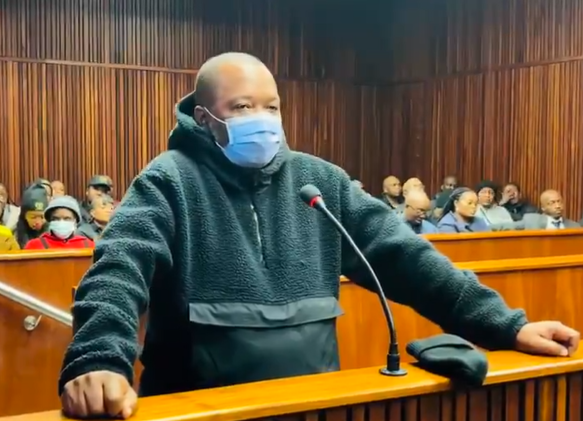
- LADGAC founder Tsebe Philimon Moloto has been granted R50 000 bail after appearing in the Polokwane Magistrate’s Court.
- Prosecutors allege he set fire to his ex-partner’s rehabilitation business, a Toyota Hilux and a signboard, causing about R800 000 in damage.
- The matter has been postponed to 22 September for further investigation.
The Polokwane Magistrate’s Court has released the founder and owner of the LADGAC programme on R50 000 bail.
Tsebe Philimon Moloto was arrested for allegedly setting fire to his ex-partner’s rehabilitation centre, as well as her Toyota Hilux and a signboard advertising the business.
According to the National Prosecuting Authority (NPA), Moloto and the complainant were previously involved in a romantic relationship and were business partners at the LADGAC Rehabilitation Centre in Seshego.
Following their breakup, the complainant started her own rehabilitation centre.
The NPA alleges that, in late June 2026, Moloto poured a flammable substance onto a Toyota Hilux belonging to the complainant while it was parked at her parents’ home in Seshego Zone 3.
In a separate incident, prosecutors further allege that Moloto set fire to a signboard advertising the complainant’s new rehabilitation business in Ladanna.
Authorities estimate the damage caused by the incidents at approximately R800 000.
The matter has been postponed to 22 September 2026 for further investigation.
The founder of LADGAC, Tsebe Philimon Moloto, was granted bail of R50,000 by the Polokwane Magistrates' Court. He is facing two counts of malicious damage to property. He is alleged to have set alight his former girlfriend and business partner’s Toyota Hilux and a signage board. pic.twitter.com/r3g7JpIn6Z
— NPASouthAfrica (@NPA_Prosecutes) July 14, 2026
Who is ‘Ntate’ Moloto?
Moloto and his business rose to prominence on TikTok over the past few years, where he regularly posted videos of himself and his employees travelling to different destinations to fetch people struggling with drug addiction at the request of their families.
Unlike conventional rehabilitation centres, where individuals are usually taken for treatment by their guardians or loved ones with consent, Moloto would travel to locations across the country, often in the early hours of the morning, to collect people without their consent but with the consent of their parents or guardians.
Families from across South Africa have turned to Moloto after exhausting other options and feeling that existing support systems had failed them.
When a person living with substance use disorder became aggressive, stole from family members, or repeatedly refused treatment, LADGAC was often called in to intervene and assist.
READ NEXT: Limpopo launches landmark cancer scanners to revolutionise local treatment