By Enkosi Selane at The Citizen
- ANC secretary-general Fikile Mbalula has admitted that some branch-submitted candidate lists contained inaccurate and unverified ID numbers, prompting the party to review weaknesses in its nomination and vetting process.
- The ANC is challenging the IEC’s decision not to reopen candidate submissions, arguing that information already captured on the commission’s system before the 28 August deadline should be processed. Mbalula stressed that the legal challenge is not an attack on the IEC or the credibility of the elections.
- The party is investigating further problems, including changes to its Eastern Cape candidate list, while planning stronger verification systems linked to Home Affairs and the IEC ahead of future elections. The ANC says its candidates for the 4 November 2026 local government elections have been confirmed and campaigning will continue.
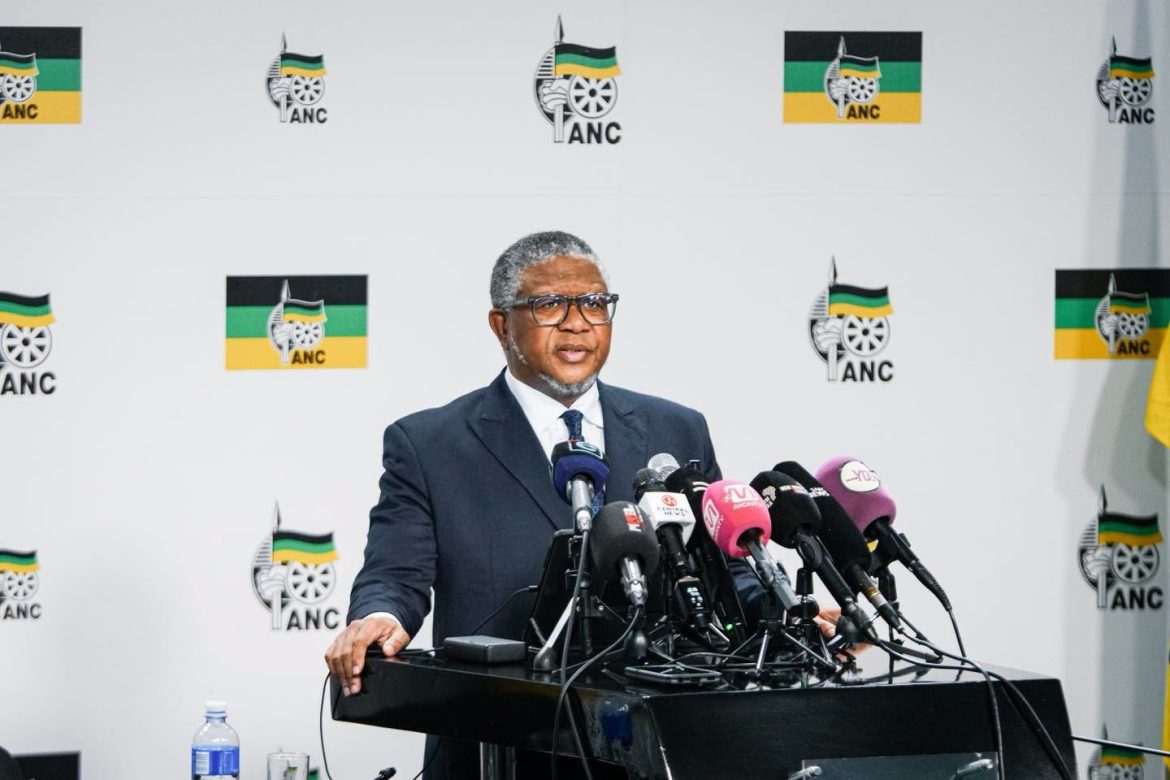
ANC secretary-general Fikile Mbalula has admitted that some of its branch-submitted candidate lists for the upcoming local government elections contained inaccurate and unverified identity numbers, prompting the party to launch an internal review of its nomination process.
He addressed the matter at a media briefing held at Luthuli House in Johannesburg on Tuesday.
Mbalula disputes glitch was ever the IEC’s
The briefing came after the ANC filed papers with the Electoral Court challenging a decision by the Electoral Commission (IEC) not to reopen candidate list submissions, following reports that a technical glitch on the IEC’s system had caused the party to miss the 28 August nomination deadline in some provinces.
The commission disputed the claim that the ANC’s candidates couldn’t register due to technical problems with the IEC’s system.
Mbalula said the session was also intended to correct what he described as inaccurate reporting about the party’s candidate lists in the days prior, and to give the public what he called a full account of the sequence of events.
Mbalula also repeatedly insisted the ANC never said the glitch was the IEC’s system’s fault, only that the ANC “encountered difficulties.”
He explicitly said “We did not say the glitch is because of the IEC… we said there was a glitch.”
Mbalula said the ANC had logged 9 128 total candidates, with 97% submitted, and only 181 affected, and that 44 other parties are in the same position.
“The ANC is not in court for itself alone. Whatever we ask for [us] we ask for you too,” he said.
Party admits gaps in its own vetting system
Mbalula said national officials received a report identifying weaknesses in how the ANC verified candidate details before uploading them to the Electoral Commission’s system.
According to Mbalula, an internal review of the candidate nomination process found more than 200 identity numbers recorded at branch meetings but never verified.
He said branch structures had, in some cases, submitted names and ID numbers that were never properly checked against national records before being entered into the party’s own nomination system.
“The National Executive Committee approved the list on the 25th August, and ratified them on 27th August, the day before the deadline,” Mbalula said.
He said the review had traced the nomination process through nine stages, from branch meetings to regional and national structures, and found that verification checks were not consistently applied at each stage.
Mbalula added that the party’s own electoral committee, together with provincial secretaries and chairpersons, had been responsible for confirming the lists before they were captured on the commission’s system, and that the review would help identify exactly where the gaps occurred.
Plan to link ANC systems with Home Affairs and IEC
Mbalula said the party intended to upgrade its membership database so that every member’s identity number could be checked against national population records, and would seek to establish a direct link between its own systems, the Department of Home Affairs, and the Electoral Commission so that verification would happen automatically in future, rather than being discovered after lists had already been submitted.
He distinguished this internal reform process from the party’s separate court challenge over the missed 28 August deadline, which he said was about a narrower legal question rather than a dispute over the fairness of the election itself.
“On 2 September the movement wrote to the Electoral Commission. We asked for one thing. We asked the Commission to process the candidate information that its own system had received and stored before the deadline.
“We asked to add no nameS. We asked to change no list. We asked for no late nomination and no extension of any deadline. And we asked that whatever the Commission did, it do for every one of the 45 affected parties on identical terms,” Mbalula said.
ANC says dispute is over a point of law, not election integrity
Mbalula was at pains to stress that the ANC’s court challenge should not be read as an attack on the credibility of the electoral process or the outcome of the elections themselves.
He said the party had accepted every substantive result the Electoral Commission had delivered over the years and had never previously gone to court to dispute an outcome.
He said the current matter was narrower than that: the ANC disagreed with the commission on a specific point of law relating to how candidate information already captured in its system should be treated, rather than disputing the commission’s broader authority or the legitimacy of the vote.
Mbalula said the party was concerned that other formations had used the dispute to air separate grievances against the commission, and made clear the ANC did not associate itself with that approach, saying it would defend the institution where it believed the commission was being unfairly attacked.
WATCH: Mbalula speaks on the candidate list fiasco
Eastern Cape changes under forensic scrutiny
Mbalula confirmed that a forensic investigation was under way into changes made to the ANC’s Eastern Cape candidate list after it had already been compiled and confirmed by branch structures.
He said the provincial leadership would be required to account for what was changed and why, adding that the secretary-general’s office was deliberately excluded from list decisions to avoid any appearance of interference from his position.
Despite acknowledging the internal shortcomings, Mbalula maintained that the Electoral Commission remained a credible and well-functioning institution, and said the ANC’s criticism was aimed at process gaps rather than the commission’s integrity.
“We are proud of the institution the Commission is. We insist that our role must always be anchored in strengthening the institutions of the state, above all those that defend our democracy and the public purse.
“The Electoral Commission is an exemplary institution by any global standard. There is no question about its integrity, or about its standing as a guardian of our democracy and of the right to vote, which was bled for,” Mbalula said.
He said the reforms were expected to be in place well ahead of future election cycles, and that the ANC’s candidates for the 4 November local government elections had already been confirmed through the party’s existing vetting process, with campaigning continuing regardless of the outcome of the court challenge.
When IEC timetable can change
According to the SABC, former IEC chairperson Terry Tselane said the Electoral Commission can only amend its election timetable under two specific conditions.
Tselane pointed to a 2021 Constitutional Court ruling that upheld the IEC’s decision to amend the timetable and allow parties that missed a deadline to resubmit: where it’s necessary in the interest of free and fair elections, or where election day itself has been postponed.
This article was republished from The Citizen. Read the original here.
READ NEXT:
![[WATCH PODCAST] Omar on his ninth studio album and why Stevie Wonder and Erykah Badu call him their ultimate musical idol](https://www.kaya959.co.za/wp-content/uploads/2026/10/KAYA-959-THUMBNAILS-6-1170x658.png)

![[WATCH PODCAST] Omar on his ninth studio album and why Stevie Wonder and Erykah Badu call him their ultimate musical idol](https://www.kaya959.co.za/wp-content/uploads/2026/10/KAYA-959-THUMBNAILS-6-100x100.png)