By: Natasha Archary
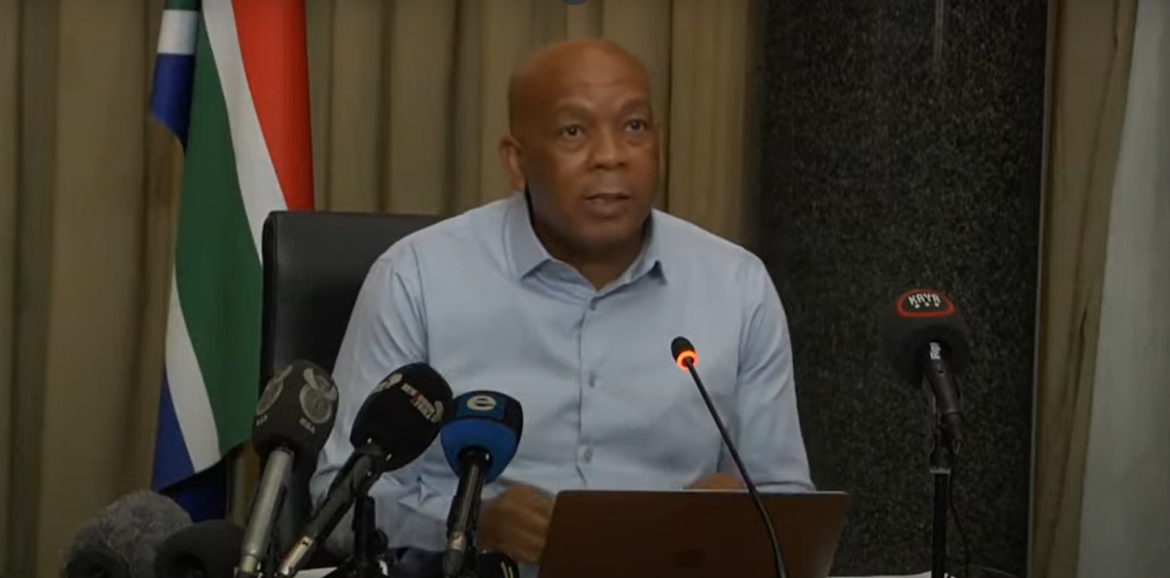
Minister of Electricity, Kgosientsho Ramokgopa has warned South Africans to brace for a difficult winter with higher loadshedding stages.
This as Eskom pushed the country into Stage 5 loadshedding until further notice due to higher than expected demand which is keeping the grid constrained.
In a media briefing, Ramokgopa said the energy demand is expected to grow in winter, which will likely result in higher stages of loadshedding.
According to the minister, there’s currently a deficit of 6,000MW and the gap is expected to increase to 10,000MW as temperatures drop.
“If this demand is going to go up to about 37,000MW, the worst case scenario, if we are not able to improve on this 27,000MW, you can see the gap grow from 5,000MW to 10,000MW.
This is determination made on summer conditions. On average, Eskom can guarantee us about 27,000MW, and we know that peak demand in summer is about 32,000MW.
Our initial computations suggest we need something in the order of about 6,000MW for us to close this gap.”
Electricity minister Kgosientsho Ramokgopa
This is a stark contrast to the minister’s confidence that loadshedding will be resolved.
In March, Ramokgopa went on a two-week trip of Eskom’s plants, and assured South Africans that loadshedding will be a thing of the past.
“The problem of load shedding will be resolved. Ultimately, the problem of electricity in this country will also be resolved. We are all in this together, the problem of load shedding must end.
I am confident that we are going to resolve the electricity problem. We will be honest and transparent about where we are now in as far as resolving the problem.
We have committed men and women with skills at Eskom. From the discussions we are having with Eskom, it is clear that the problem of load shedding will be resolved.”
However, it seems the minister has bitten off more than he can chew, with the reality of the loadshedding crisis only progressing, leaving the country in a precarious position.
“I’ll be brutally honest, it’s going to be an exceptionally difficult winter. We know that in summer conditions, the deficit is 6,000MW. When we go into winter, the peak can go up to 37,000MW. But at the current rates of trips and failures, it’s going to be an exceptionally difficult winter.”
Also read: Dr Pashy distances herself from Nandipha Magudumana, seeking legal advice over stolen identity
![[WATCH PODCAST] Kabelo Mabalane teams up with The Arrows for infectious comeback track ahead of 10th studio album](https://www.kaya959.co.za/wp-content/uploads/2026/10/KAYA-959-THUMBNAILS-1170x658.png)

![[WATCH PODCAST] Kabelo Mabalane teams up with The Arrows for infectious comeback track ahead of 10th studio album](https://www.kaya959.co.za/wp-content/uploads/2026/10/KAYA-959-THUMBNAILS-100x100.png)