
fb

Romantha Botha opens up about using digital storytelling to unpack South Africa’s history, identity and culture

The filmmaker and digital content creator uses short-form storytelling to explore South Africa’s history, identity, language and culture, helping audiences understand where complex issues come from and where the country may be heading.

By Mapaballo Borotho

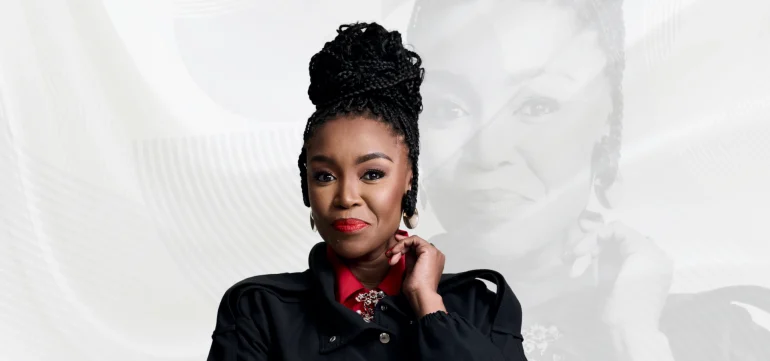
Romantha Botha
Image @Romantha Botha | Instagram

Leaving a career you studied for to pursue your passion can be one of the most difficult decisions to make. But for South African filmmaker and digital content creator Romantha Botha, storytelling has remained a constant throughout her career, even as the platforms she uses have changed.

Botha uses short-form storytelling to explore South Africa’s history, identity, language and culture, helping audiences understand complex issues, where they come from and how they continue to shape society.

After leaving her journalism job to venture into filmmaking, she continued doing what she has always known: explaining complex issues. 

Her work includes the Showmax docu-series Sex & Pleasure and kykNET’s Jou Mase Taal.

“I think the digital space is probably the first time I took control of what I would like to say and do. The digital space found me, and I am exactly where I need to be. Everything that I did before now equipped me with everything that I have now,” she said.

Finding her voice through digital storytelling

Growing up in a small township in George, Botha says she was not exposed to a wide variety of career options. As a child, her initial dream was to become a tourist.

Recalling an encounter with her uncle, who had travelled to Sweden with missionaries, she explained how the experience shaped her childhood aspirations.

“I remember him showing me pictures of himself on snow when he came back, big skyscrapers, and I was interested in doing whatever my uncle was doing at that time. He was just a tourist,” she recalled, giggling.

“Lack of exposure for kids in townships is crazy. If you don’t have your lucky moment where someone exposes you to things, you just don’t know.”

Botha says survival played a significant role in bringing her to where she is today. She believes that many of the opportunities she encountered along the way helped shape her career, and that, for the first time, she now has the freedom to choose what she wants to do.

Unpacking South Africa’s complex identity

Botha says her digital storytelling journey gained momentum when international conversations around Grammy-winning South African musician Tyla sparked debate about her identity and how she is perceived globally.

The discussions prompted her to reflect on how South Africans understand race, particularly the Coloured identity, and how these conversations differ between South Africa and the United States.

“That made me realise that both Coloured and Black people in South Africa could not fully understand or explain this group of people. There’s no indictment to anyone who can’t, because I think even Coloured people struggle,” she said.

“I just realised that someone has to break it down so that we can understand before we defend. That’s how my digital journey started, with basic concepts such as race versus ethnicity and nationality.”

Through her work, Botha seeks to provide context to conversations that can otherwise become divisive, encouraging audiences to understand the historical background of issues before forming opinions.

Navigating the challenges of the digital space

Asked about the challenges she has encountered in the digital space, Botha said she has become increasingly aware of the divisions that shape who gets to speak on certain issues and how their views are received.

She explained that discussing complex South African issues online can be difficult because people approach conversations from different social and economic positions. While some speak from a place of privilege, others draw on their lived experiences.

According to Botha, these differences can contribute to cancellation culture, particularly when conversations take place without sufficient historical context.

Rather than focusing solely on the issues people expect her to address, she says she tries to explore the underlying factors that shape them.

“Now I do not spotlight the very thing that people expect me to, I go around it and speak about things that people should know about how these things come about, from their history and how history is repeating itself. This is conditioning people to understand better,” she said.

‘I worry about literacy’

One of Botha’s biggest concerns is literacy in its different forms, including reading, comprehension and media literacy.

She believes that people need the skills to interpret information, distinguish between sources and opinions, and navigate the internet critically.

Botha also raised concerns about what she sees as a lack of urgency in addressing declining literacy and the broader challenges facing education.

“I think our government thinks that education is just a nice thing to do to get a pass rate, but it is critical for our future,” she said.

“Saying that you are going to put tablets in schools because you want to advance some revolution that you never prepared for, does not make sense. Our literacy levels are very low, and you are putting an iPad in someone’s hand that cannot distinguish between sources, opinions and don’t know how to navigate the internet.”

Botha believes South Africa needs to do more to equip people with the skills required to participate meaningfully in an increasingly digital world.

She says the country’s preparedness for developments in the technology space remains a concern, particularly when access to devices is not matched by the literacy and critical thinking skills needed to use them effectively.

Listen to the podcast for the full conversation. Kaya 959 podcasts are available to download.

READ NEXT:

Don't miss out on the latest local news, interviews and competitions.

Interests

More articles

QUICK LINKS

UpComing Shows

DownLoad Our Mobile App

Privacy Policy

THIS PRIVACY STATEMENT FORMS PART OF KAYA 959’S TERMS OF USE POLICY. IF YOU DO NOT AGREE WITH ANY TERM OF THIS PRIVACY STATEMENT, YOU MUST CEASE YOUR ACCESS OF THIS WEBSITE IMMEDIATELY. 

POPIA Act – To promote the protection of personal information processed by public and private bodies; to introduce certain conditions so as to establish minimum requirements for the processing of personal information; to provide for the establishment of an Information Regulator to exercise certain powers and to perform certain duties and functions in terms of this Act and the Promotion of Access to Information Act, 2000; to provide for the issuing of codes of conduct; to provide for the rights of persons regarding unsolicited electronic communications and automated decision making; to regulate the flow of personal information across the borders of the Republic; and to provide for matters connected therewith.

RECOGNISING THAT—

  • section 14 of the Constitution of the Republic of South Africa, 1996, provides that everyone has the right to privacy;
  • the right to privacy includes a right to protection against the unlawful collection, retention, dissemination and use of personal information;
  • the State must respect, protect, promote and fulfil the rights in the Bill of Rights;

AND BEARING IN MIND THAT—

  • consonant with the constitutional values of democracy and openness, the need for economic and social progress, within the framework of the information society, requires the removal of unnecessary impediments to the free flow of information, including personal information;

AND IN ORDER TO—

  • regulate, in harmony with international standards, the processing of personal information by public and private bodies in a manner that gives effect to the right to privacy subject to justifiable limitations that are aimed at protecting other rights and important interests,
  1. Definitions and Interpretation

1.1.“Personal Information” means information relating to an identifiable, living, natural person and where it is applicable, identifiable, existing juristic person, including all information as defined in the Protection of Personal Information Act 4 of 2013. 

1.2  Parliament assented to POPIA on 19 November 2013. The commencement date of section 1, Part A of Chapter 5, section 112 and section 113 was 11 April 2014. The commencement date of the other sections was 1 July 2020 (with the exception of section 110 and 114(4). The President of South Africa has proclaimed the POPI commencement date to be 1 July 2020.

 
1.3. “Processing” means the creation, generation, communication, storage, destruction of personal information as more fully defined in the Protection of Personal Information Act 4 of 2013.  

1.4. “You” or the “user” means any person who accesses and browses this website for any purpose. 

1.4. “Website” means the website of the KAYA 959 at URL www.kaya959.co.za or such other URL as KAYA 959 may choose from time to time.   

  1. Status and Amendments

2.1. KAYA 959 respects your privacy. This privacy policy statement sets out KAYA 959’s information gathering and dissemination practices in respect of the Website. 

2.2. This Privacy Policy governs the processing of personal information provided to KAYA 959 through your use of the Website. 

2.3. Please note that, due to legal and other developments, KAYA 959 may amend these terms and conditions from time to time.  

  1. Processing of Personal Information

3.1. By providing your personal information to KAYA 959 you acknowledge that it has been collected directly from you and consent to its processing by KAYA 959. 

3.2. Where you submit Personal Information (such as name, address, telephone number and email address) via the website (e.g. through completing any online form) the following principles are observed in the processing of that information: 

3.2.1. KAYA 959 will only collect personal information for a purpose consistent with the purpose for which it is required. The specific purpose for which information is 
collected will be apparent from the context in which it is requested. 

3.2.2. KAYA 959 will only process personal information in a manner that is adequate, relevant and not excessive in the context of the purpose for which it is processed. 

3.2.3. Personal information will only be processed for a purpose compatible with that for which it was collected, unless you have agreed to an alternative purpose in writing or KAYA 959 is permitted in terms of national legislation of general application dealing primarily with the protection of personal information. 

3.2.4. KAYA 959 will keep records of all personal Information collected and the specific purpose for which it was collected for a period of 1 (one) year from the date on which it was last used. 

3.2.5. KAYA 959 will not disclose any personal information relating to you to any third party unless your prior written agreement is obtained or KAYA 959 is required to do so by law. 

3.2.6. If personal information is released with your consent KAYA 959 will retain a record of the information released, the third party to which it was released, the reason for the release and the date of release, for a period of 1 (one) year from the date on which it was last used. 

3.2.7. KAYA 959 will destroy or delete any personal information that is no longer needed by KAYA 959 for the purpose it was initially collected, or subsequently processed. 

3.3. Note that, as permitted by the Electronic Communications and Transactions Act 25 of 2002, KAYA 959 may use personal information collected to compile profiles for statistical purposes. No information contained in the profiles or statistics will be able to be linked to any specific user.    

  1. Collection of anonymous data

4.1. KAYA 959 may use standard technology to collect information about the use of this website. This technology is not able to identify individual users but simply allows KAYA 959 to collect statistics. 

4.2. KAYA 959 may utilise temporary or session cookies to keep track of users’ browsing habits. A cookie is a small file that is placed on your hard drive in order to keep a record of your interaction with this website and facilitate user convenience. 

4.2.1. Cookies by themselves will not be used to identify users personally but may be used to compile identified statistics relating to use of services offered or to provide KAYA 959 with feedback on the performance of this website. 

4.2.2. The following classes of information may be collected in respect of users who have enabled cookies: 

4.2.2.1. The browser software used; 

4.2.2.2. IP address; 

4.2.2.3. Date and time of activities while visiting the website; 

4.2.2.4. URLs of internal pages visited; and 

4.2.2.5. referrers. 

4.3. If you do not wish cookies to be employed to customize your interaction with this website it is possible to alter the manner in which your browser handles cookies. Please note that, if this is done, certain services on this website may not be available. 

  1. Security

5.1. KAYA 959 takes reasonable measures to ensure the security and integrity of information submitted to or collected by this website, but cannot under any circumstances be held liable for any loss or other damage sustained by you as a result of unlawful access to or dissemination of any personal information by a third party. 

  1. Links to other websites

6.1. KAYA 959 has no control over and accepts no responsibility for the privacy practices of any third party websites to which hyperlinks may have been provided and KAYA 959 strongly recommends that you review the privacy policy of any website you visit before using it further. 

  1. Queries

7.1. If you have any queries about this privacy policy please contact us by emailing [email protected]