By: Natasha Archary
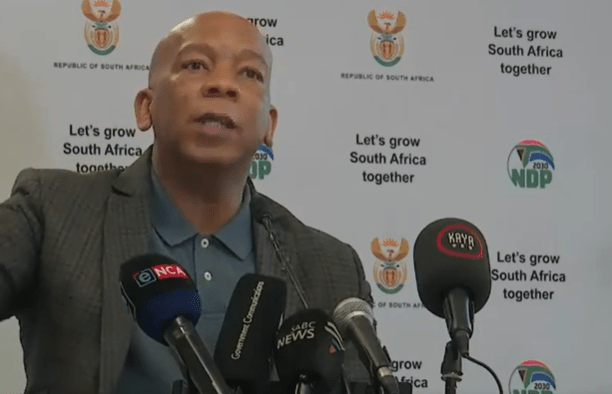
Minister of Electricity, Dr Kgosientsho Ramokgopa joins Gugulethu Mfuphi on Kaya Biz to shed light on the state of the national grid ahead of the upcoming elections.
For the first time since the highest hours of loadshedding in 2023, South Africa has gone 40 days without rolling blackouts, which is according to Ramokgopa due to the implementation of the Energy Action Plan.
“The Energy Action Plan identifies 5 outcomes, the first of which is fixing Eskom which really is the quickest path to end loadshedding because we have an instal fleet of Eskom units that are not performing.
By fixing that we are able to get the necessary megawatts. We knew that if we are to embark on a necessary maintenance programme that’s properly orchestrated, we’re likely going to extract life from these units which still has about 15-years in them to give the megawatts necessary.
The second one is accelerating private sector investments, as I speak there’s about 66 gigawatts in a renewable energy project at various stages that are private sector sponsored.
This is on the back of the reforms that government has introduced, which includes the elimination of the requirement for licensing with Nersa for the purposes of new generation. So, if you want to do embedded generation behind a meter or you want to generate at the utility scale, you don’t have to have a license with Nersa, you just have to be registered, and this is why you see this growth.
Public procurement of renewable energy is the third outcome from the Energy Action Plan, which includes solar and wind sources and is another reason for the current stability on the national grid.
Next is accelerating rooftop solar solution for both priand almost and households.
Lastly to undermine the vertical integration of Eskom, introduce the 3 companies, of course the transmission one will be up and running in July of which Eskom is a sole shareholder.
Electricity Minister – Kgosientsho Ramokgopa
No guarantees on a loadshedding free winter
Despite the positive outlook and over 40-days loadshedding free, Ramokgopa says he cannot guarantee a loadshedding free winter.
The Electricity Minister who dismissed that electioneering was the reason for the lights remaining on, said the plan to conduct maintenance during off peak times worked well and Eskom will continue to do this to ensure a surplus of generation capacity.
However, Ramokgopa said Eskom’s winter outlook did factor in a possible 14 000 megawatts of unplanned failures, but with the contingencies in place, the power utility could mitigate loadshedding.
This is the expected result, but there are a number of scenarios which could disrupt the generation capacity which could mean Stage 5 loadshedding during winter.
In April, Eskom was given the go ahead to implement Stage 16 loadshedding, which will mean reducing 80% of the strain on the national grid.
This was confirmed by the National Energy Regulator of South Africa (Nersa) on Friday, 05 April after publishing the approved NRS 048-9 Code of Practice Edition 3.
Before the Code of Practice was updated, Eskom only had protocols in place upto Stage 8 loadshedding.
The update means Eskom will be allowed to implement loadshedding from Stage 1 to Stage 16.
Listen to the conversation on Kaya Biz:
Also read: Solly Msimanga on Democratic Alliance’s readiness to govern the Gauteng province
![[WATCH PODCAST] Kabelo Mabalane teams up with The Arrows for infectious comeback track ahead of 10th studio album](https://www.kaya959.co.za/wp-content/uploads/2026/10/KAYA-959-THUMBNAILS-1170x658.png)

![[WATCH PODCAST] Kabelo Mabalane teams up with The Arrows for infectious comeback track ahead of 10th studio album](https://www.kaya959.co.za/wp-content/uploads/2026/10/KAYA-959-THUMBNAILS-100x100.png)