Dohne Damons
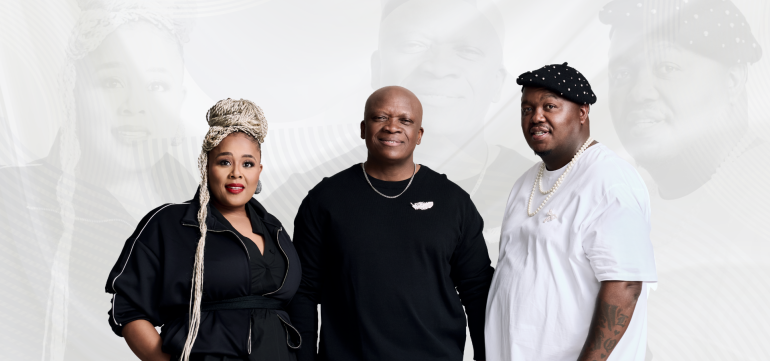
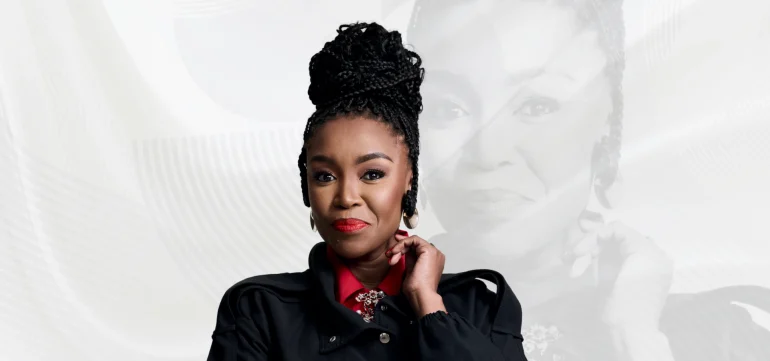
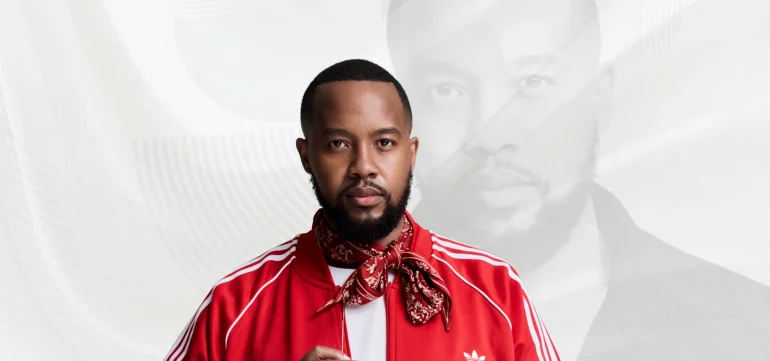
This week on 959 Breakfast, the team delved into critical issues of whether Labour brokers are necessary for South Africa, Eskom’s sale of Distribution to an unknown SOE, Pearl Thusi and Sello Maake ka Ncube seemingly endorsing ZANU PF and near-death experience stories.
Are Labour Brokers necessary?
Sizwe and Andrew Levy, a Labour Economist, provided insights into the complexities of the labour market. These discussions emerged following calls from students at the Tshwane University of Technology (TUT) Ga-Rankuwa campus to ban labour brokers and recruitment agencies operating in the Rosslyn industrial area.
The prevailing youth unemployment rate, as reported by Statistics South Africa (Stats SA), stands at 55%. This statistic has prompted a broader conversation about potential inefficiencies within the labour market. Andrew Levy, a respected Labour Economist, has shed light on the role of labour brokers in addressing specific challenges faced by companies and job seekers alike.
According to Andrew Levy, labour brokers can play a crucial role in assisting companies seeking to fill specialized positions. Such positions may require unique skills or expertise that are not readily available in the general job market. In such cases, labour brokers serve as intermediaries, helping companies identify individuals with the required qualifications and capabilities to excel in these roles.
Levy acknowledges that while labour brokers can contribute to fulfilling specific recruitment needs, there might be gaps in the system that require attention and improvement.
How “Clued Up” are we all on the sale of Eskom’s Distribution Company
The approval for the sale of Eskom’s distribution assets to a new state-owned company has been granted by Public Enterprises Minister Pravin Gordhan. This emerging entity, currently awaiting a name, will function as a wholly-owned subsidiary of Eskom.
Eskom consists of three core sections: Transmission, Generation, and Distribution. It’s notable that while Transmission and Generation have demonstrated profitability, the distribution section has faced challenges. As a strategic component of Eskom’s Turnaround plan—a roadmap for the company in a reformed electricity supply industry—the decision to divest the distribution arm aims to address these challenges.
Sizwe’s theory is that this is a strategic manoeuvre to enhance Eskom’s credit rating and, in turn, cultivate a more conducive operational climate.
You had your own theories. Some were harsh and others thought-provoking.
SA celebs endorsing political parties
A Twitter image has recently emerged, featuring Emmerson Mnangagwa, the President of both Zanu PF and Zimbabwe, flanked by prominent journalists and celebrities, including Pearl Thusi and Sello Maake ka Ncube. The photo has sparked intrigue and raised questions about the nature of their association. According to Zimbabwean journalist Hopewell Chin’ono, this gathering was part of a “propaganda tour” across Zimbabwe, funded by the controversial businessman, Zunaid Motti. Notably, all individuals in the photo are seen donning Zanu PF scarves, which can be interpreted as an implicit endorsement of the political party.
The intriguing development became a focal point for discussion, and Sizwe Dhlomo and his team engaged in a thoughtful dialogue exploring the complex relationship between celebrities and political endorsements. Listeners were invited to share their perspectives, enriching the discourse with diverse viewpoints.
In the midst of this conversation, Sizwe Dhlomo contributed his own thoughts on the matter. He suggested that the mere presence of celebrities wearing Zanu PF scarves in the photo does not necessarily translate to unwavering support for the political party. Rather, he hinted at the possibility that these individuals might have been presented with an offer they couldn’t easily decline. This perspective highlights the notion that, at times, celebrities might be approached to participate in such events for reasons beyond genuine political alignment.
It is acknowledged by many that celebrities often find themselves in a complex position where financial considerations can play a significant role in their decisions. The potential for lucrative compensation can sometimes lead to celebrity participation in such PR campaigns. This aligns with the understanding that celebrities, like any other individuals, have financial obligations and aspirations.
What happens during a Near Death Experience?
Sizwe Dhlomo shared the content of a viral video that circulated on social media. The video features a man who recounts his near-death experience, offering a vivid description of his encounter with death. In his narrative, the man describes death as an incredibly peaceful state. He emphasizes the absence of sensation or awareness—just an overwhelming sense of calm.
Sizwe Dhlomo adds to this narrative by drawing an intriguing comparison to the sensation of being on an operating table. He suggests that when undergoing a medical procedure, an individual’s consciousness seems to vanish—much like the experience of death described by the man in the viral video. Sizwe’s analogy lends a thought-provoking dimension to the notion of near-death experiences and the enigmatic nature of consciousness.
Across many near-death accounts, individuals often report a feeling of being outside their bodies, observing the scene from a detached perspective. Additionally, many describe a surreal encounter with light or a tunnel-like passage. These shared elements suggest a common thread in the emotions and sensations experienced during these moments of transition between life and what comes after.
Now Read: Tumelo Madlala disputes Kelly’s statement after Senzo’s murder
![[WATCH PODCAST] Kabelo Mabalane teams up with The Arrows for infectious comeback track ahead of 10th studio album](https://www.kaya959.co.za/wp-content/uploads/2026/10/KAYA-959-THUMBNAILS-1170x658.png)
![[WATCH PODCAST] Kabelo Mabalane teams up with The Arrows for infectious comeback track ahead of 10th studio album](https://www.kaya959.co.za/wp-content/uploads/2026/10/KAYA-959-THUMBNAILS-100x100.png)