
Not every breast lump is cancerous, and hormonal changes can affect how breast tissue feels.
By Mapaballo Borotho
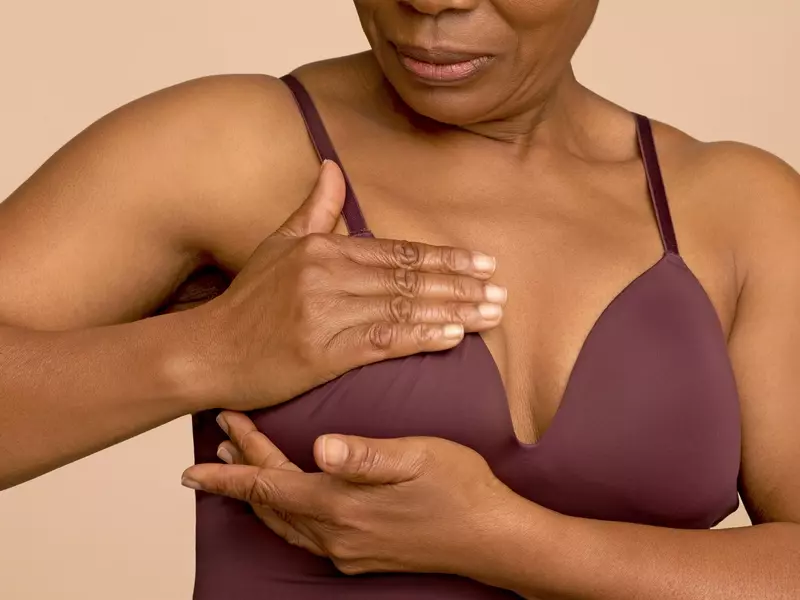
Women are often encouraged to examine their breasts regularly. However, many fear doing so because they worry about discovering a lump and what it could mean.
According to medical professionals from Health Lab, a South African digital health portal, not all breast lumps are cancerous.
While the fear of finding a lump is understandable, avoiding breast checks altogether can mean missing changes that need medical attention.
Understanding what normal breast tissue feels like, and recognising changes that warrant a doctor’s visit, is one of the most practical steps women can take towards looking after their long-term health.
As Breast Cancer Awareness Month draws to a close, various organisations have been running campaigns to educate people about breast cancer, how to check their breasts and when to seek medical advice.
While these campaigns play an important role in raising awareness, the messaging can sometimes leave people feeling frightened. For many, the possibility of a cancer diagnosis is enough to make them anxious about examining their bodies.
The intention behind these campaigns is good, but the messaging can sometimes have the opposite effect.
“When every lump is framed as a potential cancer, women who feel the ordinary nodularity of their own tissue can spiral into anxiety or avoid checking altogether because they don’t want to find something terrifying,” a medical doctor said in a statement released by Health Lab.
“The lumpy patches before your period, the tender swelling, the small moveable knot are not cancer.”
Breast tissue naturally varies in texture, and hormonal changes throughout the menstrual cycle can cause tenderness, swelling and lumpiness. However, it is important not to assume that a lump is harmless simply because it is moveable or appears around the time of your period.
Medical professionals suggest that women who menstruate may find it easier to examine their breasts about seven to 10 days after the first day of their period, when hormonal changes are generally less pronounced.
For postmenopausal women, choosing the same date each month can help establish a regular routine.
When is the right time to see a medical professional?
Benign breast lumps may feel smooth and moveable, and some can change with the menstrual cycle. However, these characteristics alone cannot confirm whether a lump is harmless.
According to medical guidance, the following changes should be assessed by a healthcare professional without delay:
- A new lump that feels hard, has an irregular shape or appears fixed in place.
- Skin dimpling, puckering or a change in the shape or contour of the breast.
- New nipple inversion, particularly if the nipple previously pointed outward.
- Bloody nipple discharge or discharge that comes from one breast or a single duct.
- Skin that appears thickened or develops an orange-peel texture.
- A lump that persists throughout the menstrual cycle.
- Swelling or a lump in the armpit that does not resolve.
These signs do not automatically mean someone has breast cancer. However, they should not be ignored, as a clinical examination is needed to determine the cause.
How can women examine their breasts effectively?
The aim of breast self-awareness is to become familiar with how your breasts normally look and feel, making it easier to notice changes.
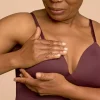
When checking your breasts, use the flat pads of your three middle fingers rather than your fingertips. Apply light, medium and firm pressure in small circular movements to feel the different layers of breast tissue.
Make sure you cover the entire breast area, from the collarbone to the lower edge of the breast and from the armpit to the centre of the chest.
You can examine your breasts while lying down, which allows the tissue to spread out against the chest wall, and while standing. Looking in the mirror with your arms raised can also help you identify changes in breast shape, skin or nipple appearance.
Most importantly, remember that breast awareness is not about trying to diagnose yourself. It is about recognising what is normal for your body and knowing when something feels or looks different.
Women are encouraged not to let fear prevent them from paying attention to their bodies. While discovering a lump can be frightening, not every lump is cancerous, and seeking medical advice is the best way to establish what is happening.
READ NEXT:


![[WATCH PODCAST] Mr. Mercedes drops highly anticipated project, joining forces with Thabo Smol and Spice Drums](https://www.kaya959.co.za/wp-content/uploads/2026/10/KAYA-959-THUMBNAILS-79-100x100.png)
![[WATCH PODCAST] Tumisho Masha commands the screen as colonel Jack Phatudi in M-Net’s new must-watch series](https://www.kaya959.co.za/wp-content/uploads/2026/10/KAYA-959-THUMBNAILS-78-100x100.png)