
fb

Fibre-maxxing: useful gut health hack or TikTok fad?

Fibre-maxxing is the latest wellness trend taking over social media, but how much fibre do you really need? A dietitian weighs in on the benefits, risks, and simple ways to get more from everyday foods.

By Bulelwa Hoala
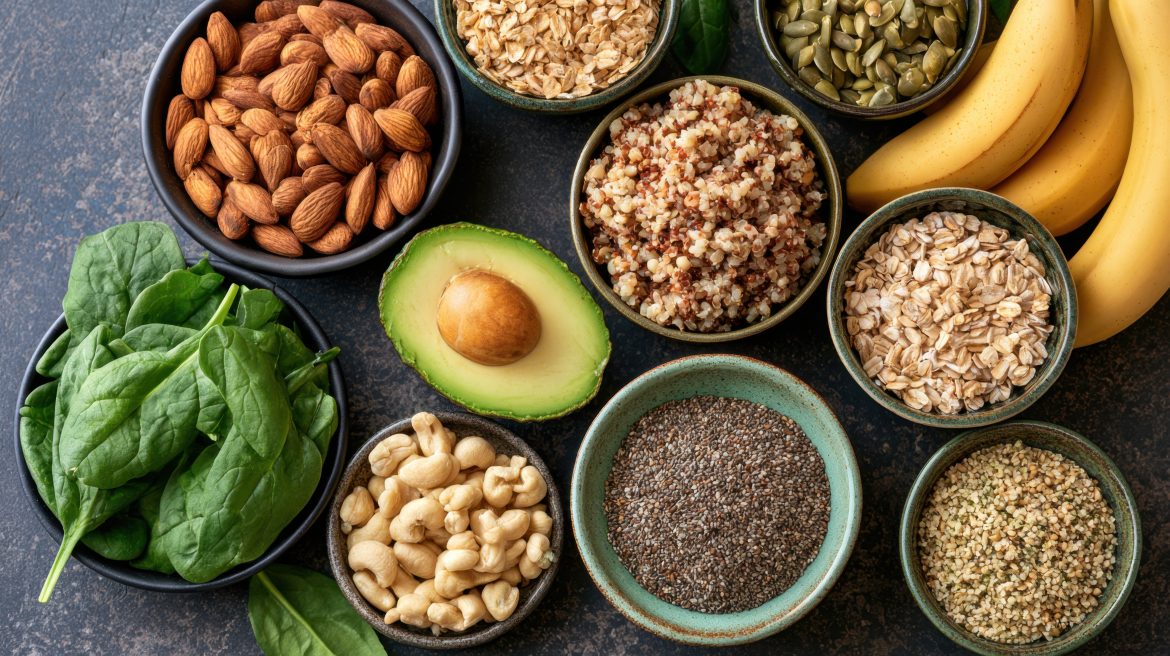
Image: https://stock.adobe.com/za/search

Social media has taught us that when it comes to health and nutrition, there is always a new food, drink, or viral ingredient we must try or include in our daily routines.

From olive oil and lemon shots and okra water to celery juice, sea moss gel, and chia seed concoctions, wellness trends come and go with promises of better digestion, more energy, weight loss, and glowing skin.

Now, fibre-maxxing is having its moment in the spotlight.

The trend encourages people to increase their fibre intake by adding beans, legumes, seeds, and other fibre-rich foods to their meals. Some are also turning to fibre supplements such as oat bran and psyllium husk.

But is fibre-maxxing a useful strategy for gut health, or is it simply the latest wellness trend to take over social media?

We spoke to registered dietitian Aziwe Booi to unpack what fibre-maxxing really means, how much fibre we need and whether you can have too much of a good thing.

Registered Dietitian (RD) and nutrition educator Aziwe Booi

What exactly is fibre-maxxing?

Fibre-maxxing is a relatively new social media phenomenon focused on increasing the amount of fibre in your diet.

“Fibremaxxing has taken social media by storm. It is essentially a trend where individuals try to add more fibre to their diet to meet the recommended intake or, in most cases, exceed this intake. It often includes using beans, legumes, seeds like flax or chia seeds, and even fibre supplements like oat bran or psyllium husk.”

While the name may be new, the nutritional principle isn’t.

“Fibre is not a new concept, but focusing on it is a fairly new concept for the Gen Z audiences.”

Booi explains that fibre is found in plant foods and cannot be completely digested by the body.

“Fibre can be defined as a component of plant foods that cannot be completely digested in the body. Other parts of your food, such as fats, proteins, and carbohydrates, are broken down and absorbed. Fibre passes through your body mostly unchanged.”

How much fibre do you actually need?

According to Booi:

  • Adult females: 25g of dietary fibre per day
  • Adult males: 38g of dietary fibre per day

Getting enough fibre is important because it supports several aspects of our health, from digestion and fullness to blood sugar and heart health.

Why does fibre matter?

For Booi, one of the key benefits of fibre is its role in digestion and how it affects fullness and blood sugar.

“I support overall digestion.”

“Fibre slows gastric emptying making you feel full for longer and slowing the rate at which glucose is absorbed in the blood. This makes fibre a crucial nutrient for optimal blood sugar control.”

That feeling of fullness can also play a role in weight management.

“Feeling full for longer may support portion control which is a crucial component of weight management.”

There are other potential benefits too. Booi says eating enough fibre may reduce the risk of certain cancers, while some forms of fibre can support the gut microbiome.

“Fibre forms such as oats and apples are rich in prebiotic fibre. This means it feeds the good bacteria in your gut.”

Soluble fibre can also support heart health.

“Soluble fibre binds to cholesterol in your digestive tract to lower total cholesterol levels and thus supports heart health.”

Not all fibre is the same

There are different types of dietary fibre, including soluble and insoluble fibre.

Soluble fibre dissolves in water and is found in foods such as oats, peas, beans, barley and many fruits. Insoluble fibre does not dissolve in water and is found in wholewheat products, bran, nuts and many vegetables.

Booi also highlights beta-glucan, pectin, psyllium husk and resistant starch.

Beta-glucan, found in oats, oat bran and barley, can help lower total cholesterol levels. Pectin, found in foods such as apples, pears and citrus, is another type of fibre.

Psyllium husk ferments slowly and can be used in the management of IBS and constipation, while resistant starch changes on a molecular level when starchy foods are cooked and cooled.

“It is the reason why as dietitians we support eating leftovers!”

According to Booi, resistant starch can help you feel full for longer and support blood sugar control and heart health.

Can you have too much fibre?

Yes.

While increasing fibre can be beneficial, suddenly going from a low-fibre diet to consuming very large amounts can have the opposite effect.

Booi says the upper limit is around 40 to 50 grams of fibre, but how quickly you increase your intake also matters.

“This can lead to digestive discomfort such as constipation, can cause bloating and cramping as well. Getting different types of fibre whilst getting adequate hydration whilst slowly increasing your fibre intake is key to avoid this.”

Her advice is to prioritise whole foods as your main source of fibre.

“Additionally, choosing whole foods as your primary source of fibre unless prescribed by your dietitian.”

In other words, don’t assume that taking large amounts of a fibre supplement is the quickest or best way to improve your diet.

What does social media get right about fibre?

According to Booi, many people may not be getting enough fibre.

“According to a 2015 Survey, South Africans fibre intake can be as low as 16 to 18 grams for males and females. So they are right that we are not consuming enough fibre!”

However, Booi warns against going from minimal fibre intake to large amounts overnight.

“But it is important to remember that going from minimal amounts to higher amounts can cause digestive discomfort so getting people to have tablespoons of fibre supplements may be too much for the gut to handle.”

She also points out that social media can oversimplify where we should get our fibre.

“Something they also get wrong is to get fibre from green leafy vegetables.”

Leafy greens are still an important part of a healthy diet, but Booi says they should not necessarily be viewed as the main source of fibre.

“We still need 400 grams of fruit and veg (3 veg and 2 fruit portions daily) but for something to be considered high in fibre it needs to have at least 6 grams of dietary fibre per 100 gram and leafy greens like spinach only contain 1-2 grams of fibre per 200 gram.”

You don’t need to change the way you eat

Increasing your fibre intake doesn’t have to mean completely changing your diet or buying expensive wellness products. Booi recommends thinking about what you can add to meals you already enjoy.

“We can ask ourselves what we can add into our diet.”

Her suggestions include:

  • Add lentils and peas into rice
  • Add chickpeas into chicken curry
  • Add kidney beans into lean mince
  • Add roasted beans into salad
  • Add sugar beans into samp

“These nutrition additions really do go a long way.”

And there are plenty of staple South African foods that can contribute to your fibre intake. Chakalaka and baked beans can provide fibre from beans, while samp and beans can be high in fibre, depending on the beans used.

Booi also says biryani can contain additional fibre from lentils and can be made with long-grain whole-grain brown rice.

So, should you try fibre-maxxing?

Booi’s advice is not to treat fibre like a competition.

“Aim for a variety of fibre in your diet to support your digestion.”

And if you’re increasing your intake, start slowly.

“Start slow and steady when incorporating more fibre in your diet.”

Her recommendation is to focus on eating a variety of plant foods.

“Aim for a plant predominant diet regardless of your eating pattern and this will assist in supporting your daily dose of dietary fibre.”

And most importantly, keep it simple.

“Start small by asking yourself what you can add into your diet and this goes such a long way.”

Fibre-maxxing may be the latest wellness phrase taking over social media, but the basic idea isn’t new. You don’t need to chase the latest gut-health hack. Start with the foods you already eat, add more fibre gradually, drink enough water, and aim for variety.

READ NEXT:

Don't miss out on the latest local news, interviews and competitions.

Interests

More articles

  • MORE ARTICLES
  • QUICK LINKS

    UpComing Shows

    DownLoad Our Mobile App

    Privacy Policy

    THIS PRIVACY STATEMENT FORMS PART OF KAYA 959’S TERMS OF USE POLICY. IF YOU DO NOT AGREE WITH ANY TERM OF THIS PRIVACY STATEMENT, YOU MUST CEASE YOUR ACCESS OF THIS WEBSITE IMMEDIATELY. 

    POPIA Act – To promote the protection of personal information processed by public and private bodies; to introduce certain conditions so as to establish minimum requirements for the processing of personal information; to provide for the establishment of an Information Regulator to exercise certain powers and to perform certain duties and functions in terms of this Act and the Promotion of Access to Information Act, 2000; to provide for the issuing of codes of conduct; to provide for the rights of persons regarding unsolicited electronic communications and automated decision making; to regulate the flow of personal information across the borders of the Republic; and to provide for matters connected therewith.

    RECOGNISING THAT—

    • section 14 of the Constitution of the Republic of South Africa, 1996, provides that everyone has the right to privacy;
    • the right to privacy includes a right to protection against the unlawful collection, retention, dissemination and use of personal information;
    • the State must respect, protect, promote and fulfil the rights in the Bill of Rights;

    AND BEARING IN MIND THAT—

    • consonant with the constitutional values of democracy and openness, the need for economic and social progress, within the framework of the information society, requires the removal of unnecessary impediments to the free flow of information, including personal information;

    AND IN ORDER TO—

    • regulate, in harmony with international standards, the processing of personal information by public and private bodies in a manner that gives effect to the right to privacy subject to justifiable limitations that are aimed at protecting other rights and important interests,
    1. Definitions and Interpretation

    1.1.“Personal Information” means information relating to an identifiable, living, natural person and where it is applicable, identifiable, existing juristic person, including all information as defined in the Protection of Personal Information Act 4 of 2013. 

    1.2  Parliament assented to POPIA on 19 November 2013. The commencement date of section 1, Part A of Chapter 5, section 112 and section 113 was 11 April 2014. The commencement date of the other sections was 1 July 2020 (with the exception of section 110 and 114(4). The President of South Africa has proclaimed the POPI commencement date to be 1 July 2020.

     
    1.3. “Processing” means the creation, generation, communication, storage, destruction of personal information as more fully defined in the Protection of Personal Information Act 4 of 2013.  

    1.4. “You” or the “user” means any person who accesses and browses this website for any purpose. 

    1.4. “Website” means the website of the KAYA 959 at URL www.kaya959.co.za or such other URL as KAYA 959 may choose from time to time.   

    1. Status and Amendments

    2.1. KAYA 959 respects your privacy. This privacy policy statement sets out KAYA 959’s information gathering and dissemination practices in respect of the Website. 

    2.2. This Privacy Policy governs the processing of personal information provided to KAYA 959 through your use of the Website. 

    2.3. Please note that, due to legal and other developments, KAYA 959 may amend these terms and conditions from time to time.  

    1. Processing of Personal Information

    3.1. By providing your personal information to KAYA 959 you acknowledge that it has been collected directly from you and consent to its processing by KAYA 959. 

    3.2. Where you submit Personal Information (such as name, address, telephone number and email address) via the website (e.g. through completing any online form) the following principles are observed in the processing of that information: 

    3.2.1. KAYA 959 will only collect personal information for a purpose consistent with the purpose for which it is required. The specific purpose for which information is 
    collected will be apparent from the context in which it is requested. 

    3.2.2. KAYA 959 will only process personal information in a manner that is adequate, relevant and not excessive in the context of the purpose for which it is processed. 

    3.2.3. Personal information will only be processed for a purpose compatible with that for which it was collected, unless you have agreed to an alternative purpose in writing or KAYA 959 is permitted in terms of national legislation of general application dealing primarily with the protection of personal information. 

    3.2.4. KAYA 959 will keep records of all personal Information collected and the specific purpose for which it was collected for a period of 1 (one) year from the date on which it was last used. 

    3.2.5. KAYA 959 will not disclose any personal information relating to you to any third party unless your prior written agreement is obtained or KAYA 959 is required to do so by law. 

    3.2.6. If personal information is released with your consent KAYA 959 will retain a record of the information released, the third party to which it was released, the reason for the release and the date of release, for a period of 1 (one) year from the date on which it was last used. 

    3.2.7. KAYA 959 will destroy or delete any personal information that is no longer needed by KAYA 959 for the purpose it was initially collected, or subsequently processed. 

    3.3. Note that, as permitted by the Electronic Communications and Transactions Act 25 of 2002, KAYA 959 may use personal information collected to compile profiles for statistical purposes. No information contained in the profiles or statistics will be able to be linked to any specific user.    

    1. Collection of anonymous data

    4.1. KAYA 959 may use standard technology to collect information about the use of this website. This technology is not able to identify individual users but simply allows KAYA 959 to collect statistics. 

    4.2. KAYA 959 may utilise temporary or session cookies to keep track of users’ browsing habits. A cookie is a small file that is placed on your hard drive in order to keep a record of your interaction with this website and facilitate user convenience. 

    4.2.1. Cookies by themselves will not be used to identify users personally but may be used to compile identified statistics relating to use of services offered or to provide KAYA 959 with feedback on the performance of this website. 

    4.2.2. The following classes of information may be collected in respect of users who have enabled cookies: 

    4.2.2.1. The browser software used; 

    4.2.2.2. IP address; 

    4.2.2.3. Date and time of activities while visiting the website; 

    4.2.2.4. URLs of internal pages visited; and 

    4.2.2.5. referrers. 

    4.3. If you do not wish cookies to be employed to customize your interaction with this website it is possible to alter the manner in which your browser handles cookies. Please note that, if this is done, certain services on this website may not be available. 

    1. Security

    5.1. KAYA 959 takes reasonable measures to ensure the security and integrity of information submitted to or collected by this website, but cannot under any circumstances be held liable for any loss or other damage sustained by you as a result of unlawful access to or dissemination of any personal information by a third party. 

    1. Links to other websites

    6.1. KAYA 959 has no control over and accepts no responsibility for the privacy practices of any third party websites to which hyperlinks may have been provided and KAYA 959 strongly recommends that you review the privacy policy of any website you visit before using it further. 

    1. Queries

    7.1. If you have any queries about this privacy policy please contact us by emailing [email protected]