With the ANC recording a decline in support in recent polling, political analysts weigh in on the possible outcome in Johannesburg, Tshwane and Ekurhuleni ahead of the 2026 local government elections.
By Mapaballo Borotho
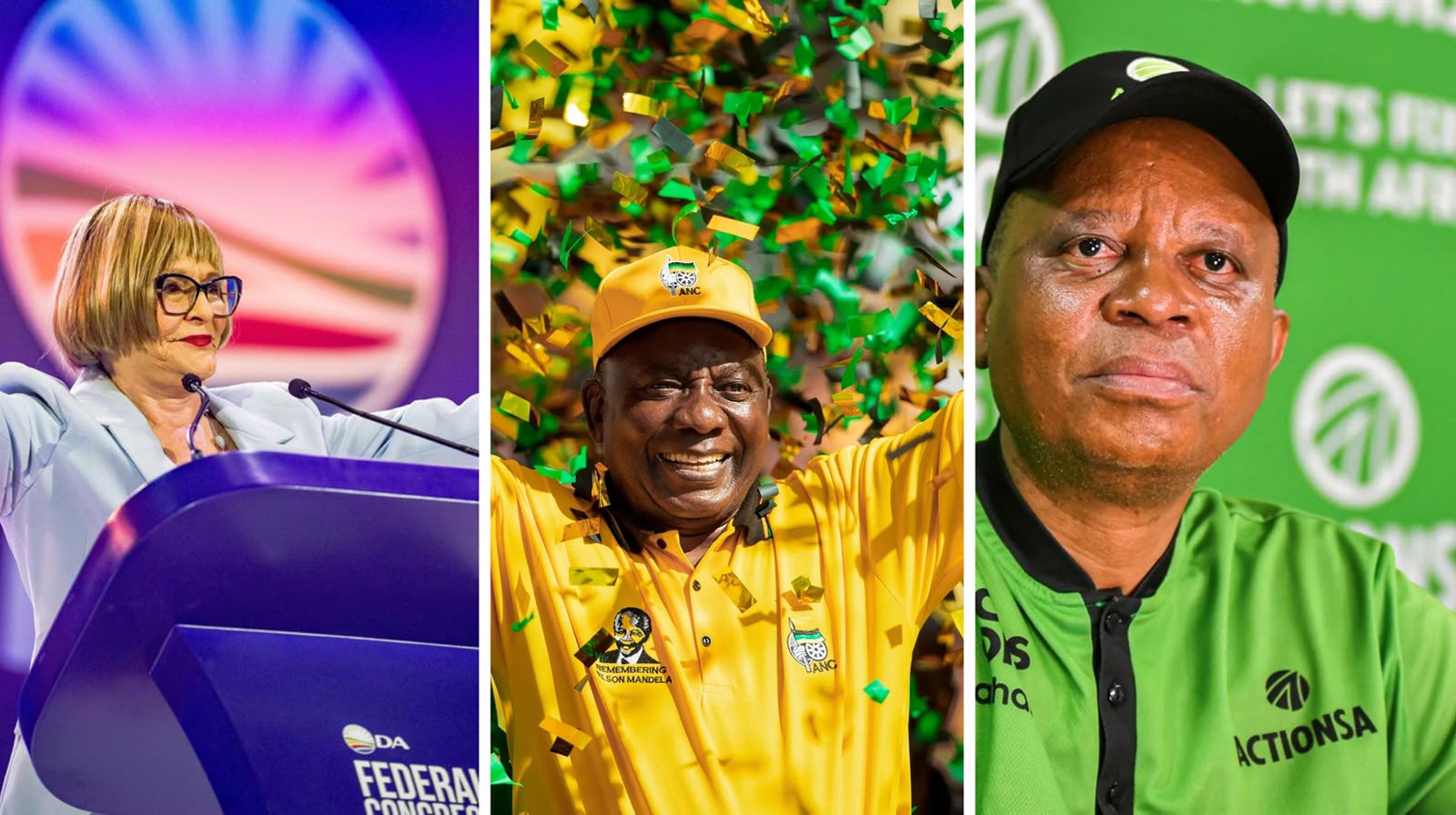
With the 2026 local government elections approaching, many experts have predicted which party is likely to win more votes.
While these are just predictions based on research, they do not necessarily reflect the real outlook of what the outcome would actually look like, especially for the bigger parties.
It is also important to note that in some metros, no party will get an outright majority, which could enforce yet another coalition government.
According to a News24/SABI poll, the ANC would remain the country’s largest party if local government elections were held now, with support at 31.6%.
This is a 14% decrease in comparison to its 2021 local government election performance.
The DA is polling at 25.2%, narrowing the gap with the ANC to just over five percentage points, while the MK Party is on 14.7%.
The survey also found that the DA leads in Johannesburg, Cape Town and Tshwane, while the MK Party tops support in eThekwini with 43.4%.
The poll was conducted among 5,001 registered voters.
Another coalition government in Gauteng?
Political analyst Dr Levy Ndou says there is a high chance of another coalition in both the City of Tshwane and Johannesburg.
“It will be difficult to tell how these coalitions are going to be arranged because what we have learnt from 2016 is that when parties go into a coalition, there’s no principle that is set, it is not about any ideology, it is about the convenience at that time,” he said.
Ndou says it is hard to tell how parties are going to perform in these elections.
“What we also hear is that all parties are saying they want to go for an outright majority and when any party says that, they are actually indirectly encouraging other parties to do more so that such parties do not get an outright majority.”
He says the reason metros are seeing a lot of coalition governments is based on the fact that other political parties are putting a lot of effort into ensuring that they go all out to convince people to vote for them.
“Coupled with the level of dissatisfaction on the ANC, that gives a good chance for other political parties and independents to occupy the space.”
It remains to be seen which party will lead in which metro, and whether voters will give any of the major parties enough support to secure an outright majority.
South Africans head to the polls on 04 November 2026.
Meanwhile, the African National Congress (ANC) says it is confident that it will emerge victorious in its fight against the Electoral Commission (IEC) over the exclusion of at least 181 ANC candidates from the upcoming elections.
The matter is set to be heard by the Con Court later this week. This follows the Electoral Court’s decision to dismiss the ANC’s application to have the candidates reinstated for the 4 November local government elections.
The party argues that candidate information was captured on the IEC’s online system before the 28 August deadline, but administrators were unable to complete the final submission process.
However, the IEC told the Electoral Court that its audit records show no system activity in two of the six municipalities at the centre of the dispute.
READ NEXT: