Katlego Sekhu
From a security guard’s post in Estcourt to the boardrooms of the Consumer Goods Council and GS1 South Africa, Tyikwe’s rise was never part of a plan

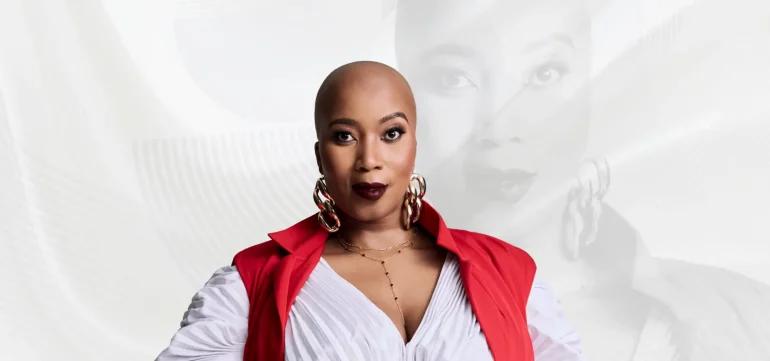
Zinhle Tyikwe dreamt of becoming a teacher. Instead, she became the chief executive of two organisations that touch nearly every South African’s daily life: the Consumer Goods Council of South Africa, representing retailers and manufacturers behind well over a trillion rand of the economy, and GS1 South Africa, the body behind the barcode on every product on every shelf.
Speaking on Kaya Breakfast‘s Big Moves segment recently, Tyikwe traced a path that started far from any executive suite. Growing up in KwaZulu-Natal, she did her in-service HR training at a Nestlé factory in the area, following in the footsteps of her father, who had worked there before his passing in 1989. When her internship ended, and no permanent post was available, she took the only opening on offer.
“There’s a job for being a security guard,” she says. “It’s better than staying at home. So I continue doing the work.”
It was a job she took seriously. Asked directly whether she was strict about who she let through the gate, she did not hesitate. “Otherwise you get fired,” she says. “If you let someone in without proper authorisation or verification, and then something goes wrong, you are absolutely in big trouble.”
That stint as a security guard, watching the factory floor and its cameras for anything out of place, would later feed directly into a career fighting the same instincts at industry scale, only now against organised crime syndicates rather than opportunistic pilferage.
The relationships that got her out
Tyikwe is clear that her exit from security work did not come from a plan. It came from the relationships she had built as an intern, long before she needed them. “The relationships that I built when I was in Nestle as an intern, that’s what helped me to get out of that role,” she says.
That thread, doing the unglamorous work in front of you and trusting that it opens doors later, runs through the rest of her account of her career. Asked what kept her going through the periods when the right job wasn’t coming, she was candid. “No one knows what they’re doing,” she says. “You just get in there and you get it done and you succeed. So imagine we all say we fake it till we make it. I promise you no one knows what they’re doing.”
Leading a sector she never set out to run
Tyikwe took the call to lead the Consumer Goods Council of South Africa in 2022, stepping into a sector that employs more than 3 million South Africans, roughly one in every five working people in the country. She did not describe it as a natural fit for how she saw herself.
She spoke about leadership through what she called her superpower: knowing when not to fight. “I don’t need to go there fighting all the time and trying to pretend like I’ve got everything in control,” she says. “Sometimes I don’t.” She credited her board chairpersons, Gareth Ackerman and Joanne Foster, with creating space for that honesty. “I’m able to say to them, this is my challenge, and they don’t judge me.”
Of her roughly 35-member board, she counted only three other women. Her approach to leading in that environment, she says, is not to perform authority but to state clearly what she needs. “I just need to show up and say, this is what I want.”
She traced her leadership style back to her HR background. “We lead through people,” she says. “You’re never going to achieve anything if you do not have the support of your employees.”
The barcode, the boardrooms, and the criminal underworld behind both
Much of Tyikwe’s current work sits at the intersection of trade, technology and crime. She described a marked shift in the retail crime landscape since she joined the industry: from straightforward shoplifting to organised syndicates, some involving employees using customers’ cards for online purchases, and a growing problem of illicit online gambling operations that route money out of the country without paying local tax.
“Let’s not buy illicit products,” she says. “Illicit and counterfeit products are huge.” She urged consumers to stay alert with their cards and their spending, while acknowledging the financial pressure that drives some toward illicit gambling platforms.
On the industry’s biggest current project, she pointed to the shift from linear barcodes to GS1-powered 2D barcodes, which will carry more information, including country of origin, to close loopholes like “round tripping,” where products declared for export end up back on South African shelves. GS1 South Africa is also supporting the rollout of barcoding systems in Namibia, Kenya, Tanzania, Angola and the DRC, with an eye on wider uptake across the African Continental Free Trade Area, where she noted only around a third of African countries are currently covered.
Asked, given how much data a barcode can hold, whether human beings should ever be barcoded, she was unequivocal. “We’re not gonna brand human beings. That’s not the direction we’re going.” She added, half-joking, that GS1 has permanently blocked the number 666 from ever being issued as a barcode.
Outside the boardroom
For all the ground she covers professionally, Tyikwe described a small, protected personal life. “I sleep, I promise you my sleep is so precious these days,” she says. “I go to spas when I can because I’m not big on friends. I’ve got very few friends that I have. But I’m big on family.”
She closed with a line she credited to Black Coffee: trust your dopeness. “Often we don’t do that,” she said.
To hear the full discussion, listen to the podcast.
Read Next: South Africa is losing 6000 teachers a year, and parents are feeling it in the classroom