

fb

SA schools up in smoke by vaping crisis, study finds

By Lukholo Mazibuko at The Citizen
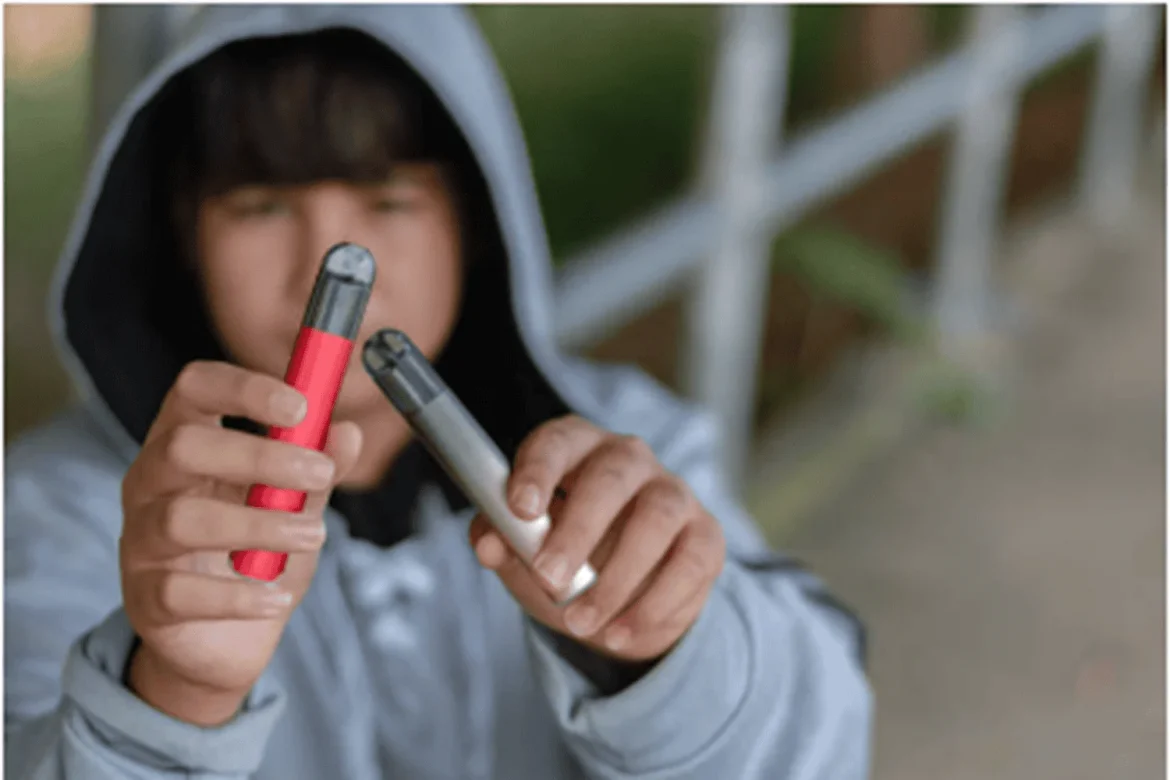
SA schools up in smoke by vaping crisis, study finds
Image: iStock
  • A major study of over 25 000 students across 52 schools found vaping is widespread in South African fee-paying high schools, with 16.8% currently vaping and 36.7% having tried it, making it more common than cannabis, cigarettes, or hookah.
  • Many student vapers show clear signs of addiction, including daily use, nicotine dependence, and reliance on vaping to cope with stress, anxiety, and social pressures.
  • Vaping is often linked to other substance use (cannabis and cigarettes), while weak regulation and targeted marketing have fuelled the crisis, prompting urgent calls for stricter laws and public health action.

A major new study involving over 25 000 students has sounded the alarm on a growing public health crisis in South Africa’s fee-paying high schools.

The research led by Professor Richard van Zyl-Smit reveals that e-cigarettes (vapes) have become the dominant inhaled substance among adolescents, often acting as a “gateway” or companion to cannabis and tobacco.

The study published in the South African Medical Journal (SAMJ), which surveyed 52 schools across eight provinces, found that 16.8% of students, nearly one in six, are current vapers.

36.7% of students reported having ever tried a vaping product.

This significantly outpaces the use of cannabis (5.1%), hookah (3.2%), and traditional cigarettes (2.1%).

Addictive patterns of student vapers

Among those who are current vapers, the study found addictive patterns from the vapers.

38.3% reported vaping every day, and more than half of students reported vaping four or more days per week.

88.1% of pupils reported using vapes that contain nicotine.

47% reported vaping within the first hour after waking up. 11.8% of students indicated that they cannot get through the school day without vaping.

And finally, 24.9% indicated that waiting a long time before they can vape makes them feel anxious or angry.

Why vape?

The study found that adolescents continue to vape to manage their emotional well-being and perceived physical needs.

Many young users turn to vapes to cope with stress, anxiety, and depression, while others use them to improve their body image, control their weight, or help them sleep.

Over time, these behaviours often evolve into a deep-seated dependency, as habit formation and addiction make it increasingly difficult for individuals to stop.

Social influence and peer dynamics play a major role, alongside environmental factors such as ease of access and general boredom.

Furthermore, an information gap persists where a lack of awareness or infrequent casual use leads many students to continue vaping simply because they want to, often without fully understanding the long-term health consequences.

Many students use vaping as a tool for enjoyment, exploration, and harm reduction.

They seek out the physical sensations, diverse flavours, and recreational pleasure associated with e-cigarettes to satisfy their curiosity.

Simultaneously, some adolescents view vaping as a substitution strategy, using it to stay off traditional cigarettes, reduce their alcohol consumption, or minimise other harmful addictive behaviours.

The ‘dual-use’ trap

Perhaps the most striking finding is that vaping is rarely an isolated habit. Researchers discovered a massive overlap between e-cigarettes and other substances:

  • 81.2% of cigarette smokers also vape;
  • 71.8% of cannabis users also vape;
  • 34.3% of all vapers are “dual users,” meaning they use at least one other inhaled substance.

“These patterns suggest that adolescent vaping is not just isolated experimentation, but potentially indicates entrenched multi-substance use,” the study notes.

The ‘co-ed’ factor and ageing risks

The research also highlighted specific vulnerabilities based on school structure and age.

Students in co-educational (mixed-gender) schools showed significantly higher odds of cannabis use compared to those in all-boys schools.

Experts believe the social networks in mixed environments may normalise substance use more quickly.

Substance use increased significantly as students progressed from Grade 8 to Grade 12, peaking as older teens gained more autonomy and access to older social circles.

What needs to be done?

While tobacco is strictly governed by the 1993 Tobacco Products Control Act, e-cigarettes remain largely unregulated in South Africa.

This lack of oversight has allowed for aggressive social media marketing and the sale of flavoured products that reduce the perceived harm of vaping among youth.

The researchers are now calling for the urgent enactment of the 2018 Control of Tobacco Products and Electronic Delivery Systems Bill to curb marketing aimed at children.

The dangerous myth that “vaping is safe” also needs to be debunked.

“The dominance of vaping among sampled students mirrors global trends,” the report concludes, “but the prominent role of vaping in patterns of dual use underscores the urgent need to prioritise youth e-cigarette use in both policy and public health responses,” it said.

This article was republished from The Citizen. Read the original here.

READ NEXT: New UJ study reveals how SA can dramatically improve STEM outcomes


Don’t miss out on the latest local news, interviews and competitions.
Interests

Similar posts

  • MORE ARTICLES
  • QUICK LINKS

    UpComing Shows

    DownLoad Our Mobile App

    Privacy Policy

    THIS PRIVACY STATEMENT FORMS PART OF KAYA 959’S TERMS OF USE POLICY. IF YOU DO NOT AGREE WITH ANY TERM OF THIS PRIVACY STATEMENT, YOU MUST CEASE YOUR ACCESS OF THIS WEBSITE IMMEDIATELY. 

    POPIA ActTo promote the protection of personal information processed by public and private bodies; to introduce certain conditions so as to establish minimum requirements for the processing of personal information; to provide for the establishment of an Information Regulator to exercise certain powers and to perform certain duties and functions in terms of this Act and the Promotion of Access to Information Act, 2000; to provide for the issuing of codes of conduct; to provide for the rights of persons regarding unsolicited electronic communications and automated decision making; to regulate the flow of personal information across the borders of the Republic; and to provide for matters connected therewith.

    RECOGNISING THAT—

    • section 14 of the Constitution of the Republic of South Africa, 1996, provides that everyone has the right to privacy;
    • the right to privacy includes a right to protection against the unlawful collection, retention, dissemination and use of personal information;
    • the State must respect, protect, promote and fulfil the rights in the Bill of Rights;

    AND BEARING IN MIND THAT—

    • consonant with the constitutional values of democracy and openness, the need for economic and social progress, within the framework of the information society, requires the removal of unnecessary impediments to the free flow of information, including personal information;

    AND IN ORDER TO—

    • regulate, in harmony with international standards, the processing of personal information by public and private bodies in a manner that gives effect to the right to privacy subject to justifiable limitations that are aimed at protecting other rights and important interests,
    1. Definitions and Interpretation

    1.1.“Personal Information” means information relating to an identifiable, living, natural person and where it is applicable, identifiable, existing juristic person, including all information as defined in the Protection of Personal Information Act 4 of 2013. 

    1.2  Parliament assented to POPIA on 19 November 2013. The commencement date of section 1Part A of Chapter 5section 112 and section 113 was 11 April 2014. The commencement date of the other sections was 1 July 2020 (with the exception of section 110 and 114(4). The President of South Africa has proclaimed the POPI commencement date to be 1 July 2020.

     
    1.3. “Processing” means the creation, generation, communication, storage, destruction of personal information as more fully defined in the Protection of Personal Information Act 4 of 2013.  

    1.4. “You” or the “user” means any person who accesses and browses this website for any purpose. 

    1.4. “Website” means the website of the KAYA 959 at URL www.kaya959.co.za or such other URL as KAYA 959 may choose from time to time.   

    1. Status and Amendments

    2.1. KAYA 959 respects your privacy. This privacy policy statement sets out KAYA 959’s information gathering and dissemination practices in respect of the Website. 

    2.2. This Privacy Policy governs the processing of personal information provided to KAYA 959 through your use of the Website. 

    2.3. Please note that, due to legal and other developments, KAYA 959 may amend these terms and conditions from time to time.  

    1. Processing of Personal Information

    3.1. By providing your personal information to KAYA 959 you acknowledge that it has been collected directly from you and consent to its processing by KAYA 959. 

    3.2. Where you submit Personal Information (such as name, address, telephone number and email address) via the website (e.g. through completing any online form) the following principles are observed in the processing of that information: 

    3.2.1. KAYA 959 will only collect personal information for a purpose consistent with the purpose for which it is required. The specific purpose for which information is 
    collected will be apparent from the context in which it is requested. 

    3.2.2. KAYA 959 will only process personal information in a manner that is adequate, relevant and not excessive in the context of the purpose for which it is processed. 

    3.2.3. Personal information will only be processed for a purpose compatible with that for which it was collected, unless you have agreed to an alternative purpose in writing or KAYA 959 is permitted in terms of national legislation of general application dealing primarily with the protection of personal information. 

    3.2.4. KAYA 959 will keep records of all personal Information collected and the specific purpose for which it was collected for a period of 1 (one) year from the date on which it was last used. 

    3.2.5. KAYA 959 will not disclose any personal information relating to you to any third party unless your prior written agreement is obtained or KAYA 959 is required to do so by law. 

    3.2.6. If personal information is released with your consent KAYA 959 will retain a record of the information released, the third party to which it was released, the reason for the release and the date of release, for a period of 1 (one) year from the date on which it was last used. 

    3.2.7. KAYA 959 will destroy or delete any personal information that is no longer needed by KAYA 959 for the purpose it was initially collected, or subsequently processed. 

    3.3. Note that, as permitted by the Electronic Communications and Transactions Act 25 of 2002, KAYA 959 may use personal information collected to compile profiles for statistical purposes. No information contained in the profiles or statistics will be able to be linked to any specific user.    

    1. Collection of anonymous data

    4.1. KAYA 959 may use standard technology to collect information about the use of this website. This technology is not able to identify individual users but simply allows KAYA 959 to collect statistics. 

    4.2. KAYA 959 may utilise temporary or session cookies to keep track of users’ browsing habits. A cookie is a small file that is placed on your hard drive in order to keep a record of your interaction with this website and facilitate user convenience. 

    4.2.1. Cookies by themselves will not be used to identify users personally but may be used to compile identified statistics relating to use of services offered or to provide KAYA 959 with feedback on the performance of this website. 

    4.2.2. The following classes of information may be collected in respect of users who have enabled cookies: 

    4.2.2.1. The browser software used; 

    4.2.2.2. IP address; 

    4.2.2.3. Date and time of activities while visiting the website; 

    4.2.2.4. URLs of internal pages visited; and 

    4.2.2.5. referrers. 

    4.3. If you do not wish cookies to be employed to customize your interaction with this website it is possible to alter the manner in which your browser handles cookies. Please note that, if this is done, certain services on this website may not be available. 

    1. Security

    5.1. KAYA 959 takes reasonable measures to ensure the security and integrity of information submitted to or collected by this website, but cannot under any circumstances be held liable for any loss or other damage sustained by you as a result of unlawful access to or dissemination of any personal information by a third party. 

    1. Links to other websites

    6.1. KAYA 959 has no control over and accepts no responsibility for the privacy practices of any third party websites to which hyperlinks may have been provided and KAYA 959 strongly recommends that you review the privacy policy of any website you visit before using it further. 

    1. Queries

    7.1. If you have any queries about this privacy policy please contact us by emailing [email protected]