Zuko Komisa

In a move that has stunned the burgeoning South African cannabis industry, the government has enacted an immediate ban on the sale, importation, and manufacture of all cannabis-infused food products, hemp seed oil, and hemp seed flour.
On the 7th of March, the Gazetted regulations, operating under the Foodstuffs, Cosmetics, and Disinfectants Act (1972), have triggered widespread confusion and concern among entrepreneurs and consumers alike.
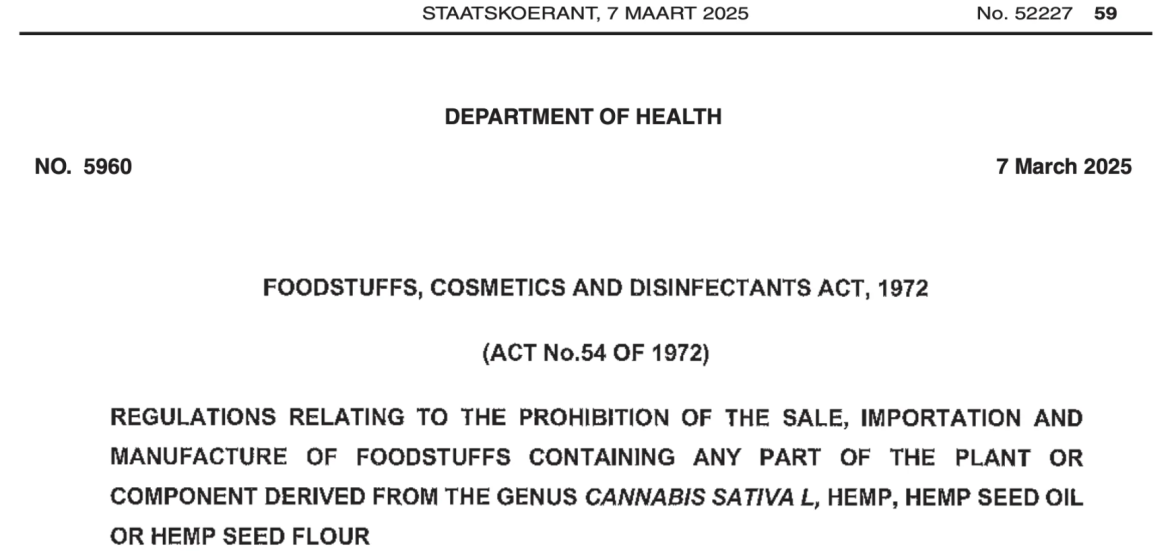
The sweeping prohibition covers a range of popular products, including hemp seed oil, hemp seed flour, and THC-infused edibles, which were previously gaining traction in the market.
The ban is now legally binding and enforceable, with severe penalties for non-compliance.
Individuals and businesses found to be selling, manufacturing, or importing these products face significant fines and potential imprisonment.
The sudden ban on cannabis edibles has left many industry stakeholders scrambling for clarity and direction, highlighting the complex and evolving regulatory landscape surrounding cannabis in South Africa.
While many initially interpreted the ban as a complete prohibition on cannabis, the government has clarified that this is not the case.
Private cultivation and use of cannabis, as established by the 2018 Constitutional Court ruling and the Cannabis for Private Purposes Bill (2024), remains legal.
READ NEXT: Glen Lewis reflects on his name and the family conflict behind it




![[WATCH PODCAST] Mr. Mercedes drops highly anticipated project, joining forces with Thabo Smol and Spice Drums](https://www.kaya959.co.za/wp-content/uploads/2026/10/KAYA-959-THUMBNAILS-79-100x100.png)
![[WATCH PODCAST] Tumisho Masha commands the screen as colonel Jack Phatudi in M-Net’s new must-watch series](https://www.kaya959.co.za/wp-content/uploads/2026/10/KAYA-959-THUMBNAILS-78-100x100.png)