
By: Natasha Archary
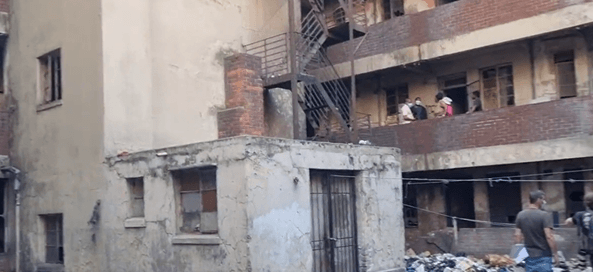
The South African Institute for Black Property Professionals (SAIBPP) is gravely concerned about the high costs associated with the ongoing hijacked buildings in the country’s CBDs.
Kululwa Muthwa, CEO of SAIBPP joins Gugulethu Mfuphi on Kaya Biz highlighting the four issues that need attention regarding hijacked buildings.
Building hijackings cost South Africans in many ways, including an increase in decay, drug abuse, and elements of criminality in world-class cities like eThekwini, Ekurhuleni, Tshwane and Johannesburg.
“When we look at the recent fire that broke out in the JHB CBD, which claimed the lives of over 70 people, it highlights the challenges and complexities regarding these building hijackings.
The impact that it has on business, and the cost of raising finance in an area that would be considered risky business by potential funders, the problem has a number of layers, and doesn’t only impact the cities or the people that are occupying these buildings, but it also affects the opportunity to invest and do business in the city.”
Kululwa said SAIBPP has an idea of how many buildings are hijacked in Johannesburg but shared that the magnitude of the problem is multi-layered, including illegal immigrants and desperate tenants trying to find greener pastures in CBDs.
SAIBPP views the act of criminality as a direct attack on the transformation agenda as it creates yet another barrier to already limited investment opportunities in inner city property developments.
The institute state that its areas of contention are focused on the pillars of legislative reform, access to finance, spatial transformation and inclusive development, and property ownership and entrepreneurship.
Kululwa highlighted four issues that need attention with regards to hijacked buildings:
- Ownership – hijackings entrench the lack of property ownership by black people in the inner cities
- Management control – the lack of property ownership means that black practitioners are excluded from opportunities to manage properties in the inner city, including rental administration, and asset and facilities management
- Preferential procurement – members of SAIBPP continue to be marginalised as property development procurement opportunities continue to be taken up by a select few groupings of historically privileged players
- Skills development – Without ownership and management control of inner city developments, opportunities to empower and train the next generation of black property practitioners to take over inner city developments will be missed
Listen to the conversation on Kaya Biz:
Also read: “Talking about people’s business unhinged” – Your not-so-toxic traits that rub people the wrong way
![[WATCH PODCAST] Kabelo Mabalane teams up with The Arrows for infectious comeback track ahead of 10th studio album](https://www.kaya959.co.za/wp-content/uploads/2026/10/KAYA-959-THUMBNAILS-1170x658.png)

![[WATCH PODCAST] Kabelo Mabalane teams up with The Arrows for infectious comeback track ahead of 10th studio album](https://www.kaya959.co.za/wp-content/uploads/2026/10/KAYA-959-THUMBNAILS-100x100.png)