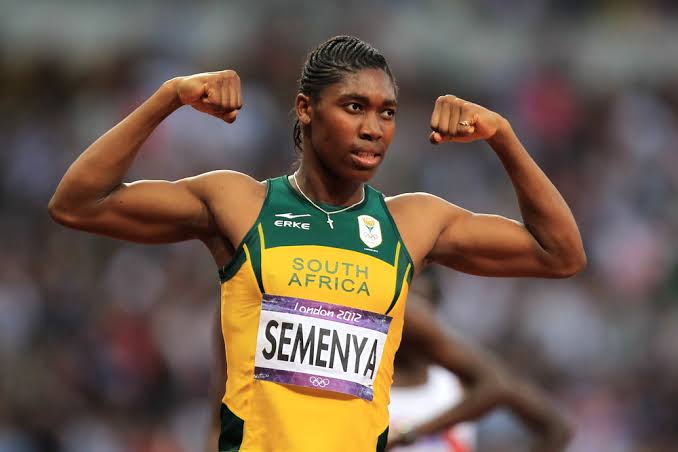
Caster Semenya wins an appeal against testosterone rules at the European Court of Human Rights.
Caster Semenya, a two-time Olympic gold medalist, has won in a human rights court challenge on the regulations governing testosterone in female athletes.
The South African 800m gold medalist was found to have experienced discrimination, according to the European Court of Human Rights.
She won the 800m gold at the 2012 and 2016 Olympics, but the testosterone regulations have prevented her from competing in that race since 2019, therefore she was unable to defend her title in Tokyo.
Point of View with Phemelo Motene spoke to the UN Special rapporteur on the right to health and Medical Doctor, Tlaleng Mofokeng and Commissioner at the SA Human Rights Commission, Andre Gaum.
Listen to the full conversation:
Semenya has always identified as female while being officially gendered as a woman since birth, but new rules put out by the organization that oversees track and field in 2019 required her to artificially lower her natural testosterone in order to participate in women’s contests.
Also Read: Eskom implements Stage 4 loadshedding on bitter cold snow day
Semenya is aiming to participate at next year’s Olympics in Paris.
READ THE FULL RULING HERE:
Judgment Semenya v. Switzerland – Discrimination against international-level athlete who was not afforded sufficient procedural safeguards when challenging World Athletics regulationshttps://t.co/b1iSVzZ9fM#ECHR #CEDH #ECHRpress pic.twitter.com/VJWCPGdZaC
— ECHR CEDH (@ECHR_CEDH) July 11, 2023
World Athletics has responded in a statement to the judgement by the European Court of Human Rights.
“We remain of the view that the DSD regulations are a necessary, reasonable and proportionate means of protecting fair competition in the female category as the Court of Arbitration for Sport and Swiss Federal Tribunal both found, after a detailed and expert assessment of the evidence.” read the statement.
READ NEXT: WATCH: Emotional video of Lady reuniting with twin brother years after they were separated
![[WATCH PODCAST] Kabelo Mabalane teams up with The Arrows for infectious comeback track ahead of 10th studio album](https://www.kaya959.co.za/wp-content/uploads/2026/10/KAYA-959-THUMBNAILS-1170x658.png)
![[WATCH PODCAST] Kabelo Mabalane teams up with The Arrows for infectious comeback track ahead of 10th studio album](https://www.kaya959.co.za/wp-content/uploads/2026/10/KAYA-959-THUMBNAILS-100x100.png)