
By: Natasha Archary
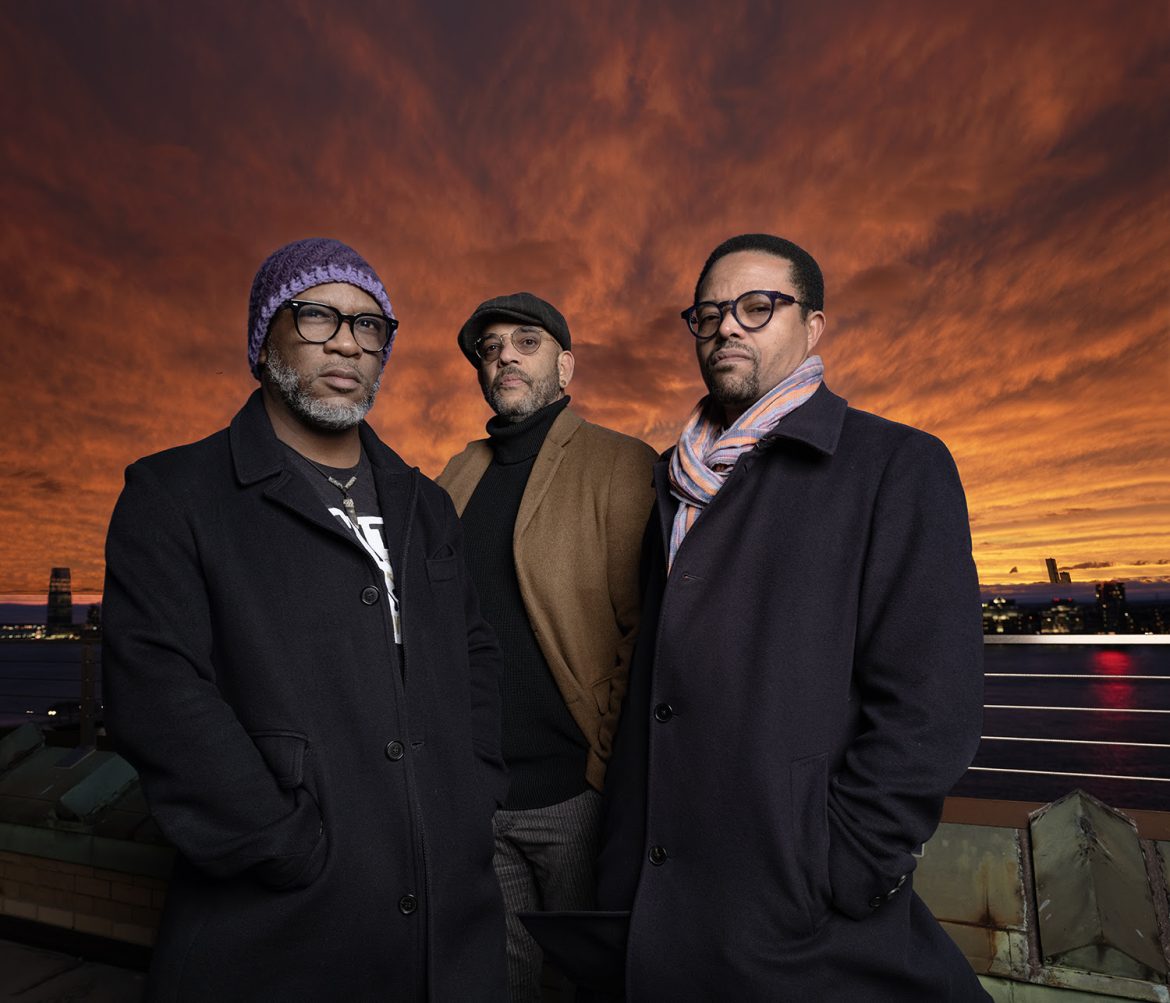
American Jazz Drummer Nasheet Waits joins Brenda Sisane on The Jazz Standard to talk about the reconvergance of Tarbaby, the three-man band that features Orrin Evans and Eric Revis.
With Evans on the piano, bassist Revis stretching the jazz fabric without ripping it apart and Waits bringing up the rear on drums, Tarbaby is a provocative yet impeccable trio.
Waits, the son of percussionist Freddit Waits shares with Brenda that he always returns to Tarbaby because of the level of fun they have together.
“Truly we are brothers. I consider Orrin and Revis my brothers, you know they’ve aided me and I hope I’ve aided them along their life path.
Ours is a story of success in spite of the pressure and environment from which we find ourselves in.
Which we’ve established is not wholly supportive but even within that structure, as black artists in America, we have been able to find beauty, support, unity and strength.
Even with that, we manage to have fun at the same time, so it’s not all heavy all the time.”
Nasheet Waits on The Jazz Standard
The 53-year old drummer said he tried to imitate his father from a young age, emulating his music, but finding his individuality was never a problem.
Nasheet Waits said it was time that the trio got together as a collective and complete the live performance which people were asking and waiting for.
Breaking down Tarbaby
The social connotation of Tarbaby is a lot deeper than being primarily about aesthetics.
Generally when somebody says something about a tar baby, it’s something you don’t want to touch. It’s a sticky situation that wants to be avoided.
We’re not afraid to address those sticky situations. It could be with regard to race or culture or economics, or even creativity or music.
That was another thing that we were initially talking about, this movement in the music where everything was so overintellectualized.
The more difficult it was, then the more appealing it was. And our feeling was, that’s not necessarily so. We love music like that. Some of the music we play is extremely hard, but that’s not the focus of the group. The focus is the communal effort, and that communal effort not only in the group, but between the listeners, too.”
Listen to the conversation on The Jazz Standard:
Also read: Brenda Sisane celebrates jazz giant Khaya Mahlangu’s 70th Birthday




![[WATCH PODCAST] Mr. Mercedes drops highly anticipated project, joining forces with Thabo Smol and Spice Drums](https://www.kaya959.co.za/wp-content/uploads/2026/10/KAYA-959-THUMBNAILS-79-100x100.png)
![[WATCH PODCAST] Tumisho Masha commands the screen as colonel Jack Phatudi in M-Net’s new must-watch series](https://www.kaya959.co.za/wp-content/uploads/2026/10/KAYA-959-THUMBNAILS-78-100x100.png)