By: Natasha Archary
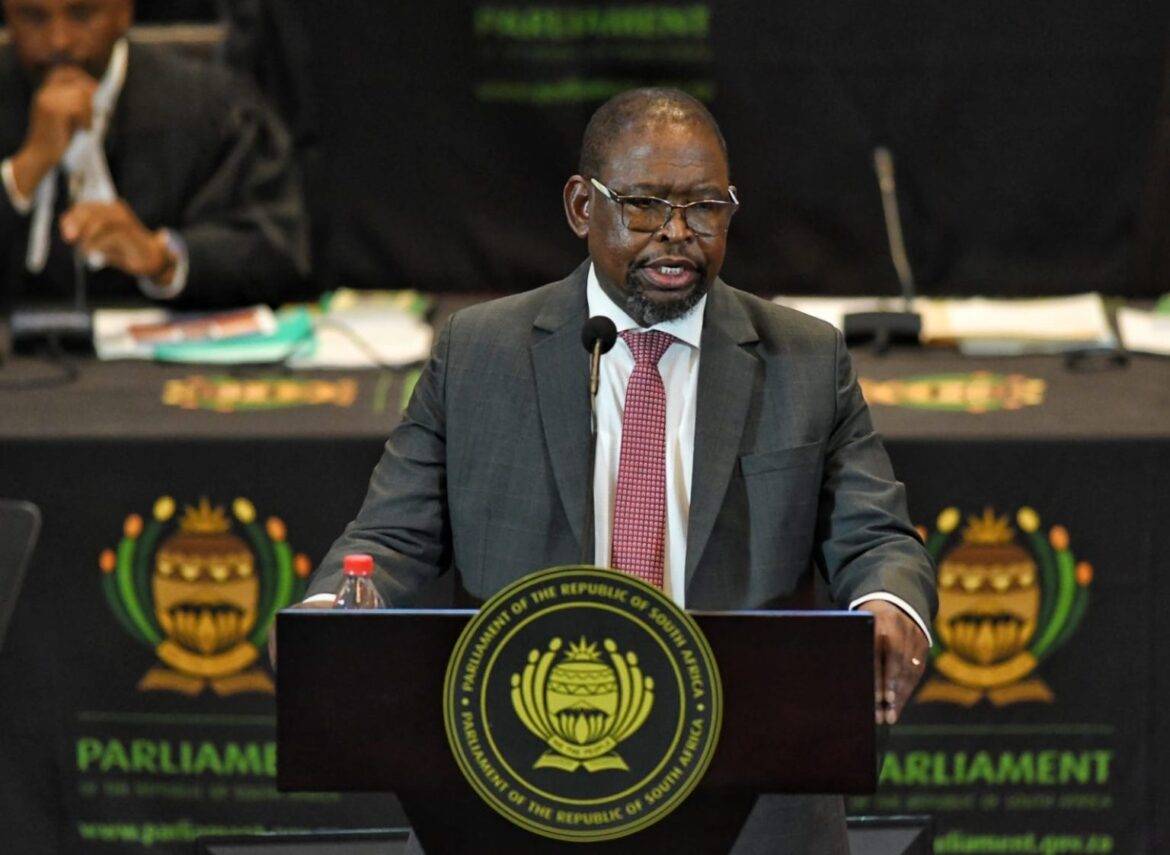
Finance Minister Enoch Godongwana tabled his Medium-Term Budget Policy Speech (MTBPS) on Wednesday, 01 November, highlighting three areas of focus.
These include:
- Stablizing public finances while maintaining support for the most vulnerable and protecting front-line services
- Fast-tracking growth-enhancing reforms. This includes a new financing mechanism for large infrastructure projects
- Reconfiguring the structure and size of the state, while strengthening its capacity to deliver quality public services
Godongwana said while global growth forecasts slowed from 3.5% in 2022 to 3% in 2023, a weaker growth outlook for China, lower commodity prices, and the risk that the US interest rates will remain high, means the global economic environment is less supportive of SA’s growth prospects.
“Government spending exceeded revenue since the 2008 Global Financial crisis.
These rising annual budget deficits have reached an extent where the government will borrow an average of R553 billion per year over the medium term.
As a result, gross debt rises from R4.8 trillion in 2023/24 to R5.2 trillion in the next financial year.
By 2025/26, it will exceed the R6 trillion mark. We not expect gross government debt to stabilise at 77% of GDP by 2025/26.
This is higher than the level we forecast in February. Over the next 3-years, debt-service costs as a share of revenue will increase from 20.7% in 2023/24 to 22.1% in 2026/27.
The cost, or interest of this debt, for next year alone, amounts to around R385.9 billion.
Over the Medium Term Expenditure Framework (MTEF), interest costs amount to R1.3 trillion. It is important, however, to point out that our debt levels and rising debt service costs are not problems in and of themselves.
Our challenge is that rising debt services costs are crowding out important social spending, and our economy has not grown fast enough to support increasing expenditure or our current debt levels.
Therefore, this policy statement sets out our strategy for avoiding a fiscal crisis and preventing the build-up of systemic risks to the economy.”
Finance Minister Enoch Godongwana
The government has made a strategic decision to allocate funds to sectors that are personnel-heavy, such as Health, Education, and Police Services.
Additional funding of R24 billion this year, and R74 billion over the medium term will be used to fund the 2023/24 wage increase and the associated carry-through costs in these sectors.
A further R34 billion is allocated to extend the COVID-19 Social Relief of Distress Grant by another year.
Over the medium term, a provisional allocation is retained while a comprehensive review of the entire social grant system is finalised.
Duma Gqubule, research associate at the Social Policy Initiative joins Gugulethu Mfuphi on Kaya Biz to unpack what this means.
Listen to the conversation on Kaya Biz:
We value your feedback:
[vfb id=97]
Also read: Eskom recorded a R24 billion loss over the last financial year




![[WATCH PODCAST] Mr. Mercedes drops highly anticipated project, joining forces with Thabo Smol and Spice Drums](https://www.kaya959.co.za/wp-content/uploads/2026/10/KAYA-959-THUMBNAILS-79-100x100.png)
![[WATCH PODCAST] Tumisho Masha commands the screen as colonel Jack Phatudi in M-Net’s new must-watch series](https://www.kaya959.co.za/wp-content/uploads/2026/10/KAYA-959-THUMBNAILS-78-100x100.png)