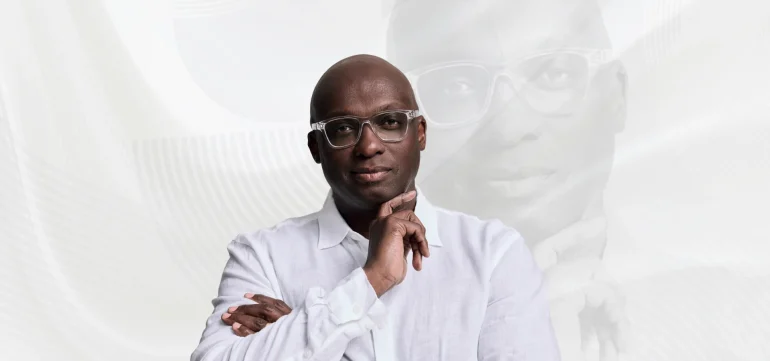
Political analyst Tessa Dooms weighs in on the ANC’s coalition rethink, the DA’s negotiations with ActionSA and the MK Party’s growing role in determining who governs South Africa’s hung metros.
By Mapaballo Borotho
Political analysts have warned that South Africa’s hung municipalities could face continued coalition instability, with parties potentially shifting alliances as local political interests change.
This comes as the African National Congress (ANC) has reportedly indicated that it is reconsidering its coalition stance with the Democratic Alliance (DA), including at national level.
Rivonia Circle director Tessa Dooms says this is one of the major outcomes to watch if the ANC follows through on its position.
She says the 14-day window for negotiations, alongside guidelines from the Department of Cooperative Governance, may not be enough to prevent a revolving door of mayoral leadership and shifting political partnerships.
“This means that ANC either sees their relationship with the DA as a risk because of how the constituency feels about it, and we know that from the 2024 elections, there were many people within the ANC that were unhappy with the DA as the coalition partner of choice,” said Dooms.
She explains that the ANC is likely making political calculations ahead of the 2029 elections, as it finds itself in a significantly weakened position.
“In the past two elections, the ANC dropped about 30 percentage points and it finds itself in a weak position as a negotiator and it also finds itself where in Johannesburg or other metros, they don’t have PR councillors, just ward councillors. So they are probably thinking of whether or not they are willing to go into a coalition with a stronger DA.”
DA and MK party coalition?
Dooms says one of the surprising developments in the coalition negotiations has been the DA reaching out to the uMkhonto weSizwe (MK) Party, despite previously describing the party as unconstitutional.
“The fact that the MK is not shutting the door to the party like the DA shows that they are trying to broker power in as many ways and as many places they possibly can, because they don’t want to end up just being a KZN regional party.”
She says the MK Party has often been associated with political instability, but believes this is not the full picture of the party, pointing to the unity it demonstrated during the recent local elections.
According to Dooms, the party appears to have learnt the importance of respecting its voters’ wishes and ensuring they feel represented, heard and seen.
“It might be chaotic but it has a lot of organisational capacity in its ranking file, membership and voter base. Them opening the door for coalitions for these other parties is the MK prioritising their voters base.”
DA’s fight with ActionSA?
Dooms says what may appear to be a position of strength for the DA, having emerged as the largest party in five metros, could actually be a position of weakness.
She explains that the party has not secured enough seats in these municipalities to negotiate and form governments without the support of other parties.
“They are looking for a substantive number of seats, and the irony of the Joburg situation is that the percentage that ActionSA got is exactly what the DA needs to get over the line.”
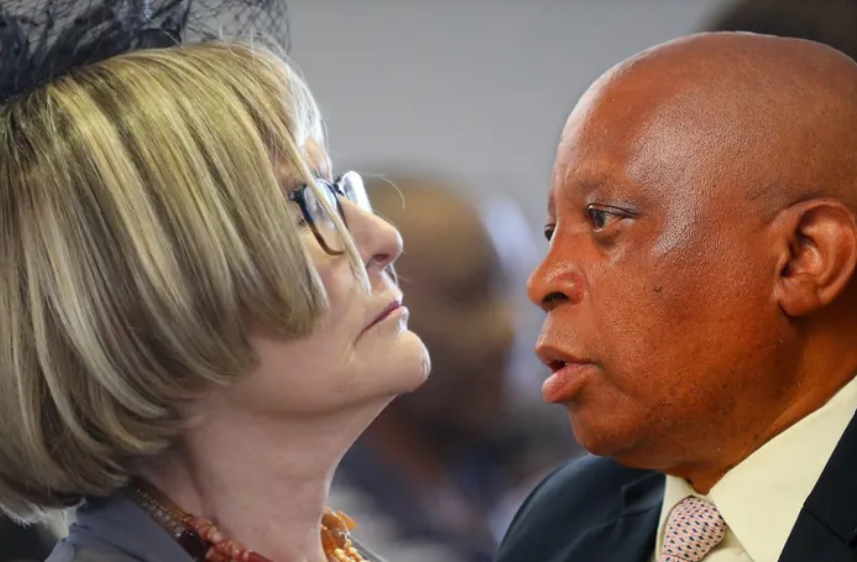
She says the DA’s 2026 local election campaign placed significant emphasis on personality politics, with the party building much of its Johannesburg campaign around Helen Zille’s mayoral ambitions.
According to Dooms, the party’s resources and public relations efforts were largely directed towards positioning Zille as its mayoral candidate.
“They sold the personality of Helen Zille, and this is what DA voters voted for. They voted for Helen.”
However, ActionSA has indicated that it is willing to work with the DA in Johannesburg, provided Zille does not become mayor.
ActionSA leader Herman Mashaba has consistently maintained that he campaigned for his party to keep Zille out of the mayoral office.
“Herman is holding a lot of the cards at this moment. I call Herman and the ActionSA in this election the super king maker. Herman is sitting in the City of Joburg with 40 seats, in Tshwane with 22%. ActionSA is not playing a small game.”
Mashaba is demanding that Zille and Tshwane mayoral candidate Cilliers Brink step aside to allow for any possibility of a coalition with the DA in the Gauteng metros.
If this happens, he said the DA can run Johannesburg and Ekurhuleni, with ActionSA governing Tshwane under mayor Nasiphi Moya.
This raises the question of whether the Democratic Alliance will sacrifice Zille and Brink to fix Johannesburg and Ekurhuleni, or whether it was a bridge too far.
The ANC’s fall from grace?
Dooms says one of the most significant developments in the 2026 local elections is not only the ANC’s decline, but also the DA’s limited growth despite the changing political landscape.
“It’s shocking that the ANC has fallen by 30% but the DA has failed to grow as a party. Because the DA in its national percentage is only 4% higher than it’s been in the last 10 years.
Maybe the ANC and the DA should go back to the drawing board and actually check if their projects are what South Africans are really looking for.”
Meanwhile, Zille has indicated that if she does not become Johannesburg’s mayor, she will return to Cape Town.
Listen to the podcast for the full conversation. Kaya 959 podcasts are available to download.
READ NEXT: