The ANC says it wants to focus on its collective “talent pool” and election campaign rather than individuals, but political analyst Angelo Fick has questioned whether the approach will resonate with voters.
By Mapaballo Borotho
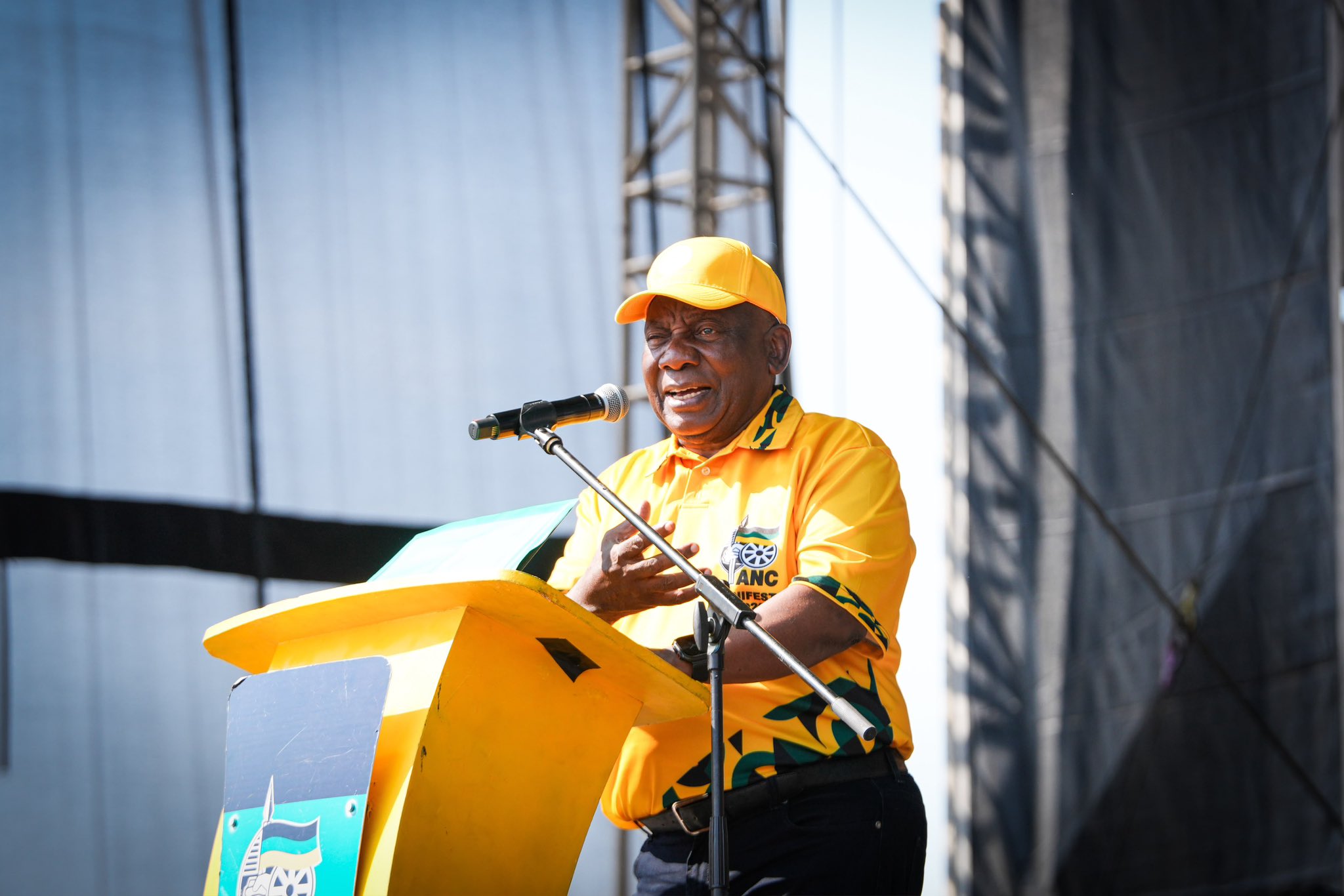
The ANC has launched its 2026 local government election manifesto, promising to fix struggling municipalities, improve service delivery, tackle corruption and reclaim hijacked buildings in the inner city, among other commitments.
But with its support falling to 45.59% in the 2021 local government elections and the party that was once the hope for many black South Africans failing to secure a majority in the 2024 national elections, the ANC is under pressure to turn familiar promises into action.
President Cyril Ramaphosa acknowledged the ANC’s shortcomings while using the phrase “clock it” to connect with younger voters.
The ANC says it will make safety more visible in communities over the next five years, arguing that communities cannot thrive when residents are afraid to use their streets, public transport and public facilities.
— Kaya News (@KayaNews) August 23, 2026
The party launched its election manifesto today in Riverside,… pic.twitter.com/XdGmVA30C8
Over the weekend, the party was expected to introduce its mayoral candidates for various municipalities. However, that was put on hold, with ANC national spokesperson Mahlengi Bhengu-Motsiri explaining the decision.
“The reason behind the decision not to unveil our mayoral candidates was informed by the fact that we wanted to show South Africans the talent pool from which we are going to draw specific mayors for certain cities and metros.
We are doing things the ANC way because our process has followed a process that other parties do not often follow,” she said.
Bhengu-Motsiri says the party’s immediate focus is on its campaign, which is not anchored around individuals but around the ANC as a brand and organisation.
“We will, at the appropriate time, unveil those who will be leading the cities should we be successful in our election fight,” she added.
She said the party’s focus, as approved by President Cyril Ramaphosa, is on winning as many wards as possible.
This would enable candidates to work and give their all, allowing the party to assess whether they could deliver when given the task of serving communities.
Bhengu-Motsiri also assured that there are no internal divisions within the party, saying that even if there were, the public would know because the ANC is one of the “transparent” parties in South Africa.
But what do political analysts say?
Political analyst Angelo Fick says he is not convinced that the ANC’s new approach to selecting mayoral candidates and ward councillors is necessarily effective.
“I sense that there’s always, in all political parties, what the party says is going to be the process and then the politicking that makes sure that the process does not have outcomes the party cannot deal with.
No political party would open up the process to such an extent that they cannot predict that there will be politically educated and sophisticated individuals that are chosen to lead,” he said.
He also emphasised that the trust the general public once had in the ANC and other political parties is not what it was 20 years ago.
“That is a deficit that the party is trying to combat, and while it is doing this, the Madlanga Commission plays out, people who were affected by the Marikana massacre, Life Esidimeni and the Limpopo textbook scandals, as well as disease outbreaks, water and electricity outages. A
ll of these issues are happening inside ANC-governed municipalities, and it is combating its own record,” he added.
Fick says the ANC’s manifesto is not enough to address the everyday experiences of South Africans.
Listen to the podcast for the full conversation.