

Africa-Asia Dialogues Senior Research Fellow Thembisa Fakude unpacks the factors driving the Ceuta migration crisis.
By Mapaballo Borotho
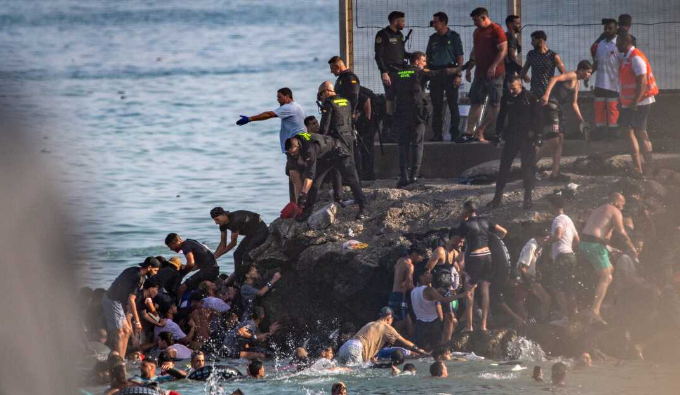
Ceuta is grappling with a humanitarian crisis after thousands of migrants from Morocco crossed into the territory, overwhelming the European country’s resources.
Other Moroccan migrants have already been returned to their home country; however, thousands remain in the enclave, with reception centres stretched beyond capacity and concerns growing over the rising death toll.
Phemelo Motene speaks to Africa-Asia Dialogues Senior Research Fellow Thembisa Fakude about what’s driving the crisis and its wider implications for migration and regional relations.
“Firstly, the correct way to put all of this is that these migrants moved to a Spanish colony in Africa. The talk has been that there are 69 000 migrants who moved to Spain, and that’s incorrect.
They were not anywhere close to Europe; they were still in Africa. This is a colony of Spain, Ceuta, which borders Morocco,” said Fakude.
Fakude says Spanish authorities believe they still own that piece of land because of a colonial mentality. He says there are many European countries that still believe they own territories that are far from their own countries.
“Americans are doing the same with Hawaii, so this is just another continuation of this colonial mentality. Reports suggesting that these migrants went to Spain are incorrect; they were still in Africa because they did not cross the Mediterranean into Spanish territory,” he said.
He says the migrant crisis was caused by certain social media posts suggesting that if people crossed to Ceuta, they would be transported to Spain, where there are better opportunities.
Like many other African countries, Morocco is also grappling with an unemployment crisis among young people, and desperate times lead to such situations.
Fakude says people are constantly looking for better economic opportunities because, in some parts of the African country, there is significant economic inequality.
He clarified that not all the migrants who crossed into Ceuta were Moroccan, but a majority of them were from Morocco.
“There are credible reports that authorities in Morocco decided to look the other way when all of this was happening. We still have not figured out the political reasoning behind this, but I think Moroccans are also beginning the process of retrieving Ceuta,” he added.
Listen to the podcast for the full conversation.
READ NEXT: