South Africa’s newest world champion is 13, self-funded, and just getting started.
Katlego Sekhu
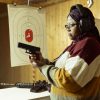
Last September, the IPSC World Shoot came to Stilfontein, South Africa, drawing 1,600 competitors from 86 countries. In the Super Junior Division, one South African beat every one of them. Olebile walked away a world champion.
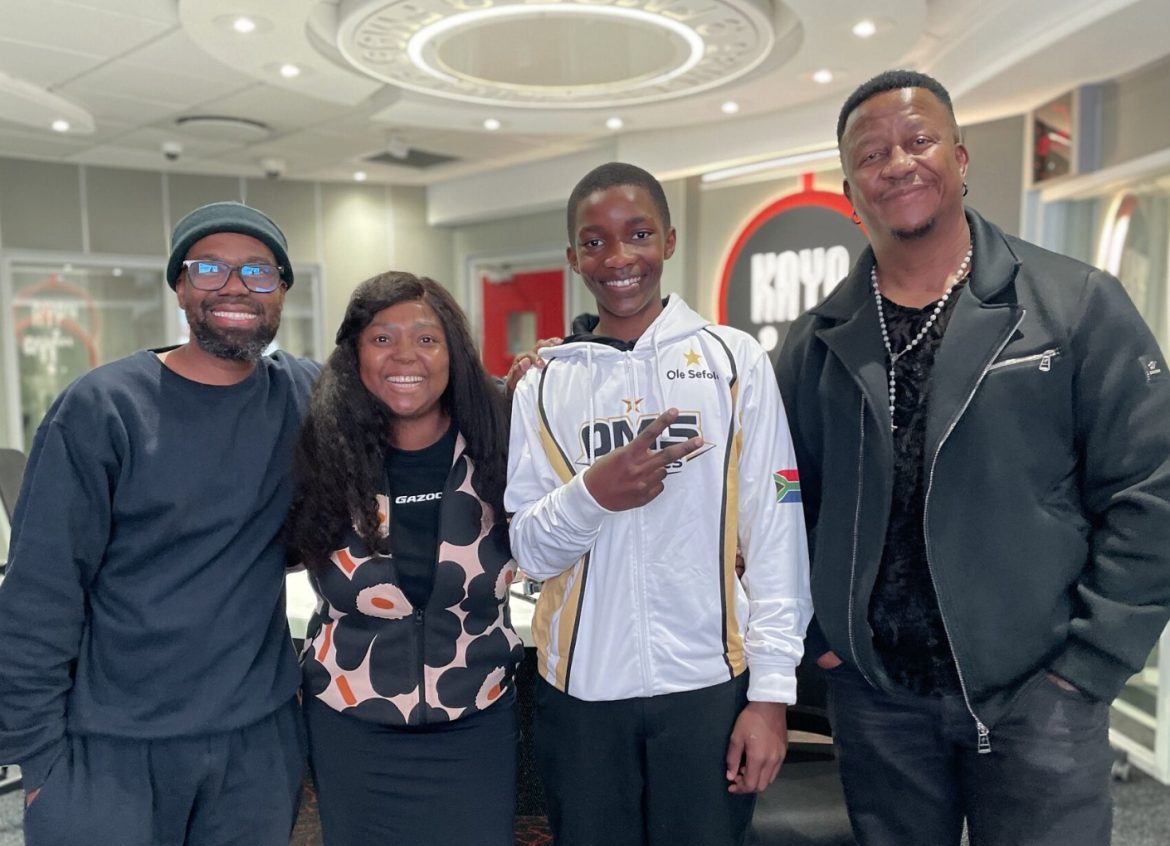
On Thursday morning, he joined Fresh and Thato on Kaya Breakfast, alongside his father Temba, to talk about what it actually takes to compete at that level as a young South African.
A hobby that became a calling
Olebile’s shooting journey started casually, at the range with his mother and father. It was there that talent scouts from firearms brand Canik spotted him and offered their sponsorship, a moment that shifted everything.
“It was a shock to everyone, including my parents,” Olebile said. “Because nobody really expected me to really become what I am today.”
His father remembers the exact moment he knew his son had something rare. “I took a picture after his first shot,” he said. “I said, it might not make sense to you now, but later you’ll get to understand what it means.”
The discipline behind the trophy
What Olebile does on the range sounds almost unbelievable. Drawing his firearm, locating his target, and firing accurately takes him under a second. Doubling that, firing two accurate shots, still comes in under a second.
His week is built around that precision. Training starts at 4:30am with an hour of dry fire practice before school, then continues in the evenings with a 45-minute workout followed by another hour of dry fire.
“What’s going through me is that I must have a clear mind,” Olebile said, describing the moments before a competition stage. “Because when you’re shooting, you have to have a clear mind. Otherwise, you might mess up during the stage.”
A family carrying the cost alone
Behind the title is a family making real sacrifices. Olebile’s parents stepped back from their own shooting to direct every available resource toward his training, and after losing a sponsor following the World Shoot, Olebile started designing and selling his own shooting apparel to fund his gear.
His father was direct about the gap between Olebile and the competitors he’s up against internationally, many of whom are state-sponsored with access to coaching, ranges, and unlimited ammunition budgets. Olebile currently competes without any of that support.
Ammunition remains the single biggest cost, with practice rounds running around R300 for 50 bullets, and Olebile going through 200 to 300 rounds in a normal practice session.
What’s next
With nationals approaching and the level of competition rising as he gets older, Olebile says the work only increases from here. His message to other young people watching is simple.
“Knowing what you’re fighting for,” he said. “Knowing what your goals are and believing in yourself.”
Listen to the Kaya Breakfast podcast to hear the full discussion.
Read Next: From Med student to World Cup team Doctor: Dr Nthabiseng Maesela’s Big Moves