
fb

Soft skills, agripreneurship and early childhood: One blueprint for solving SA’s youth unemployment

Youth unemployment is at 61%. One organisation says South Africa is intervening too late.

Katlego Sekhu
Soft skills, agripreneurship and early childhood: One blueprint for solving SA's youth unemployment
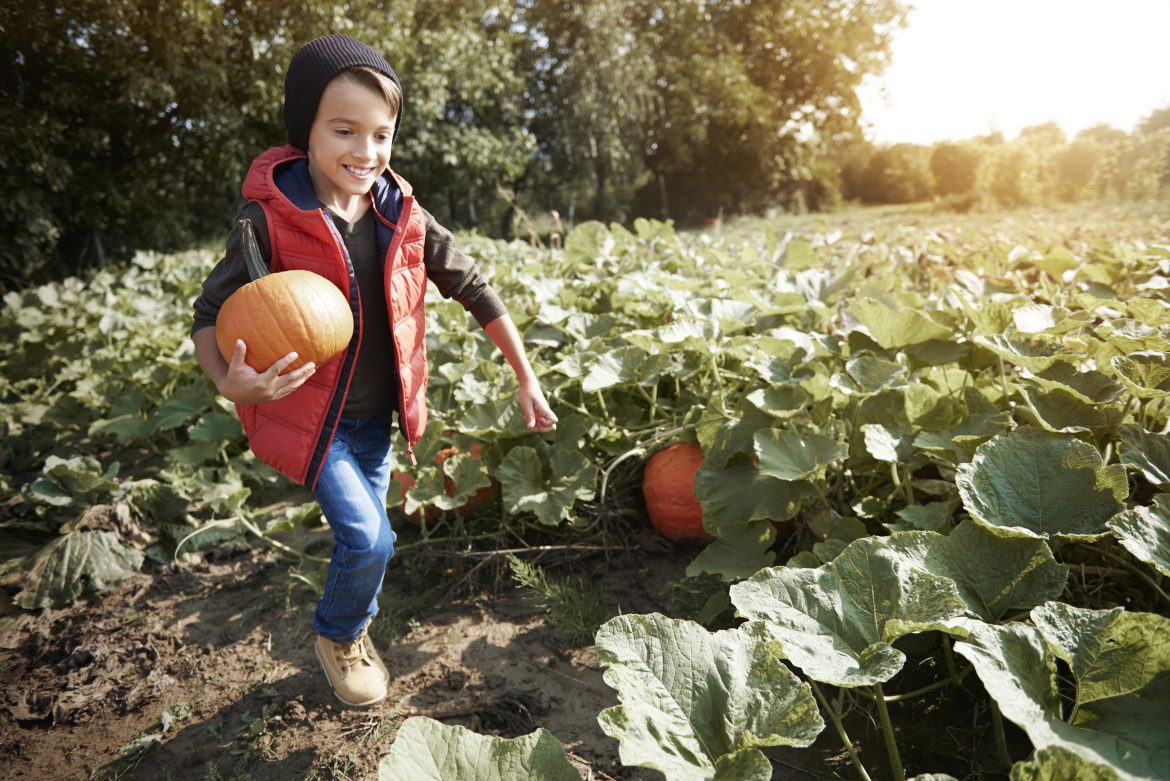
Image by gpointstudio on Magnific

South Africa’s youth unemployment crisis is well documented. According to StatsSA’s Q1 2026 report, 4.7 million young people between the ages of 15 and 34 are unemployed, with a further 10.6 million outside the labour force entirely. The formal job market created a net 130,000 jobs last year. The numbers do not add up.

But one organisation argues the conversation is starting in the wrong place. Kaya BIZ with Gugulethu Mfuphi spoke to Marc Lubner, Group CEO at Afrika Tikkun, to find out why he believes South Africa will not solve its jobs crisis until it rethinks where intervention begins.

The problem starts earlier than most people think

Lubner’s argument is disarmingly simple. If South Africa wants productive adults entering the working environment, it has to start with children, not graduates.

Afrika Tikkun’s cradle-to-career 360 degree model begins with early childhood development centres built inside township communities, staffed by people from those same communities. It moves through after-school programmes, career guidance, specialised skills training, and ultimately into job placement, in both the formal and informal sectors.

“Our philosophy is a very simple one,” says Lubner. “If you want a productive adult going into the working environment, then you have to start very early on in a child’s development.”

The model addresses what children are not learning inside the classroom, self-belief, career awareness, entrepreneurial thinking, and how to use technology as a competitive advantage.

From seedlings to agripreneurs

One of the more striking elements of the model is its agricultural pathway. It begins in preschool with what Lubner calls a garden-to-kindergarten programme, where children grow vegetables and learn to respect life through nurturing a plant.

Post-school leavers can then train for a year at Afrika Tikkun’s farm in Diepsloot on biodynamic farming methods. More recently, the organisation has introduced a mobile agri-tech unit, a self-contained ecosystem producing both crops and eggs, which can be learned in four months and generate between R10,000 and R12,000 a month.

“You have almost an ecosystem in a box,” says Lubner.

Rethinking learnerships and corporate responsibility

Lubner is direct about where the current system is failing. Too many corporates, he argues, are treating government incentive programmes like the YES for Youth initiative as a tick-box exercise rather than a genuine pipeline investment.

His proposal is a three-way partnership: civil society develops the skills, government funds the opportunity, and corporates commit upfront to what competencies they actually need, and to employing or supporting young people once learnerships end.

“We can’t just keep doing the same thing and hopefully it’s going to be different,” he says.

South Africa’s youth are not the problem, Lubner insists. They are tech-savvy, resourceful and ambitious. The missing link is a system that meets them early enough, and honestly enough, to give that ambition somewhere to go.

To hear the full discussion, listen to the podcast.

Read Next: Think before you post: Why dancing in your work uniform could cost you your job

Don’t miss out on the latest local news, interviews and competitions.
Interests

Similar posts

  • MORE ARTICLES
  • QUICK LINKS

    UpComing Shows

    DownLoad Our Mobile App

    Privacy Policy

    THIS PRIVACY STATEMENT FORMS PART OF KAYA 959’S TERMS OF USE POLICY. IF YOU DO NOT AGREE WITH ANY TERM OF THIS PRIVACY STATEMENT, YOU MUST CEASE YOUR ACCESS OF THIS WEBSITE IMMEDIATELY. 

    POPIA ActTo promote the protection of personal information processed by public and private bodies; to introduce certain conditions so as to establish minimum requirements for the processing of personal information; to provide for the establishment of an Information Regulator to exercise certain powers and to perform certain duties and functions in terms of this Act and the Promotion of Access to Information Act, 2000; to provide for the issuing of codes of conduct; to provide for the rights of persons regarding unsolicited electronic communications and automated decision making; to regulate the flow of personal information across the borders of the Republic; and to provide for matters connected therewith.

    RECOGNISING THAT—

    • section 14 of the Constitution of the Republic of South Africa, 1996, provides that everyone has the right to privacy;
    • the right to privacy includes a right to protection against the unlawful collection, retention, dissemination and use of personal information;
    • the State must respect, protect, promote and fulfil the rights in the Bill of Rights;

    AND BEARING IN MIND THAT—

    • consonant with the constitutional values of democracy and openness, the need for economic and social progress, within the framework of the information society, requires the removal of unnecessary impediments to the free flow of information, including personal information;

    AND IN ORDER TO—

    • regulate, in harmony with international standards, the processing of personal information by public and private bodies in a manner that gives effect to the right to privacy subject to justifiable limitations that are aimed at protecting other rights and important interests,
    1. Definitions and Interpretation

    1.1.“Personal Information” means information relating to an identifiable, living, natural person and where it is applicable, identifiable, existing juristic person, including all information as defined in the Protection of Personal Information Act 4 of 2013. 

    1.2  Parliament assented to POPIA on 19 November 2013. The commencement date of section 1Part A of Chapter 5section 112 and section 113 was 11 April 2014. The commencement date of the other sections was 1 July 2020 (with the exception of section 110 and 114(4). The President of South Africa has proclaimed the POPI commencement date to be 1 July 2020.

     
    1.3. “Processing” means the creation, generation, communication, storage, destruction of personal information as more fully defined in the Protection of Personal Information Act 4 of 2013.  

    1.4. “You” or the “user” means any person who accesses and browses this website for any purpose. 

    1.4. “Website” means the website of the KAYA 959 at URL www.kaya959.co.za or such other URL as KAYA 959 may choose from time to time.   

    1. Status and Amendments

    2.1. KAYA 959 respects your privacy. This privacy policy statement sets out KAYA 959’s information gathering and dissemination practices in respect of the Website. 

    2.2. This Privacy Policy governs the processing of personal information provided to KAYA 959 through your use of the Website. 

    2.3. Please note that, due to legal and other developments, KAYA 959 may amend these terms and conditions from time to time.  

    1. Processing of Personal Information

    3.1. By providing your personal information to KAYA 959 you acknowledge that it has been collected directly from you and consent to its processing by KAYA 959. 

    3.2. Where you submit Personal Information (such as name, address, telephone number and email address) via the website (e.g. through completing any online form) the following principles are observed in the processing of that information: 

    3.2.1. KAYA 959 will only collect personal information for a purpose consistent with the purpose for which it is required. The specific purpose for which information is 
    collected will be apparent from the context in which it is requested. 

    3.2.2. KAYA 959 will only process personal information in a manner that is adequate, relevant and not excessive in the context of the purpose for which it is processed. 

    3.2.3. Personal information will only be processed for a purpose compatible with that for which it was collected, unless you have agreed to an alternative purpose in writing or KAYA 959 is permitted in terms of national legislation of general application dealing primarily with the protection of personal information. 

    3.2.4. KAYA 959 will keep records of all personal Information collected and the specific purpose for which it was collected for a period of 1 (one) year from the date on which it was last used. 

    3.2.5. KAYA 959 will not disclose any personal information relating to you to any third party unless your prior written agreement is obtained or KAYA 959 is required to do so by law. 

    3.2.6. If personal information is released with your consent KAYA 959 will retain a record of the information released, the third party to which it was released, the reason for the release and the date of release, for a period of 1 (one) year from the date on which it was last used. 

    3.2.7. KAYA 959 will destroy or delete any personal information that is no longer needed by KAYA 959 for the purpose it was initially collected, or subsequently processed. 

    3.3. Note that, as permitted by the Electronic Communications and Transactions Act 25 of 2002, KAYA 959 may use personal information collected to compile profiles for statistical purposes. No information contained in the profiles or statistics will be able to be linked to any specific user.    

    1. Collection of anonymous data

    4.1. KAYA 959 may use standard technology to collect information about the use of this website. This technology is not able to identify individual users but simply allows KAYA 959 to collect statistics. 

    4.2. KAYA 959 may utilise temporary or session cookies to keep track of users’ browsing habits. A cookie is a small file that is placed on your hard drive in order to keep a record of your interaction with this website and facilitate user convenience. 

    4.2.1. Cookies by themselves will not be used to identify users personally but may be used to compile identified statistics relating to use of services offered or to provide KAYA 959 with feedback on the performance of this website. 

    4.2.2. The following classes of information may be collected in respect of users who have enabled cookies: 

    4.2.2.1. The browser software used; 

    4.2.2.2. IP address; 

    4.2.2.3. Date and time of activities while visiting the website; 

    4.2.2.4. URLs of internal pages visited; and 

    4.2.2.5. referrers. 

    4.3. If you do not wish cookies to be employed to customize your interaction with this website it is possible to alter the manner in which your browser handles cookies. Please note that, if this is done, certain services on this website may not be available. 

    1. Security

    5.1. KAYA 959 takes reasonable measures to ensure the security and integrity of information submitted to or collected by this website, but cannot under any circumstances be held liable for any loss or other damage sustained by you as a result of unlawful access to or dissemination of any personal information by a third party. 

    1. Links to other websites

    6.1. KAYA 959 has no control over and accepts no responsibility for the privacy practices of any third party websites to which hyperlinks may have been provided and KAYA 959 strongly recommends that you review the privacy policy of any website you visit before using it further. 

    1. Queries

    7.1. If you have any queries about this privacy policy please contact us by emailing [email protected]