
Disability rights activist Thato Mphuthi says South Africa has made progress in recognising the rights of people with disabilities, but inaccessible public spaces and weak accountability continue to undermine their independence and dignity.
By Mapaballo Borotho
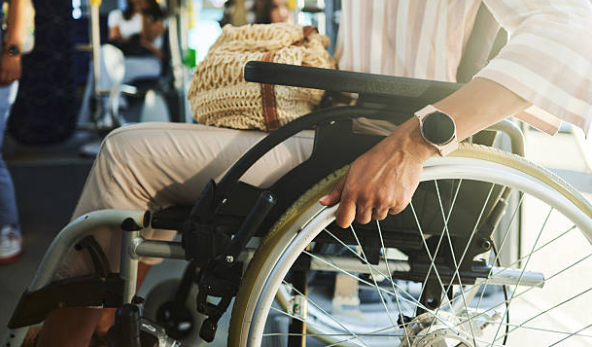
People living with disabilities are a part of our everyday lives. We encounter them at home, at work, in shopping centres and in various recreational and public spaces.
However, not all these spaces cater for the needs of people living with disabilities. This raises an important question: how far has South Africa come in making public spaces accessible, particularly for people with physical disabilities?
November marks Disability Rights Awareness Month. As part of observing this significant period, Kaya 959 spoke to disability rights activist Thato Mphuthi about whether the country is doing enough to protect the rights and dignity of people living with disabilities.
Mphuthi says South Africa has made strides in recognising the rights of differently abled people. However, translating those rights into reality remains an everyday struggle.
“I have attended meetings and engagements where accessibility was clearly not considered during the planning process. I have experienced buildings where people have to look for alternative routes, and situations where accessing something as basic as a bathroom becomes a negotiation exercise.
We cannot measure progress by how many disability policies we have adopted. We must measure it by whether a person with a disability can independently enter a building, use its facilities, access services, and leave with the same dignity and freedom as everyone else,” she said.
She emphasises that accessibility should not be limited to accommodating people who use wheelchairs. It should also consider people who use crutches, those with mobility impairments, people with temporary injuries and older persons.
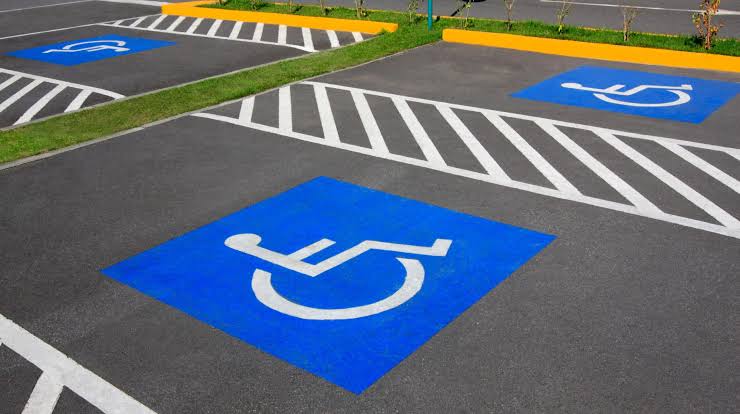
For example, while designated parking bays for people with disabilities are visible at many shopping centres, Mphuthi says their presence does not necessarily mean that the entire shopping centre or surrounding public spaces are accessible.
“Our biggest failure is the implementation gap, but I would also identify weak accountability, insufficient monitoring, and a failure to meaningfully involve persons with disabilities in planning and decision-making.
We have frameworks, including the National Building Regulations and SANS 10400 Part S, which address facilities for persons with disabilities, yet we continue to encounter buildings and public spaces that are inaccessible.
The question is, who is checking whether these standards are being implemented? Who is held accountable when a public building is inaccessible? What consequences exist when developers, institutions or municipalities repeatedly fail to accommodate persons with disabilities? I also think we approach accessibility too narrowly,” she said.
How inaccessible infrastructure affects everyday life
When asked how inaccessible infrastructure affects people’s independence, employment opportunities, social lives and ability to participate fully in society, Mphuthi said it transfers the burden of exclusion to the individual.
Instead of authorities being held accountable for inaccessible environments, people living with disabilities are often expected to find alternative ways to cope.
“Inaccessible infrastructure is not just an infrastructure problem. It is an economic, social, political and human rights issue.
When a person cannot access public transport, they may struggle to get to work or attend an interview. When a workplace is inaccessible, their professional capabilities may never be recognised because the environment excludes them before they even have an opportunity to demonstrate what they can do.
When restaurants, recreational spaces and entertainment venues are inaccessible, people are excluded from social experiences, friendships, relationships and community life.
For women with disabilities, there are additional layers to consider. Inaccessible healthcare facilities can affect access to sexual and reproductive health services, maternal healthcare and other essential services. When facilities are inaccessible, our bodily autonomy and ability to make informed decisions about our health can also be compromised.
As a mother, I also think about how accessibility affects parenting. Public spaces should allow parents with disabilities to participate in their children’s lives without constantly having to negotiate physical barriers.
We need to understand that independence does not mean never needing assistance. It means having the freedom, choices and appropriate support to determine how you participate in society,” she said.
There are numerous challenges that people living with disabilities experience daily in South Africa. Some may appear insignificant to those who are not directly affected, but they can create considerable barriers and inconvenience.
Mphuthi says many of these challenges have become so normalised that people without disabilities do not always recognise them as barriers.
“There are so many, and I think the difficulty is that many of these barriers are so normalised that people without disabilities do not even recognise them as barriers. For someone who uses crutches, a flight of stairs is not simply a flight of stairs. It can mean having to find an alternative entrance, asking someone to assist, or sometimes abandoning the activity altogether,” she said.
She also points to uneven pavements, which increase the risk of falling, cause physical strain and can make an ordinary journey exhausting.
“A long queue without seating becomes a physical challenge. A restaurant with closely arranged tables can make movement difficult. A bathroom with inadequate space can compromise someone’s dignity and independence.
Even something as simple as attending a workshop can become complicated when the venue has no accessible bathroom or when the organisers have not considered how participants with mobility impairments will navigate the building.
I have experienced situations where people had to look for alternative routes for me because accessibility had not been considered beforehand,” she said.
The emotional and mental toll of inaccessible spaces
Beyond the physical challenges, inaccessible environments can also take an emotional and mental toll on people living with disabilities.
Mphuthi says the constant need to anticipate barriers before leaving home can become exhausting.
“You begin anticipating barriers before you even leave your home. You have to research venues, call ahead, explain your access requirements and sometimes prepare yourself for disappointment. That is exhausting.
And I think this is something able-bodied people need to understand: persons with disabilities are often required to do additional work simply to access opportunities that other people can enjoy without thinking twice,” she said.
As South Africa observes Disability Rights Awareness Month, Mphuthi acknowledges the importance of awareness campaigns, saying visibility and public education remain essential.
However, she believes the country cannot continue commemorating disability rights every November while people with disabilities still struggle to access public buildings, healthcare facilities, educational institutions, workplaces and public transport.
“I want to see municipalities conducting accessibility audits and publishing their findings. I want to see budgets allocated towards removing physical barriers. I want to see businesses being held accountable for inaccessible premises.
I also want to see persons with disabilities occupying decision-making positions, not simply being invited to attend events where decisions have already been made.
We cannot speak about universal healthcare while women with disabilities struggle to access examination beds, consultation rooms and reproductive health services. For me, meaningful progress is when a woman with a disability can access a service without having to first fight for the right to enter the building,” she said.
Mphuthi says South Africans must understand that disability is not the problem; rather, the barriers are often created by the environments, systems and attitudes society has developed towards people with disabilities.
“Accessibility should therefore not be understood as something we do for a small group of people. It is about recognising human diversity and designing a society that accommodates everyone.
I also want people to rethink the idea that accessibility is expensive or an inconvenience. What is expensive is exclusion,” she said.
South Africa observes Disability Rights Awareness Month from 3 November to 3 December, with the aim of promoting the rights, dignity, equality and social inclusion of people with disabilities.
READ NEXT: