By David O’sullivan
In 1988, a mate and I were on a quest to find historic sites and attempted to locate the scene of the Sharpeville massacre. In hindsight it was a dumb idea for two white guys to go wandering around Sharpeville at the height of the State of Emergency at time when there was an international outcry over the case of the Sharpeville Six (six people sentenced to death for the murder of the township’s deputy mayor). It was also at the time when David Kramer and Taliep Petersen’s musical District Six was enjoying popularity at the Market Theatre, and I happened to have some publicity t-shirts in my car. We were promptly surrounded by agitated police who searched the car, mistook the District Six t-shirts for the Sharpeville Six and arrested us. We were released when a literate senior police officer intervened and angrily reprimanded his over-zealous underlings. But we never found the site of the Sharpeville massacre as we were ejected from the township because we didn’t have the requisite permit to enter.

Today, on the 58th anniversary, I finally got to the site of the Sharpeville massacre. I broadcast my morning show on Kaya 959 from outside the Sharpeville Memorial, 100m away from the old police station where, 58 years ago today, policemen standing on Saracen armoured vehicles shot dead 69 people and injured 289 others during anti-pass law protests.I got to meet three people who were there that day and survived the massacre. Their memories were as vivid as if the event had taken place days ago. Their emotions were still very raw as they expressed their deep anger and aching pain.

One of the survivors is 73-year old Thomas Masilo. He walked me around the old police station (now a cultural site), showing me exactly where the crowd had gathered waiting for a promised police official to address their demand that they be arrested for not carrying their hated dompas pass books. He showed me where the police Saracens were parked and how the shooting unfolded. We had a copy of the 1961 book by Johannesburg Anglican Bishop Ambrose Reeves, Shooting Sharpeville, which contains a full set of Drum photographer Ian Berry’s iconic photos from that day. We found the places where the photos of the dreadful aftermath of the massacre had been taken.

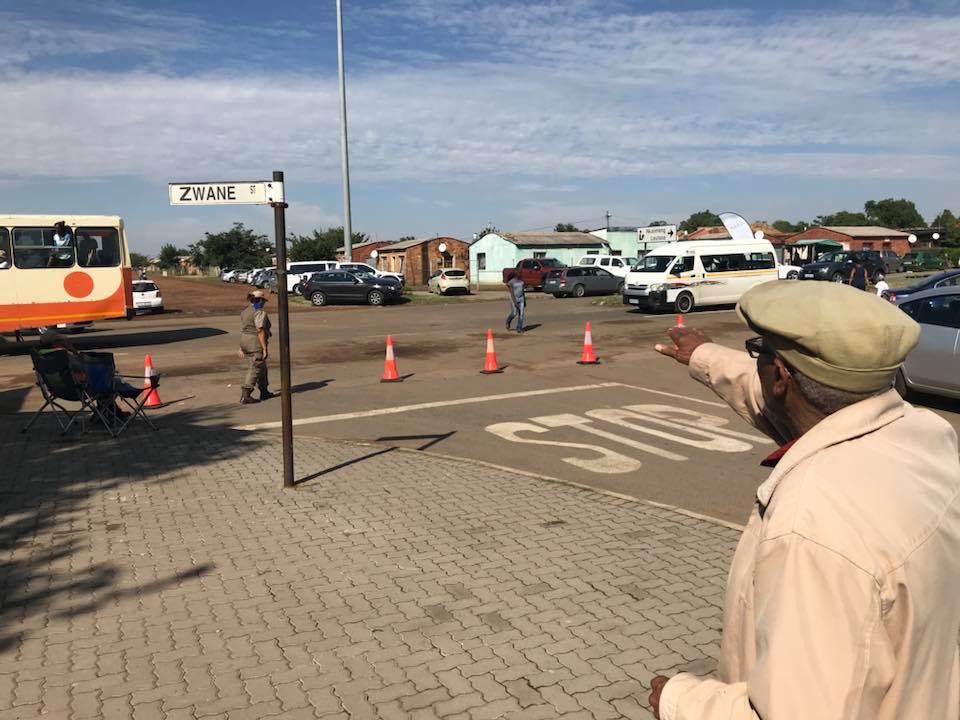
Obviously the scene today is very different to 58 years ago. The memorial site dominates much of the original killing field to the west of the police station, but not much has changed to the southwest on Zwane Street close to where Thomas dived for cover when the shooting broke out. The road has been tarred, the street sign is new but many of the old houses remain. Today the road was crowded with people taking part in Human Rights Day commemorations, but it wasn’t difficult to imagine (with the help of the photos) what it looked like 58 years ago.
Amazingly, Thomas pulled his battered dompas out of his back pocket. He had kept it so that he could tell his grandchildren why he and other residents were protesting that day. Tragically, three of his family members were killed and his brother, who survived, lived with a couple of bullets lodged in his body up until his death in 1998.


Thomas Masilo’s dompas
Listen to conversations on Breakfast with David, live from Sharpeville


![[WATCH PODCAST] Mr. Mercedes drops highly anticipated project, joining forces with Thabo Smol and Spice Drums](https://www.kaya959.co.za/wp-content/uploads/2026/10/KAYA-959-THUMBNAILS-79-100x100.png)
![[WATCH PODCAST] Tumisho Masha commands the screen as colonel Jack Phatudi in M-Net’s new must-watch series](https://www.kaya959.co.za/wp-content/uploads/2026/10/KAYA-959-THUMBNAILS-78-100x100.png)