By Kaya 959 Entertainment
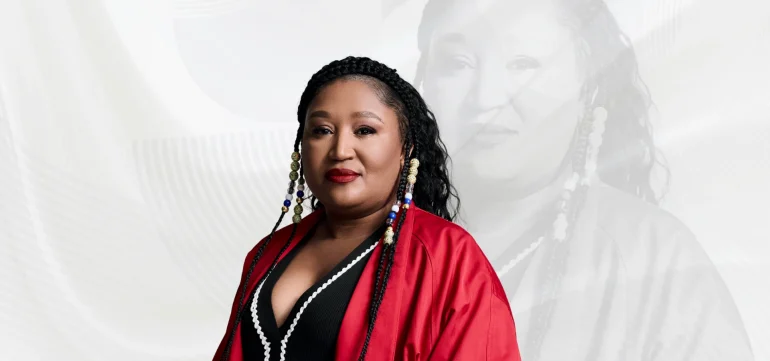
Ayanda Borotho has urged her fans to “be careful of the roots of the words” they use to describe themselves.
The actress says she recently learned an important lesson about calling women “strong” as a compliment.
Ayanda says as beautiful as it is for women to have “strength”, the word is not used in the same context for men.
“We seldom hear that men are strong. Instead, we hear about ‘strong’ men in the context of ‘power’. If he loses his wife, his grief is seldom seen as strength, instead it is “courage” and “bravery”.”
Ayanda adds that a woman’s strength is often associated with pain.
“You see my problem with the connotations of strength and women is that its disposition is pain. We were forced to be strong because of the societal, religious, political, cultural and family traditional inequities and injustices against us, even by women themselves.
“For most of us our strength emanates from pain, oppression, opposition, submission, fear, guilt… you name it,” she says.
The author says women are always seen as strong because they are always fighting a struggle.
“I am teaching myself to get back to a place of drawing strength from my seat of power and not the opposition of pain…place of authority and not defense. A state of being and not of function.
“For me… it begins with mastering that power and then conquering whatever it is that dominates you so you will know which battle is yours.”
Women knowing their place
Ayanda is all about empowering women in all areas of their lives.
She opened up about how she felt about men being seen as the custodians of culture.
She said in a February Instagram post that women often got the “raw end of the stick” where “culture” or “kwashobona” is concerned.
“I have been challenged publicly and privately by men and women. I have even been bullied by men who believed they were above me in the spaces I worked…
“… we are a beautiful people, with many beautiful cultural practices that must be presevered because they speak of our humanity. For me personally, a culture that does not serve the greater good of humanity is not a culture of the people. It is a culture of an agenda (angikhulumi ngesikompilo noma umkhuba wezibongo ezithile). “



![[WATCH PODCAST] Mr. Mercedes drops highly anticipated project, joining forces with Thabo Smol and Spice Drums](https://www.kaya959.co.za/wp-content/uploads/2026/10/KAYA-959-THUMBNAILS-79-100x100.png)
![[WATCH PODCAST] Tumisho Masha commands the screen as colonel Jack Phatudi in M-Net’s new must-watch series](https://www.kaya959.co.za/wp-content/uploads/2026/10/KAYA-959-THUMBNAILS-78-100x100.png)