

fb

Homeopathy explained: What you need to know about this alternative form of holistic healing

Registered homeopath Dr Vernisha Moodley explains its principles, how remedies are prepared and how the practice differs from herbal medicine.

By Mapaballo Borotho

Homeopathy
Image @Istock images

You might have heard of the word homeopathy but probably do not know what it entails, what it is or who practises it.

Homeopathy is a system of complementary medicine that was developed more than 200 years ago by a German physician Samuel Hahnemann.

This type of healing understands that healing begins with understanding the whole person, not just their symptoms.

Unlike conventional Western medicine, which generally uses treatments guided by a person’s diagnosis and the available clinical evidence, homeopathy places emphasis on each individual’s overall presentation and reported symptoms.

According to Dr Vernisha Moodley, a registered homeopath, Homeopathy aims to understand an individual’s overall presentation rather than focusing exclusively on a single symptom.

“When I explain homeopathy to someone who is unfamiliar with it, I describe it as an approach that places considerable emphasis on individualisation and a detailed consultation,” she said.

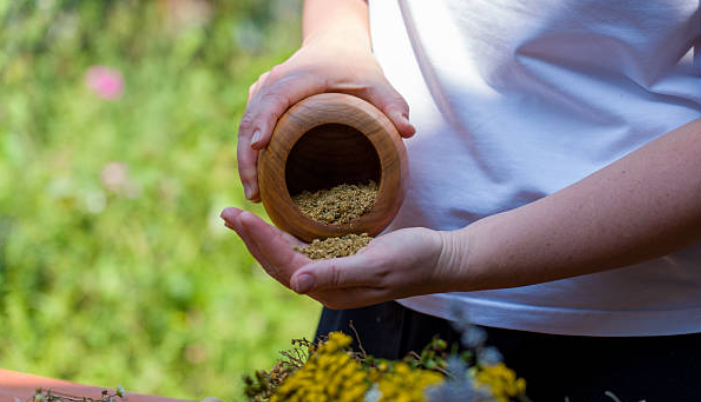
She says homeopathic remedies may be prepared from plant, mineral or other starting materials through specific processes of dilution and, traditionally, vigorous shaking.

“The preparation method and level of dilution vary depending on the remedy”.

How are homeopathic remedies prepared, and what does the dilution process involve?

Dr Moodley says remedies are prepared using a process that traditionally involves repeated dilution and vigorous shaking, known as succussion.

“In a common preparation method, a starting substance is diluted in a liquid and shaken. This process may be repeated many times, with each stage producing a greater dilution.

It is the succussion process which renders the safety of the homeopathic medication.”

She says the safety of a remedy depends on factors such as its ingredients, preparation, quality and level of dilution.

“Highly diluted products may contain little or none of the original substance, but not every product labelled homeopathic is necessarily harmless”.

Homeopathy vs herbal medicine: What is the difference?

People might confuse homeopathy with herbal medicine, but Dr Moodley says the two are very different.

Although these approaches are sometimes grouped together as natural or complementary healthcare, they are not the same.

Homeopathy is based on principles such as “like cures like” and the use of serial dilution and succussion. Some homeopathic practitioners believe this process leaves an “energy imprint” of the original substance in the final product. However, this explanation has not been established by reliable scientific evidence, and research has not demonstrated that homeopathy is effective for treating specific health conditions beyond placebo effects.

Herbal medicine, on the other hand, uses plants or plant-derived substances for their chemical constituents. Some plant-based medicines have demonstrated benefits for particular conditions, although their effectiveness depends on the specific plant, preparation, dose and quality of the evidence. Herbal products can also cause side effects and interact with other medicines.

“Herbal skincare ingredients such as aloe vera, tea tree oil and rooibos contain plant-derived compounds, whereas highly diluted homeopathic remedies follow a different preparation system,” Dr Moodley explained.

What qualifications and professional registration are required to practise as a homeopath in South Africa?

In South Africa, homeopathy is a regulated allied health profession under the Allied Health Professions Council of South Africa (AHPCSA), in terms of the Allied Health Professions Act 63 of 1982.

Dr Moodley explains that practitioners must meet the Council’s applicable educational and professional requirements and be registered in the appropriate professional category.

“The qualification must meet the relevant recognition and accreditation requirements, and practitioners must comply with applicable professional conduct and scope-of-practice rules.”

Homeopathy is offered at the University of Johannesburg and the University of KwaZulu-Natal.

“It has diversified quite a bit since its original course implementation. It generally covers a five-year period of study, including a clinical internship and dissertation.”
Dr Moodley says individualisation is one of the defining features of traditional homeopathic practice.

Two people who present with similar symptoms may receive different homeopathic prescriptions because the practitioner considers their broader symptom patterns, medical histories and individual experiences, including physical, mental and emotional symptoms.

“For example, two people may both report headaches, but the homeopath may explore differences in the location of the pain, what aggravates or relieves it, and other symptoms accompanying it.

Importantly, homeopathy also tries to identify the root cause or source of the symptoms, and this may differ from person to person and thus may also affect the remedy chosen.”

This type of holistic healing stimulates the body’s own healing abilities using gentle, natural remedies. medicines are made from natural substances in highly diluted forms, with minimal side effects.

READ NEXT:

Don't miss out on the latest local news, interviews and competitions.

Interests

More articles

  • MORE ARTICLES
  • QUICK LINKS

    UpComing Shows

    DownLoad Our Mobile App

    Privacy Policy

    THIS PRIVACY STATEMENT FORMS PART OF KAYA 959’S TERMS OF USE POLICY. IF YOU DO NOT AGREE WITH ANY TERM OF THIS PRIVACY STATEMENT, YOU MUST CEASE YOUR ACCESS OF THIS WEBSITE IMMEDIATELY. 

    POPIA Act – To promote the protection of personal information processed by public and private bodies; to introduce certain conditions so as to establish minimum requirements for the processing of personal information; to provide for the establishment of an Information Regulator to exercise certain powers and to perform certain duties and functions in terms of this Act and the Promotion of Access to Information Act, 2000; to provide for the issuing of codes of conduct; to provide for the rights of persons regarding unsolicited electronic communications and automated decision making; to regulate the flow of personal information across the borders of the Republic; and to provide for matters connected therewith.

    RECOGNISING THAT—

    • section 14 of the Constitution of the Republic of South Africa, 1996, provides that everyone has the right to privacy;
    • the right to privacy includes a right to protection against the unlawful collection, retention, dissemination and use of personal information;
    • the State must respect, protect, promote and fulfil the rights in the Bill of Rights;

    AND BEARING IN MIND THAT—

    • consonant with the constitutional values of democracy and openness, the need for economic and social progress, within the framework of the information society, requires the removal of unnecessary impediments to the free flow of information, including personal information;

    AND IN ORDER TO—

    • regulate, in harmony with international standards, the processing of personal information by public and private bodies in a manner that gives effect to the right to privacy subject to justifiable limitations that are aimed at protecting other rights and important interests,
    1. Definitions and Interpretation

    1.1.“Personal Information” means information relating to an identifiable, living, natural person and where it is applicable, identifiable, existing juristic person, including all information as defined in the Protection of Personal Information Act 4 of 2013. 

    1.2  Parliament assented to POPIA on 19 November 2013. The commencement date of section 1, Part A of Chapter 5, section 112 and section 113 was 11 April 2014. The commencement date of the other sections was 1 July 2020 (with the exception of section 110 and 114(4). The President of South Africa has proclaimed the POPI commencement date to be 1 July 2020.

     
    1.3. “Processing” means the creation, generation, communication, storage, destruction of personal information as more fully defined in the Protection of Personal Information Act 4 of 2013.  

    1.4. “You” or the “user” means any person who accesses and browses this website for any purpose. 

    1.4. “Website” means the website of the KAYA 959 at URL www.kaya959.co.za or such other URL as KAYA 959 may choose from time to time.   

    1. Status and Amendments

    2.1. KAYA 959 respects your privacy. This privacy policy statement sets out KAYA 959’s information gathering and dissemination practices in respect of the Website. 

    2.2. This Privacy Policy governs the processing of personal information provided to KAYA 959 through your use of the Website. 

    2.3. Please note that, due to legal and other developments, KAYA 959 may amend these terms and conditions from time to time.  

    1. Processing of Personal Information

    3.1. By providing your personal information to KAYA 959 you acknowledge that it has been collected directly from you and consent to its processing by KAYA 959. 

    3.2. Where you submit Personal Information (such as name, address, telephone number and email address) via the website (e.g. through completing any online form) the following principles are observed in the processing of that information: 

    3.2.1. KAYA 959 will only collect personal information for a purpose consistent with the purpose for which it is required. The specific purpose for which information is 
    collected will be apparent from the context in which it is requested. 

    3.2.2. KAYA 959 will only process personal information in a manner that is adequate, relevant and not excessive in the context of the purpose for which it is processed. 

    3.2.3. Personal information will only be processed for a purpose compatible with that for which it was collected, unless you have agreed to an alternative purpose in writing or KAYA 959 is permitted in terms of national legislation of general application dealing primarily with the protection of personal information. 

    3.2.4. KAYA 959 will keep records of all personal Information collected and the specific purpose for which it was collected for a period of 1 (one) year from the date on which it was last used. 

    3.2.5. KAYA 959 will not disclose any personal information relating to you to any third party unless your prior written agreement is obtained or KAYA 959 is required to do so by law. 

    3.2.6. If personal information is released with your consent KAYA 959 will retain a record of the information released, the third party to which it was released, the reason for the release and the date of release, for a period of 1 (one) year from the date on which it was last used. 

    3.2.7. KAYA 959 will destroy or delete any personal information that is no longer needed by KAYA 959 for the purpose it was initially collected, or subsequently processed. 

    3.3. Note that, as permitted by the Electronic Communications and Transactions Act 25 of 2002, KAYA 959 may use personal information collected to compile profiles for statistical purposes. No information contained in the profiles or statistics will be able to be linked to any specific user.    

    1. Collection of anonymous data

    4.1. KAYA 959 may use standard technology to collect information about the use of this website. This technology is not able to identify individual users but simply allows KAYA 959 to collect statistics. 

    4.2. KAYA 959 may utilise temporary or session cookies to keep track of users’ browsing habits. A cookie is a small file that is placed on your hard drive in order to keep a record of your interaction with this website and facilitate user convenience. 

    4.2.1. Cookies by themselves will not be used to identify users personally but may be used to compile identified statistics relating to use of services offered or to provide KAYA 959 with feedback on the performance of this website. 

    4.2.2. The following classes of information may be collected in respect of users who have enabled cookies: 

    4.2.2.1. The browser software used; 

    4.2.2.2. IP address; 

    4.2.2.3. Date and time of activities while visiting the website; 

    4.2.2.4. URLs of internal pages visited; and 

    4.2.2.5. referrers. 

    4.3. If you do not wish cookies to be employed to customize your interaction with this website it is possible to alter the manner in which your browser handles cookies. Please note that, if this is done, certain services on this website may not be available. 

    1. Security

    5.1. KAYA 959 takes reasonable measures to ensure the security and integrity of information submitted to or collected by this website, but cannot under any circumstances be held liable for any loss or other damage sustained by you as a result of unlawful access to or dissemination of any personal information by a third party. 

    1. Links to other websites

    6.1. KAYA 959 has no control over and accepts no responsibility for the privacy practices of any third party websites to which hyperlinks may have been provided and KAYA 959 strongly recommends that you review the privacy policy of any website you visit before using it further. 

    1. Queries

    7.1. If you have any queries about this privacy policy please contact us by emailing [email protected]