By Mapaballo Borotho
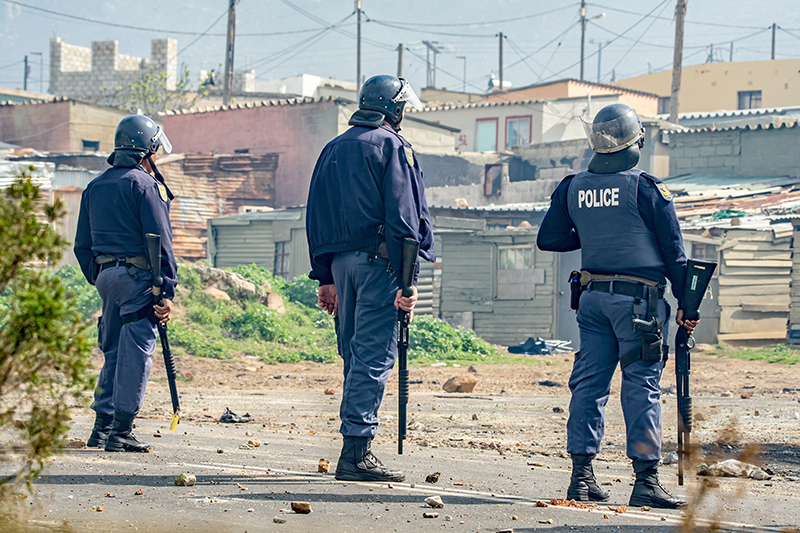
- A protest by Rhodes University students over a new student debt management policy turned tense on Friday when police used stun grenades and rubber bullets to disperse the crowd.
- Not In My Name International has accused police of excessive force and called for an independent investigation, while SAPS says 13 students were arrested for allegedly contravening a court order.
- The incident has revived memories of previous confrontations between police and students during Wits University’s #FeesMustFall protests, including the 2021 death of bystander Mthokozisi Ntumba
The Not In My Name International has slammed members of the South African Police Service (SAPS) following a tense protest by Rhodes University students on Friday, 2 October 2026.
The students were protesting at the 1820 Settlers National Monument during the university’s graduation ceremony, amid an ongoing dispute over the institution’s new student debt management policy.
Police were called to the scene after students gathered outside the graduation venue. SAPS says officers were enforcing a High Court order that prohibited protest action aimed at disrupting the graduation proceedings.
According to police, the crowd was given time and repeated warnings to disperse before public order police moved in.
Police reportedly used stun grenades and rubber bullets to disperse the protesters, with 13 students, aged between 19 and 23, arrested for allegedly contravening the court order. No serious injuries were reported.
Students, however, have given a different account of the events, saying they were sitting outside the monument when police ordered them to leave before using teargas and pursuing and arresting some of them.
Not In My Name condemns police conduct
Not In My Name International has accused police of using excessive force against the students and has called for an urgent and independent investigation into the officers involved.
The organisation says the students, most of whom were between 19 and 23 years old, were subjected to intimidation, shooting, chasing, physical dragging and arbitrary arrests.
“It is both sickening and unacceptable that young people (mostly aged between 19 and 23 with the majority being female) were subjected to live intimidation, violent shooting, chasing, physical dragging, and arbitrary arrests.”
The organisation further alleges that police targeted students and bystanders who were not involved in the protest.
“What should have been a space for constitutional expression was turned into a scene of state-sanctioned violence. Worse still, SAPS officers indiscriminately targeted, assaulted, and detained young bystanders and non-protesters who were simply in the area, violating basic human rights without restraint or cause,” said Not In My Name.
The organisation says the use of force against unarmed students has no place in a democratic society.
“Protesters who were sitting down on the ground posed zero threat. Yet, officers saw fit to open fire, drag individuals who had already surrendered, and hunt down fleeing young people all the way onto university campus grounds.”
Not In My Name is now calling for an independent investigation into the conduct of every police officer involved.
“We refuse to let this instance of police excess be swept under the rug or masked behind generic departmental apologies. We demand full transparency and accountability from SAPS leadership, the provincial commissioner, and the Ministry of Police.”
What was the protest about?
The protest is linked to Rhodes University’s proposed new student debt management regime, which is set to affect self-funded students from 2027.
Students have raised concerns about having to settle part of their outstanding debt before they can register for the following academic year. The university has said the new arrangements are necessary to manage its cash flow.
Student protesters have argued that the policy could place students from disadvantaged backgrounds under further financial pressure.
The university’s Student Representative Council had also urged students to avoid violence during the protests.
Is this the first time police have been accused of using excessive force against protesting students?
The events at Rhodes University are not the first time police conduct during student protests has come under scrutiny in South Africa.
During the #FeesMustFall protests of 2015 and 2016, police used rubber bullets, stun grenades and teargas to disperse protesters during several confrontations.
Reports from the period documented injuries and accusations from students that excessive force had been used. Police, however, maintained that force was used in response to escalating unrest and to protect people and property.
In March 2021, tensions between police and Wits University students during protests over financial exclusion resulted in the death of 35-year-old bystander, Mthokozisi Ntumba.
Ntumba was not part of the protest and was shot during clashes in Braamfontein as police fired rubber bullets to disperse protesters.
The Independent Police Investigative Directorate investigated the incident, and four police officers were subsequently charged.
However, in July 2022, the Gauteng High Court discharged all four officers at the close of the State’s case, finding that there was insufficient evidence linking them to Ntumba’s death. The National Prosecuting Authority accepted the court’s decision.
The latest incident at Rhodes University has therefore once again placed the use of force during student protests under scrutiny, with questions around the balance between maintaining public order and protecting the constitutional right to protest.
SAPS has defended its operation, saying officers acted after protesters failed to comply with the court order.
READ NEXT: