
Kaya Breakfast speaks to firearm instructor Sidney Matlhaku on the mindset, the training and the law behind responsible gun ownership
Katlego Sekhu
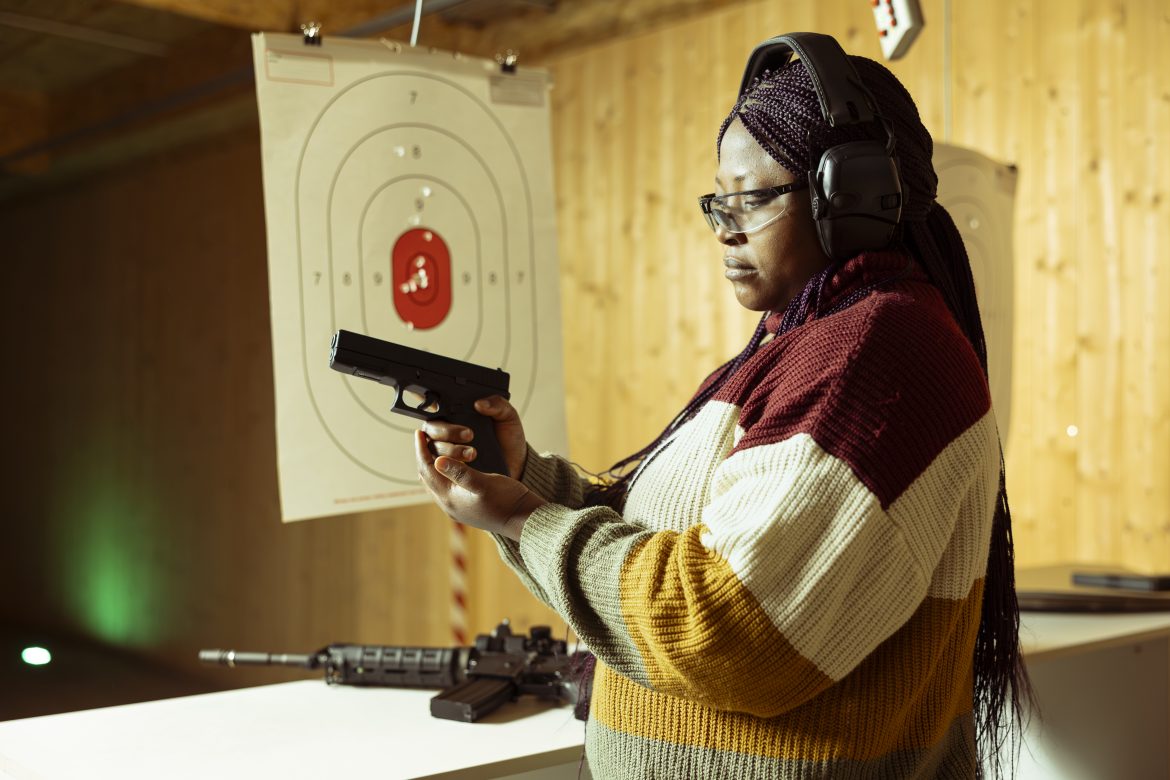
South Africans talk about crime often, but for some, the conversation eventually turns into a decision. A robbery, a hijacking, a home invasion, or simply a change of neighbourhood can be the moment someone decides they need to protect themselves.
Kaya Breakfast spoke to Sidney Matlhaku, a firearm instructor and sharpshooter, to unpack what owning a firearm actually involves, from the mindset required to the legal process itself.
Why South Africans Are Choosing to Arm Themselves
For Matlhaku, the decision often comes down to one question: who is going to be your first responder when help is not there?
“So what happens then when they are not there?” he said, describing the moment during South Africa’s 2020 lockdown that pushed him to arm himself. “That’s one of the reasons why for me, I decided, you know what, it’s time now to arm myself.”
Not everyone reaches the same conclusion. One listener, who called into the show, said she has no interest in owning a firearm. “I’m very scared of guns and I’m scared of violence,” she said. “I don’t want to be using them for other things. If I just hear a sound and then I just, you know, whip out a gun, I don’t know how I’ll behave.”
Matlhaku said that hesitation is common, and it usually has less to do with firearms themselves than with fear of the legal consequences of using one. “I think most people are scared of the law more than they are scared of saving their own lives,” he said.
What Responsible Ownership Actually Requires
Owning a firearm, Matlhaku said, is not a purchase. It is a discipline that has to be maintained.
He recommends training at a shooting range at least once a week, not once a year, because the cost of missing a shot in a real situation is high. “The consequences of you missing and then shooting somebody that had nothing to do with what was happening is much higher than not,” he said.
That discipline extends to the household. Matlhaku said children need to understand firearm safety even if their own parents do not own one, since they may encounter one at a friend’s house. “It’s about the exposure of not feeling that, yes, it is dangerous, but what if they find it? What must they do?” he said.
He also pushed back on the instinct to reach for a firearm at the first sign of danger. Matlhaku still encourages people to carry non-lethal options such as pepper spray or a shambok, and to learn de-escalation before anything else. “You can’t just pull out a gun because you feel unsafe, but your life is not in danger,” he said, “because pulling out your gun has its own responsibilities and repercussions.”
Underlying all of it, he said, is situational awareness, understanding your surroundings well enough to know when something is wrong before it becomes dangerous.
Eight Months to a Year: What It Takes to Legally Own a Firearm
For those who do decide to own a firearm, the legal process is lengthy. It begins with a visit to a designated firearms officer at a local police station, followed by training on both firearm handling and the law, a written and practical test, and an eventual application for a competency certificate through the South African Police Service.
Only once that certificate is granted can a person apply for an actual firearm licence, a process Matlhaku said typically takes another two to four months.
“So from zero to a hundred, how long will it take? We can look at it about eight months to a year,” he said, adding that paperwork delays are usually the biggest holdup. In the interim, prospective owners can still train at a range, since the firearm remains with the dealer until the licence is issued.
Whether or not someone chooses to own a firearm, Matlhaku’s message was consistent: preparedness, not the firearm itself, is what actually keeps people safe.
To hear the full discussion with Sidney Matlhaku, listen to the podcast.