
fb

‘When family traditions change, do we have to protect them, or should we allow everyone to create their own’ – The Blind Spot

By Zuko Komisa

Anonymous is caught in a family rift over whether adult siblings must preserve lifelong birthday traditions or have the freedom to forge their own paths.
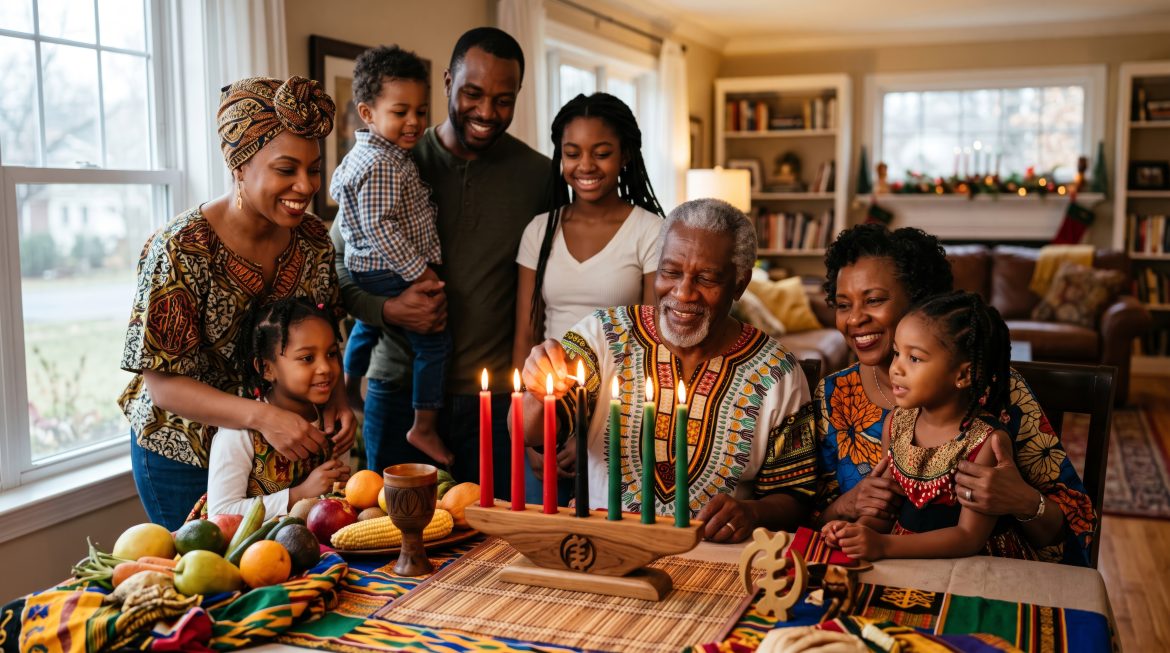
Image | Adobe Stock

Anonymous is caught in a generational clash between honouring cherished family customs and allowing adult siblings the freedom to forge their own paths.

When her younger sister chose to spend her 30th birthday with friends and her partner rather than attending the traditional family lunch, it deeply hurt their mother and sparked a fierce debate.

While some family members argue that holding onto rigid traditions preserves vital bonds, others believe that forcing compliance out of obligation stifles independence, leaving the family divided over whether to protect the past or embrace modern autonomy.

“Uncle T, birthdays have always been a big thing in my family. Growing up, whoever’s birthday it was didn’t really get to make their own plans. My mother would organise a family lunch; everyone would bring something; we’d have cake, take pictures and spend the day together.

Now that we’re all adults, the tradition has continued, but things are slowly changing. Last month it was my younger sister’s 30th birthday, and she decided she didn’t want the usual family lunch. She wanted to spend the day with her friends and her boyfriend, and then have dinner with the family the following weekend. My mother was hurt. She said turning 30 was exactly the kind of milestone to celebrate with the people who had been there from the beginning.

My sister said she loves the family, but she’s tired of every birthday becoming an obligation. She wants to create her own traditions now that she’s an adult. Then my older brother got involved and said something that made things even worse. He said, “If every generation starts changing the traditions, eventually there won’t be a family tradition left.” Now everyone is divided. Some of us feel certain traditions keep a family connected.

Others feel that holding onto every tradition simply because “that’s how we’ve always done it” can stop people from creating their own lives. When family traditions change, do we have to protect them, or should we allow everyone to create their own.”

Listen to the full conversation here:

READ NEXT:

Don't miss out on the latest local news, interviews and competitions.

Interests

More articles

QUICK LINKS

UpComing Shows

DownLoad Our Mobile App

Privacy Policy

THIS PRIVACY STATEMENT FORMS PART OF KAYA 959’S TERMS OF USE POLICY. IF YOU DO NOT AGREE WITH ANY TERM OF THIS PRIVACY STATEMENT, YOU MUST CEASE YOUR ACCESS OF THIS WEBSITE IMMEDIATELY. 

POPIA ActTo promote the protection of personal information processed by public and private bodies; to introduce certain conditions so as to establish minimum requirements for the processing of personal information; to provide for the establishment of an Information Regulator to exercise certain powers and to perform certain duties and functions in terms of this Act and the Promotion of Access to Information Act, 2000; to provide for the issuing of codes of conduct; to provide for the rights of persons regarding unsolicited electronic communications and automated decision making; to regulate the flow of personal information across the borders of the Republic; and to provide for matters connected therewith.

RECOGNISING THAT—

  • section 14 of the Constitution of the Republic of South Africa, 1996, provides that everyone has the right to privacy;
  • the right to privacy includes a right to protection against the unlawful collection, retention, dissemination and use of personal information;
  • the State must respect, protect, promote and fulfil the rights in the Bill of Rights;

AND BEARING IN MIND THAT—

  • consonant with the constitutional values of democracy and openness, the need for economic and social progress, within the framework of the information society, requires the removal of unnecessary impediments to the free flow of information, including personal information;

AND IN ORDER TO—

  • regulate, in harmony with international standards, the processing of personal information by public and private bodies in a manner that gives effect to the right to privacy subject to justifiable limitations that are aimed at protecting other rights and important interests,
  1. Definitions and Interpretation

1.1.“Personal Information” means information relating to an identifiable, living, natural person and where it is applicable, identifiable, existing juristic person, including all information as defined in the Protection of Personal Information Act 4 of 2013. 

1.2  Parliament assented to POPIA on 19 November 2013. The commencement date of section 1Part A of Chapter 5section 112 and section 113 was 11 April 2014. The commencement date of the other sections was 1 July 2020 (with the exception of section 110 and 114(4). The President of South Africa has proclaimed the POPI commencement date to be 1 July 2020.

 
1.3. “Processing” means the creation, generation, communication, storage, destruction of personal information as more fully defined in the Protection of Personal Information Act 4 of 2013.  

1.4. “You” or the “user” means any person who accesses and browses this website for any purpose. 

1.4. “Website” means the website of the KAYA 959 at URL www.kaya959.co.za or such other URL as KAYA 959 may choose from time to time.   

  1. Status and Amendments

2.1. KAYA 959 respects your privacy. This privacy policy statement sets out KAYA 959’s information gathering and dissemination practices in respect of the Website. 

2.2. This Privacy Policy governs the processing of personal information provided to KAYA 959 through your use of the Website. 

2.3. Please note that, due to legal and other developments, KAYA 959 may amend these terms and conditions from time to time.  

  1. Processing of Personal Information

3.1. By providing your personal information to KAYA 959 you acknowledge that it has been collected directly from you and consent to its processing by KAYA 959. 

3.2. Where you submit Personal Information (such as name, address, telephone number and email address) via the website (e.g. through completing any online form) the following principles are observed in the processing of that information: 

3.2.1. KAYA 959 will only collect personal information for a purpose consistent with the purpose for which it is required. The specific purpose for which information is 
collected will be apparent from the context in which it is requested. 

3.2.2. KAYA 959 will only process personal information in a manner that is adequate, relevant and not excessive in the context of the purpose for which it is processed. 

3.2.3. Personal information will only be processed for a purpose compatible with that for which it was collected, unless you have agreed to an alternative purpose in writing or KAYA 959 is permitted in terms of national legislation of general application dealing primarily with the protection of personal information. 

3.2.4. KAYA 959 will keep records of all personal Information collected and the specific purpose for which it was collected for a period of 1 (one) year from the date on which it was last used. 

3.2.5. KAYA 959 will not disclose any personal information relating to you to any third party unless your prior written agreement is obtained or KAYA 959 is required to do so by law. 

3.2.6. If personal information is released with your consent KAYA 959 will retain a record of the information released, the third party to which it was released, the reason for the release and the date of release, for a period of 1 (one) year from the date on which it was last used. 

3.2.7. KAYA 959 will destroy or delete any personal information that is no longer needed by KAYA 959 for the purpose it was initially collected, or subsequently processed. 

3.3. Note that, as permitted by the Electronic Communications and Transactions Act 25 of 2002, KAYA 959 may use personal information collected to compile profiles for statistical purposes. No information contained in the profiles or statistics will be able to be linked to any specific user.    

  1. Collection of anonymous data

4.1. KAYA 959 may use standard technology to collect information about the use of this website. This technology is not able to identify individual users but simply allows KAYA 959 to collect statistics. 

4.2. KAYA 959 may utilise temporary or session cookies to keep track of users’ browsing habits. A cookie is a small file that is placed on your hard drive in order to keep a record of your interaction with this website and facilitate user convenience. 

4.2.1. Cookies by themselves will not be used to identify users personally but may be used to compile identified statistics relating to use of services offered or to provide KAYA 959 with feedback on the performance of this website. 

4.2.2. The following classes of information may be collected in respect of users who have enabled cookies: 

4.2.2.1. The browser software used; 

4.2.2.2. IP address; 

4.2.2.3. Date and time of activities while visiting the website; 

4.2.2.4. URLs of internal pages visited; and 

4.2.2.5. referrers. 

4.3. If you do not wish cookies to be employed to customize your interaction with this website it is possible to alter the manner in which your browser handles cookies. Please note that, if this is done, certain services on this website may not be available. 

  1. Security

5.1. KAYA 959 takes reasonable measures to ensure the security and integrity of information submitted to or collected by this website, but cannot under any circumstances be held liable for any loss or other damage sustained by you as a result of unlawful access to or dissemination of any personal information by a third party. 

  1. Links to other websites

6.1. KAYA 959 has no control over and accepts no responsibility for the privacy practices of any third party websites to which hyperlinks may have been provided and KAYA 959 strongly recommends that you review the privacy policy of any website you visit before using it further. 

  1. Queries

7.1. If you have any queries about this privacy policy please contact us by emailing [email protected]