
By Mapaballo Borotho
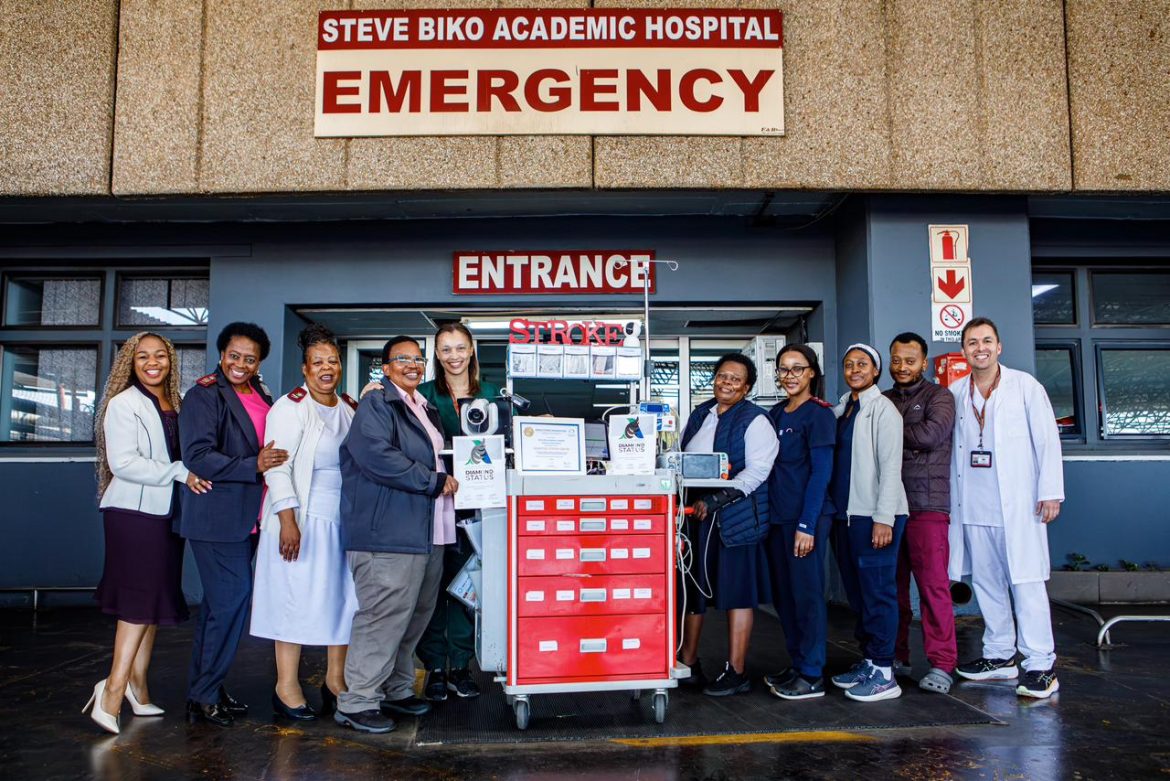
- Steve Biko Academic Hospital has become the first South African public health facility to be recognised by the World Stroke Organisation as an essential stroke centre.
- Gauteng Health says the recognition reflects the hospital’s ability to provide rapid diagnosis, timely treatment and coordinated care that meets internationally benchmarked standards.
- Research involving more than 600 acute ischaemic stroke patients also found significantly better outcomes among patients who received thrombolysis.
The Steve Biko Academic Hospital has been recognised by the World Stroke Organisation (WSO) as an essential stroke centre, making it the first South African public health facility to receive this type of recognition.
Gauteng Health MEC Faith Mazibuko says an important measure of this success is the hospital’s ability to significantly reduce the time taken to assess and diagnose stroke patients.
“The international recognition affirms the hospital’s ability to provide high-quality, evidence-based stroke care that meets globally benchmarked standards for rapid diagnosis, timely treatment, coordinated multidisciplinary management, patient safety and continuous quality improvement,” she said.
The hospital has also expanded access to thrombolysis and advanced stroke imaging.
Clinical research involving more than 600 acute ischaemic stroke patients found that those who received thrombolysis were approximately 69% more likely to achieve an excellent functional outcome, while maintaining a low symptomatic intracranial haemorrhage rate of approximately 3.3%.
Head of Neurology at the hospital, Professor Mandisa Kakaza, says the achievement reflects years of dedication and commitment to ensuring that stroke patients receive the highest standard of care.
“This recognition is a testament to the commitment, expertise and collaboration of our multidisciplinary teams, who work tirelessly to ensure that stroke patients receive timely and effective treatment.
“We have built an integrated stroke service that combines clinical expertise, advanced technology, continuous education and quality improvement. This recognition translates into better patient outcomes, reduced disability and improved quality of life for the communities we serve,” said Professor Kakaza
READ NEXT: