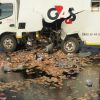
Fourteen years after 34 mine workers were killed by police during the Marikana strike, their families are still waiting for justice, with no successful prosecutions secured over the shootings.
By Mapaballo Borotho
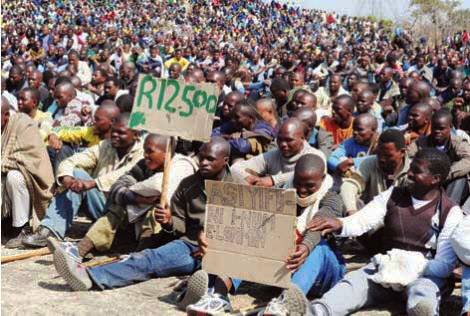
On Sunday, 16 August, it will officially mark exactly 14 years since the bloodbath deaths of mine workers in Marikana.
Members of the South African Police Service (SAPS) killed at least 34 mine workers who took to the streets, downed tools and demonstrated for better pay. Fourteen years later, not even a single person has been convicted.
The Socio-Economic Rights Institute of South Africa (SERI), which represents the families of the 34 mine workers killed during the August 2012 violence, said there had been no successful prosecutions arising from the police shootings.
SERI says the lack of justice in this case is quite appalling.
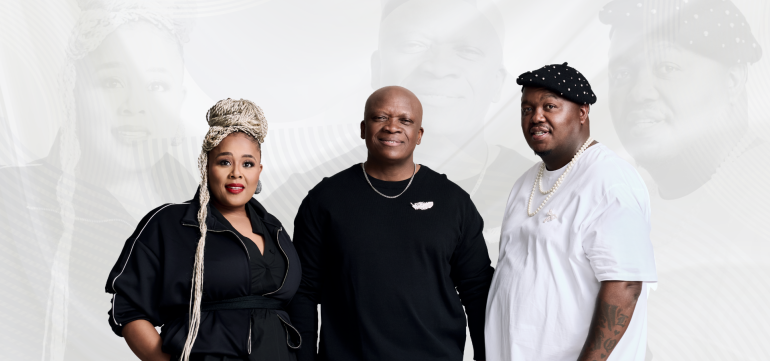
Fresh and Thato spoke to Mail & Guardian Politics Reporter Kenneth Kwadi regarding this tragic story on the Kaya 959 Breakfast show.
The Mail & Guardian editorial asks whether the justice system shields the powerful, highlighting Cyril Ramaphosa’s email before the police operation.
“Fourteen years on and the only thing that we know really happened is that there were nine police officers who were charged but were later acquitted. So it means that since 2012 until now, there have not been any successful prosecutions in the killings of 34 mine workers,” said Kwadi.
Taking you down the history books, in response to these deaths, former President Jacob Zuma set up the Farlam Commission of Inquiry to investigate the tragic events that took place at the Lonmin mine on that tragic day.
Kwadi says one of the recommendations from the commission was that there should be further investigations into the Marikana massacre; however, none of that has happened.
“There has been some reluctance even in terms of those recommendations. SERI revealed that there has been some change in attitude from the police in terms of the use of force, even when communities or university students go out to protest, there’s not too much violence from the side of the police, so maybe that is one of the ways that they are implementing the changes,” he added.
He added that the state has paid some funds to some of the affected families, but that does not mean justice has been served.
Listen to the podcast for the full conversation on the events surrounding the Marikana massacre.
READ NEXT:


![[WATCH PODCAST] British-Nigerian artist, Ola Onabulé brings his jazz quartet to Johannesburg for the Standard Bank Joy of Jazz](https://www.kaya959.co.za/wp-content/uploads/2026/09/KAYA-959-THUMBNAILS-70-100x100.png)
![[WATCH PODCAST] Leading creative voice, Ndabo Zulu celebrated for breakthrough work with the ‘Umgidi Ensemble’](https://www.kaya959.co.za/wp-content/uploads/2026/09/NDABO-2-100x100.png)