Zuko Komisa
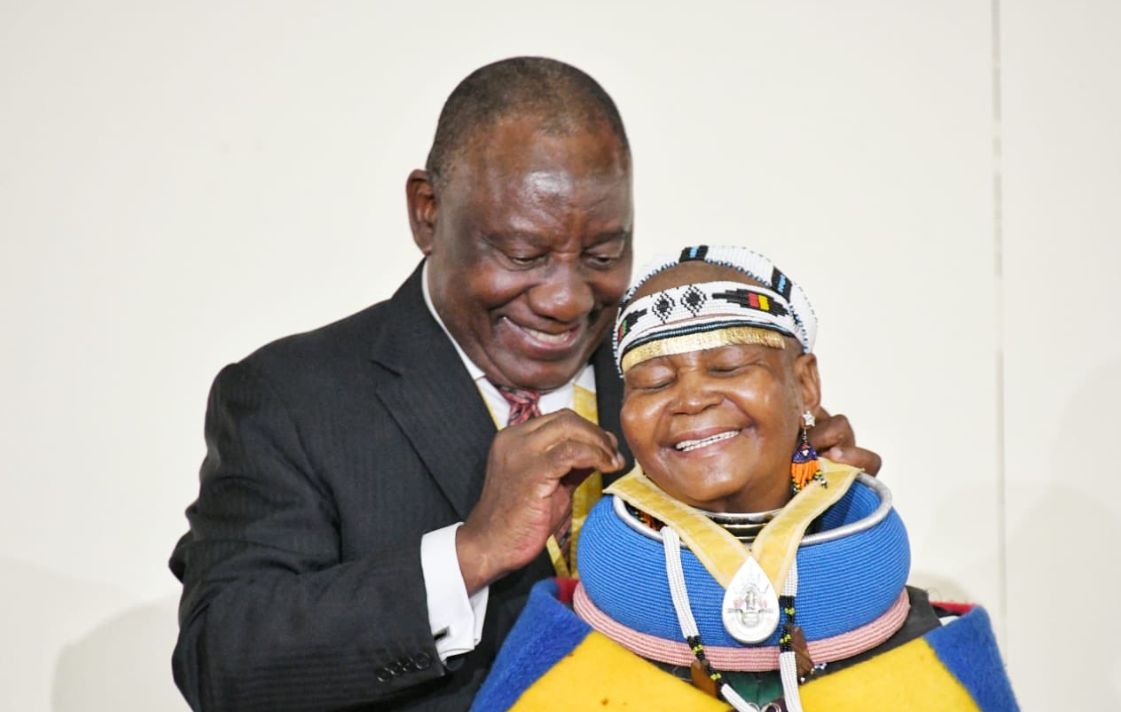
Unpacking the history and significance of National Orders.
President Cyril Ramaphosa on Tuesday bestowed National Orders to 32 recipients during a ceremony held at the Sefako M. Makgatho Presidential Guesthouse in Tshwane.
The National Orders comprise six categories, including the Order of Mendi, Ikamanga, Baobab, Luthuli, Mapungubwe, and Companions of OR Tambo, recognizing various contributions to South African life, from anti-apartheid activism to the arts, journalism, business, science, and social justice.
The ceremony celebrates the inspiring determination of humanity to attain a caring and humane society, and celebrates the commitment to a South Africa that truly belongs to its entire people as the fulfilment of the ideals of freedom. pic.twitter.com/PoUjHOcP4Z
— The Presidency 🇿🇦 (@PresidencyZA) April 30, 2024
Point of View with Phemelo Motene spoke to Cultural expert, Professor Musa Xulu reminds us of the significance and history of the national orders.
Listen to the full conversation here:
Professor Musa Xulu gave a brief history of the country’s national anthem as well as the process of renaming the South African national orders.
“The National Orders that were bestowed yesterday were only changed in 1998, because the orders that were there a global thing, even in our own country before colonialism, the king would give gifts to outstanding people. What was happening to the Orders in the country was that they were linked to the Queen, some of the orders were known as the Order of the Good Hope, and there was a look into that because the was too much linkage to the crown.
“So in 1998, the then Deputy President requested the Department of Arts and Culture and Technology to work with other departments to look at symbols and the renaming of our national orders.”
READ NEXT: How to stop taking criticism personally
![[WATCH PODCAST] Kabelo Mabalane teams up with The Arrows for infectious comeback track ahead of 10th studio album](https://www.kaya959.co.za/wp-content/uploads/2026/10/KAYA-959-THUMBNAILS-1170x658.png)

![[WATCH PODCAST] Kabelo Mabalane teams up with The Arrows for infectious comeback track ahead of 10th studio album](https://www.kaya959.co.za/wp-content/uploads/2026/10/KAYA-959-THUMBNAILS-100x100.png)