

Katlego Sekhu
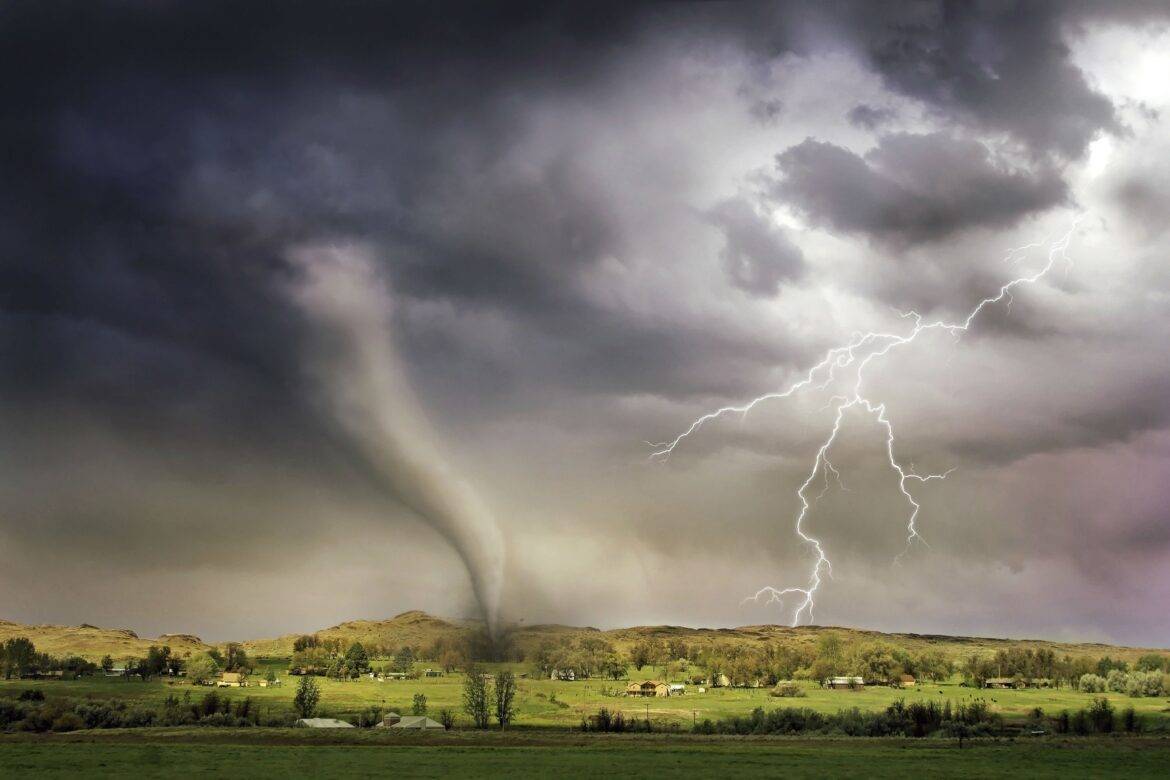
A mini tornado touched down between Inanda and Phoenix, north of Durban, on Tuesday afternoon, snapped branches off trees, picking up loose debris, and causing damage to homes.
Kholofelo Mahlangu, a Weather Forecaster with SA Weather Services, joined 959 Breakfast to explain what causes a tornado. Moreover, she shared information on the changing weather patterns in recent times.
A tornado is a violent rotating column of air extending from a thunderstorm. Tornadoes are amongst the most violent and destructive of all weather phenomena, but despite the significant amount of research into the origin and prediction thereof, the phenomenon is still not fully understood or predictable.
Field research on tornadoes is particularly difficult due to their short lifetime, the small area affected by them, and the low probability of occurrence at a particular point.
Tornadoes in South Africa are typically associated with very hot air masses and severe thunderstorms. To date, scientists do not know exactly how tornadoes are formed, but all the evidence suggests that they develop as a combination of strong spinning effects inside a thunderstorm or in the air surrounding the storm and accelerated strong updrafts (wind moving vertically in an upward direction).
Kholofelo Mahlangu notes that “these are quite usual or normal weather events.” However, they are now happening frequently and being documented more because of social media.
She adds that before Tuesday’s disaster, there was “a warning issued yesterday by the weather office.” It mentioned that there would be severe thunderstorms; they are usually accompanied by strong, damaging winds.
She said it can be difficult to forewarn people about a Tornado because it is something that “happens quickly.” And sometimes it doesn’t appear on our radar systems.
Tips on how to stay safe during a Tornado from the South Africa Weather Service
Move to the pre-designated building or else move into the center of your house and get under a strong piece of furniture, such as
a table.
Get out of vehicles, caravans, and mobile homes, as they can be moved, over-
turned and even destroyed by the strong winds and flying debris.
Do not attempt to outrun a tornado in your vehicle. Leave it immediately and seek shelter.
If caught outside in the open, lie flat in a ditch or depression but beware of flooding if there is heavy rain.
Read Next: DA suspends Nqaba Bhanga after he claimed that Hellen Zille is “racist”




![[WATCH PODCAST] Kabelo Mabalane teams up with The Arrows for infectious comeback track ahead of 10th studio album](https://www.kaya959.co.za/wp-content/uploads/2026/10/KAYA-959-THUMBNAILS-100x100.png)