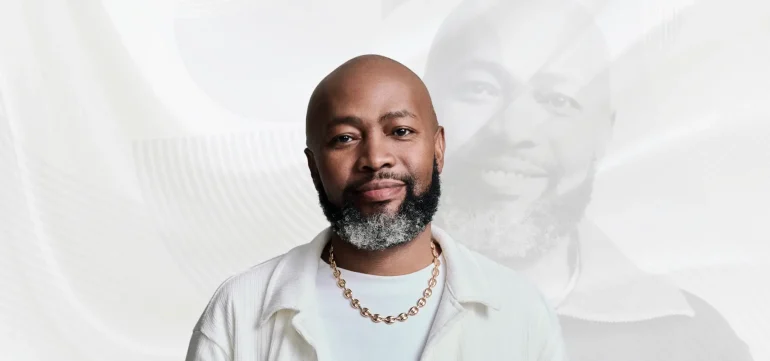
Guest Writer: Kagiso Pooe
Ah have you heard them, did you see them or have they even come past your door over the week? If you are confused as to what one is referring to, one is speaking about the political season which sees politicians of all colours and existence launching their manifestos and then trying to convince you to give them a shot/chance at governing your Ward and municipality.
It was interesting to note how this political season was not begun by the governing party with the most amount of municipalities in Gauteng and South Africa, namely the African National Congress (ANC) but rather the leading opposition parties like the Democratic Alliance (DA) which governs the second most municipalities across South Africa and the Economic Freedom Fighters (EFF). This was followed by what one might argue to be the third leading political party in municipal elections terms, the Inkatha Freedom Party (IFP), which runs the third most amount of municipalities, mostly in KwaZulu-Natal and other parties like the United Democratic, Pan Africanist Congress of Azania, African Christian Democratic Party and countless others.
Yet, I have always wanted to know why all out political parties seem so brought into the concept of manifesto production. So for a change rather than being bombarded and waiting for the 2024 National and Provincial Election’s volley of manifestos, I actually started to research what lies behind this concept and idea of a manifesto. Like most English words, I found it has Latin origins, moreover a BBC 2015 article titled The Vocabularist: Where did word ‘manifesto’ come from? contends that it means, ‘Manifestus-meaning clear, public or notorious’. If this is the case one has to commend most of the political parties’ manifestos; for giving sound magnum opus (great work) starting with the EFF’s (overly) ambitious thesis, the DA’s sound and managerial document, the IFP’s minimalist but clear proposition to voters. So, in terms of producing clear documents clear, public or notorious ideas or propositions job well done to most opposition parties.
However, one has two main problems with some of the opposition manifesto offerings and even the governing party’s generically bland offering. Firstly, in giving a clear analysis of the problems that exist what is the cost for altering the many broken municipalities in Gauteng, say for example the Emfuleni Local Municipality? No one can deny that most of the opposition parties’ identification of problems in local government ring true, but for me the missing link is a clear proposition and discussion around how they will change the status quo in the given five years.
For example the City of Johannesburg (CoJ) is estimated to have an operating budget or rather passed one for R73.3 billion. Yet, a cursory reading of all the manifestos does not explain in detail how such a budget would be used to address infrastructural backlogs and problems, detail plan on how to use it to build a realistic post Covid-19 employment creating economy and finally how to grow this budget without overly taxing already cash strapped ‘middle class’ families. It would seem most of the political parties in their offerings, have not factored in how economically disastrous Covid-19 has been on citizens pockets and also it employment destroying capability.
Secondly, while acknowledging the nuanced approach taken by the EFF in their ‘EFF Gauteng Municipalities Commitments’ document it is rather bizarre that still in 2021, political parties do not explain in great detail which and how they will produce a policy specific context for the CoJ, City of Ekurhuleni Metropolitan, City of Tshwane Metropolitan, Sedibeng region and Westrand. In the absence of such a plan, how do we know which hard decision and options each of these political parties will be willing to invest in or simply not support whoever comes in on them. It is hard to trust any document that seems unable to admit that political decision needed to rescue and build politically and financially sustainable municipalities, post-2021 will require actual sacrifices and hard decisions.
Ultimately what one was looking for was not a manifesto, but rather a commitment by leaders to tell in exact terms how and what it will mean to fix problems in my Ward and municipality, in the given five years. Moreover, it would have also been excellent to see what successes or lessons the previous Local Government Elections (LGE 2016) taught these parties and what remedies emanated from them. However, it would seem the given offerings seem to be the promise of more ‘Political Many-Tings’ by most (NOT ALL) manifestos/parties.
Perhaps as a parting shot, one would advise that moving toward the 2026 LGE all political parties could still offer their ideological laden offerings, but be compelled to offer citizens a contract/offering based on Chapter 7 of the South African Constitution, specifically Section 152 (1) Objectives and 153 Developmental duties of municipalities, to detail how they will lead Wards (each municipalities) in a clear, quantifiable, honest and sustainable manner. Just a wish!!!




![[WATCH PODCAST] Mr. Mercedes drops highly anticipated project, joining forces with Thabo Smol and Spice Drums](https://www.kaya959.co.za/wp-content/uploads/2026/10/KAYA-959-THUMBNAILS-79-100x100.png)
![[WATCH PODCAST] Tumisho Masha commands the screen as colonel Jack Phatudi in M-Net’s new must-watch series](https://www.kaya959.co.za/wp-content/uploads/2026/10/KAYA-959-THUMBNAILS-78-100x100.png)