By Mapaballo Borotho
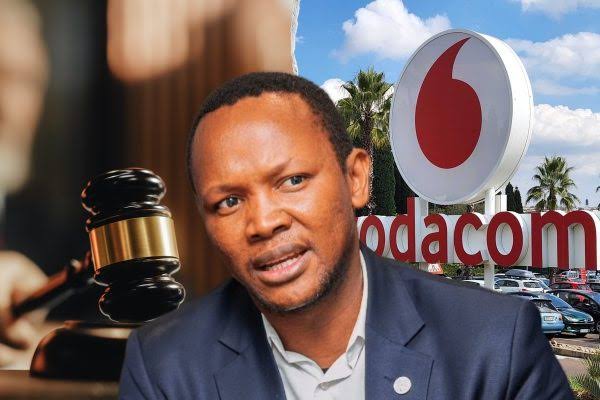
- The man who claims to have funded Nkosana Makate’s legal battle against Vodacom is preparing to sue him for defamation.
- Errol Elsdon alleges that Makate falsely portrayed him as a fraudster and has vowed to defend his reputation in court.
- The dispute is linked to an ongoing battle over the proceeds of the Vodacom settlement and the validity of a 2011 funding agreement.
It seems the legal battles surrounding Please Call Me inventor Nkosana Makate are far from over, as the man who claims to have funded Makate’s litigation against Vodacom has decided to take him to court.
According to media reports, the funder and former director of Black Rock Mining Ltd, Errol Elsdon, confirmed earlier this week that his attorneys will be instituting a defamation action against Makate. Elsdon alleges that he was falsely portrayed as a fraudster.
“I was willing to be called many things when I agreed to fund this case,” Elsdon said in a press statement. “A criminal was never one of them. I will not be branded a criminal for honouring a contract, and I will answer that accusation where it belongs: in court.”
In a statement released on Wednesday, 17 June 2026, Elsdon said the defamation case is more about vindicating his business interests than protecting his personal reputation.
The Please Call Me scandal has long been framed as the story of a lone underdog taking on a telecommunications giant.
Makate, a former Vodacom employee who claims he invented the service without compensation, eventually secured a settlement reportedly worth billions of rand. However, Elsdon’s statement sharply challenges that narrative.
Elsdon maintains that Makate’s claims are untrue
“When Makate first approached me and the late Christiaan Schoeman in 2011, the claim was unfunded, untested and stalled,” said Elsdon.
“The funding was not a solo venture,” he added.
According to Elsdon, capital was raised from a group of private backers alongside arm’s-length institutional funding partners. A professional legal team was retained, partly on a contingency basis.
He further claims that the funding was advanced entirely at risk, meaning that had the case against Vodacom failed, those who provided the capital would have recovered nothing.
“The funding was not one man’s money, and Black Rock was not one man’s pocket,” said Elsdon.
The dispute which is now before the High Court centers on the proceeds of the Vodacom settlement and whether Black Rock, as the nominated funding vehicle, is entitled to its contractual share.
Elsdon’s position is based on a written funding agreement concluded in 2011, under which Black Rock was designated as the funding party. He says an arbitrator has since confirmed that Black Rock was the only entity validly nominated under that agreement and that the nomination was never cancelled.
Makate has reportedly described the claim as a form of extortion, a statement that Elsdon strongly rejects.
“Extortion is a demand for something you have no right to.
I helped a man who had nothing turn a stalled and unfunded claim into a landmark result. I ask only that Black Rock be held to the agreement that made it possible,” he said.