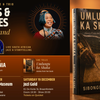

In her new book Umlungu ka Shaka and live jazz showcase Songs & Stories of Our Land, South African author and musician Sibongile Nene challenges colonial myths around King Shaka’s 1824 land agreements while weaving archival truth with music from her tribute album AZANIA.
By Zuko Komisa
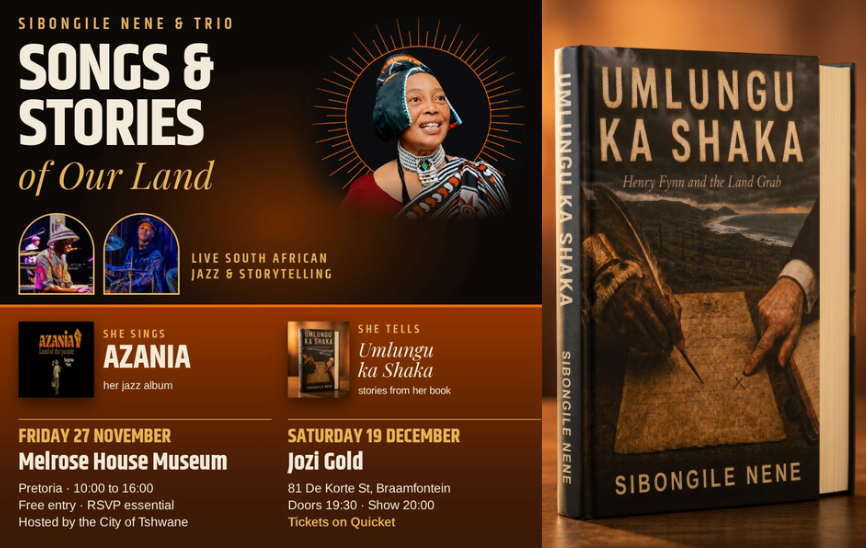
For decades, public debate in South Africa has leaned heavily on Henry Francis Fynn’s diary as an authoritative account of King Shaka kaSenzangakhona’s reign and early contact with European traders.
Yet reading Fynn’s words alongside Zulu law and oral history reveals a sharp divide between what was agreed in 1824 and what was later written down.
In her 432-page hardcover book, Umlungu ka Shaka, South African songstress, author, storyteller and filmmaker Sibongile Nene also known as Sangoma Nene revisits that moment through a simple distinction: King Shaka meant stay; the paper said sold.
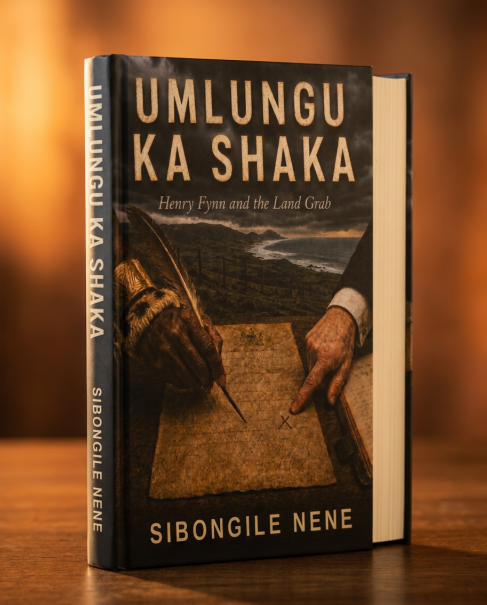
Grounded in the principle of ukubeka, where land is living, shared and tended, granting permission to live on the land was never a transfer of private ownership.
Fynn serves as Nene’s entry point into the archive rather than the centre of the story. Because his original journal was buried with his brother, the version republished in the 1950s was reconstructed decades later from memory and sensationalised at the urging of travel writer Nathaniel Isaacs to boost sales.
Meanwhile, debt-ridden Royal Navy officer Francis Farewell drafted an English document to secure loans, turning an agreement over coastal living space into a sweeping claim later used to justify British annexation.
“And so it just became a very insidious piece of paper that was in Henry Finn’s diary that is a window into the beginning, more or less the genesis of the land grab and also then the laws that are then made hence since after, which created the South Africa that we know today.”
Nene connects those early claims to later legislation including the 1913 Natives Land Act and the Group Areas Act that locked pre-1913 dispossession out of formal restitution and left deep inequalities in land ownership today.
“And people think that we’re asking for some sort of, what’s the word, some sort of charity when we say land must be given back to the people.”
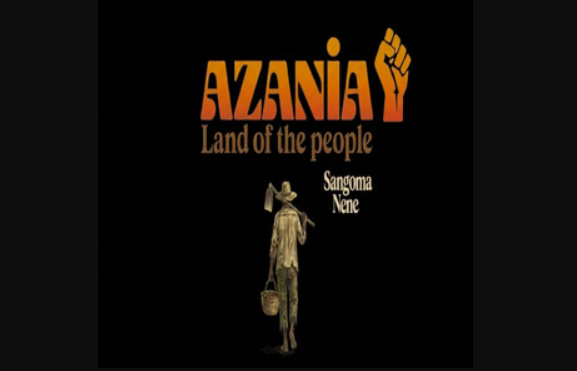
To carry what the historical papers left out, Nene brings the book together with live jazz from her album AZANIA under the banner Songs & Stories of Our Land.
Inspired by her return home in 2012 after nearly 35 years abroad, the music honours those who sacrificed for South Africa’s freedom including Steve Biko alongside tracks such as Soweto, Vuka maZulu, and Madala, as well as Bra Hugh Masekela’s Thuma Mina.
“And then I ask myself, I’m telling them to lay down their arms and rest in peace, but where? On which land?”
Launch and tour dates
- Friday, 27 November – Melrose House Museum, Pretoria: Hosted by Melrose House Museum and presented by Nandi Publishers NPC (doors at 09:30, programme at 10:00, lunch at 13:00; free entry with RSVP; signed hardcover R350). Expected guests include Chief Mfanafuthi Masondo, Principal Chieftess Mzoh Ngqulunga, Dr Motsane Getrude Seabela, moderator Bonolo Mafoyane, Princess Nokuthula Zondi Mthethwa (Cleo Zondi), and Venezuelan Ambassador Carlos Feo Acevedo, with Umlazi FM broadcasting live.
- Saturday, 12 December – Hard Rock Cafe Johannesburg, Sandton (18:00): A live African jazz evening featuring music from AZANIA (R350 per person).
- Saturday, 19 December – Jozi Gold, Braamfontein (20:00): Songs & Stories of Our Land in an intimate listening-room setting (R350 per person; group tables from five).
- 2027 Plans: Proposed dates include an early 2027 Cape Town run opening at Alma Café, alongside A Night of Revelation—a proposed three-day masterclass and jazz-storytelling evening at Mangosuthu University of Technology in uMlazi.
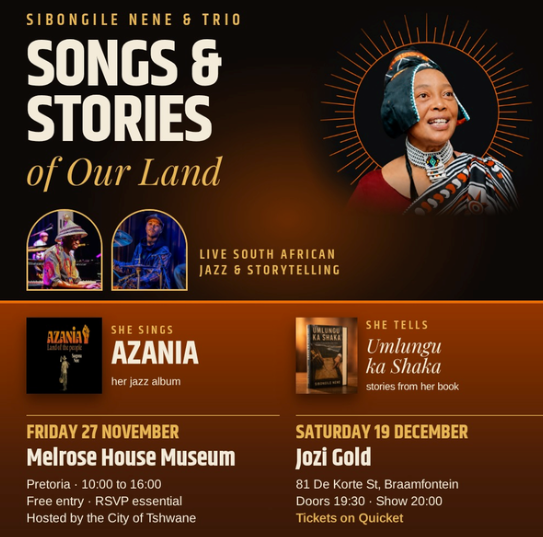
Sibongile Nene (Sangoma Nene) is a South African songstress, author, storyteller and filmmaker whose work explores land, exile and return. Her albums include AZANIA, UHAMBO and Ingoma: Song of the Torn, and her films including Iyeza and Insila kaShaka are produced through Zulu Heritage Films.
READ NEXT: