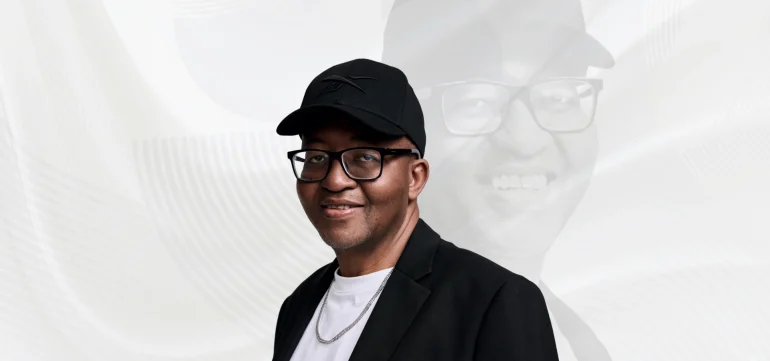

Six years after uGaba: The Migration, the award-winning saxophonist opens up about grief, family, and the faith that brought him back with uKholo.
By Bulelwa Hoala
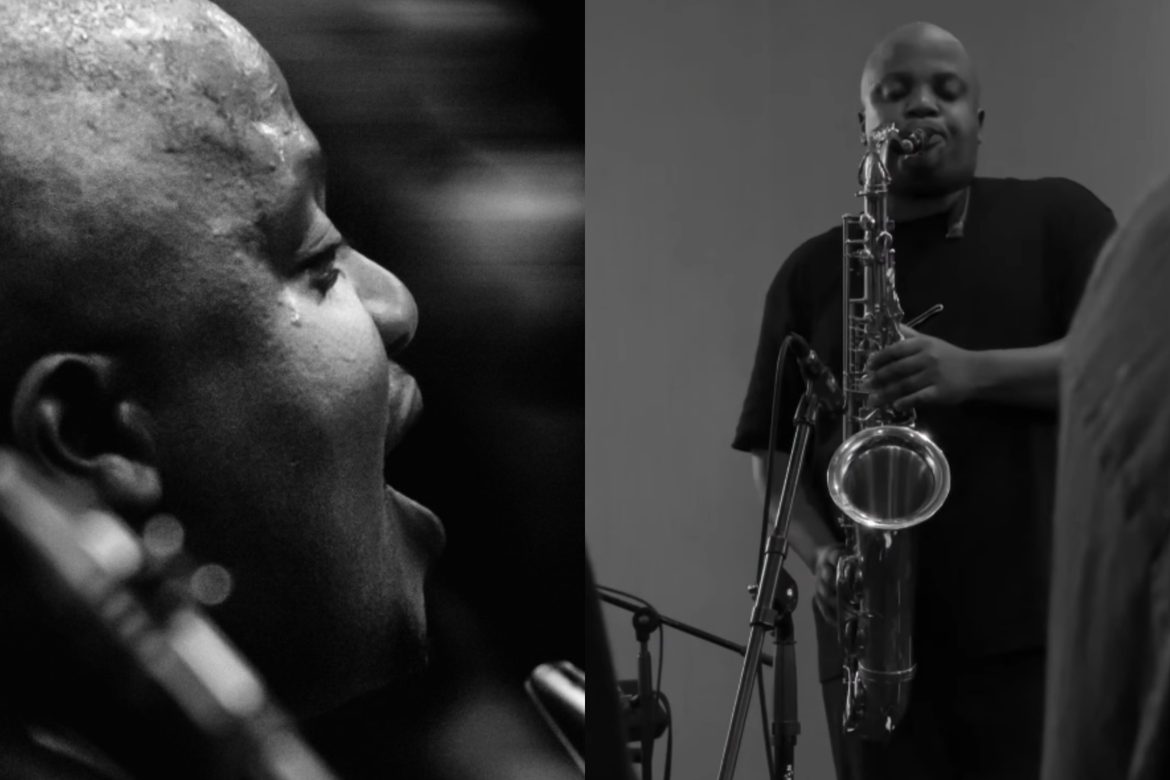
It’s been six years since Sisonke Xonti released his last album.
The South African jazz saxophonist’s journey to his third studio album, uKholo, has been about allowing life to unfold and discovering what he wanted to say when he was ready to say it.
Since releasing his second album uGaba: The Migration in 2020, he has experienced significant personal changes. The COVID-19 pandemic disrupted the live music industry; he moved from Cape Town to Johannesburg, became a father, got married, and experienced the loss of loved ones.
While the demands of life shifted his focus away from releasing music, the creative process never entirely stopped. Xonti continued writing.
The turning point came in 2025, when he wrote “Khosi”, the third track on uKholo, dedicated to his late aunt. For Xonti, the song helped him realise that the story could finally be told.
In a conversation with Kaya 959, Xonti opens up about the journey to uKholo.
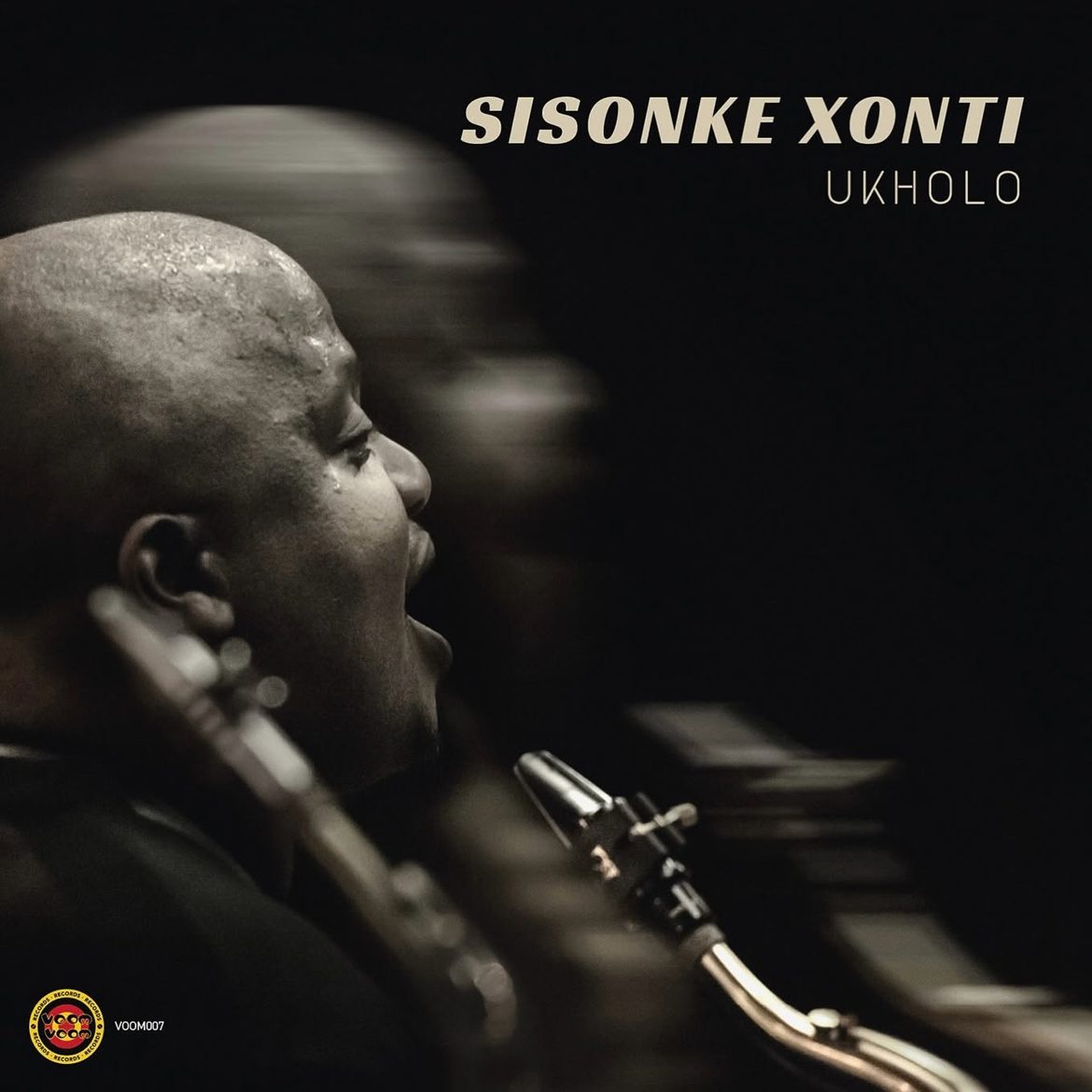
Your previous album, uGaba: The Migration, came out in 2020. Now, six years later, you’re back with uKholo. What happened during that period, and why did it take so long to release another album?
Sisonke Xonti: COVID happened in 2020 and 2021, and as an artist, it was a difficult time, particularly when it came to performing. I think I took a break from writing during that period as well.
I also moved in 2020. I had my daughter at the end of 2019, so I was concentrating on being around for her. I got married, had a second child, and I also lost my brother and my aunt. There was just a lot happening.
All of that meant the creative process of writing and releasing music took a back seat.
Looking back at those six years, what do you think has changed most about you, both as a person and as an artist?
Sisonke Xonti: The main thing is that I’m more patient now. I used to be very impatient. I wanted things to happen immediately, whether it was getting gigs or releasing music.
During this period, I learnt to be patient and to go through the different feelings that come with life, whether it’s grief or celebrating life’s milestones, having children and getting married.
I’m at a point where I’m more patient and content with where I am. I still have future goals and plans to get there, but there’s no rush.
Was there a particular moment when you realised you were ready to return to releasing music?
Sisonke Xonti: I was still writing music throughout that period. In 2024, I started performing some of the songs again, and people would ask me when I was going to release the music because they enjoyed it.
But in 2024, I felt I hadn’t completed the story yet.
Then, sometime in late 2025, I wrote “Khosi”, the third song on the album, which was dedicated to my late aunt. That’s when I felt the story could finally be told.
I was at a different place in my life. I was happier, and I felt ready.
Your previous album explored migration and the experience of moving from Cape Town to Johannesburg. How does uKholo differ creatively?
Sisonke Xonti: uGaba: The Migration was more of a concept I was exploring. I was thinking about moving from Cape Town to Johannesburg and the mentality behind that decision. I realised that I’m not the only person who leaves home to pursue a dream and find themselves somewhere else.
With uKholo, it felt as though the music came to me rather than me going out to search for it.
That’s why it was written over a period of more than six years. As I said, I’ve learnt patience and to wait for the story to tell itself rather than rush it.
What were you able to express through uKholo that you might not have been able to express six years ago?
Sisonke Xonti: When I was younger, I was freer. My time belonged to me. I didn’t have children or a family, and I was able to do things differently.
With uKholo, I had to let go of a part of myself. I was living my life freely back then, but I think there’s more control and maturity in who I am now.
When you listen to the finished album, what stands out to you most? Is there a song that feels particularly personal?
Sisonke Xonti: I question my musical decisions a lot, so I’m very happy with how uKholo turned out. I like how it sounds and how the musicians played on it.
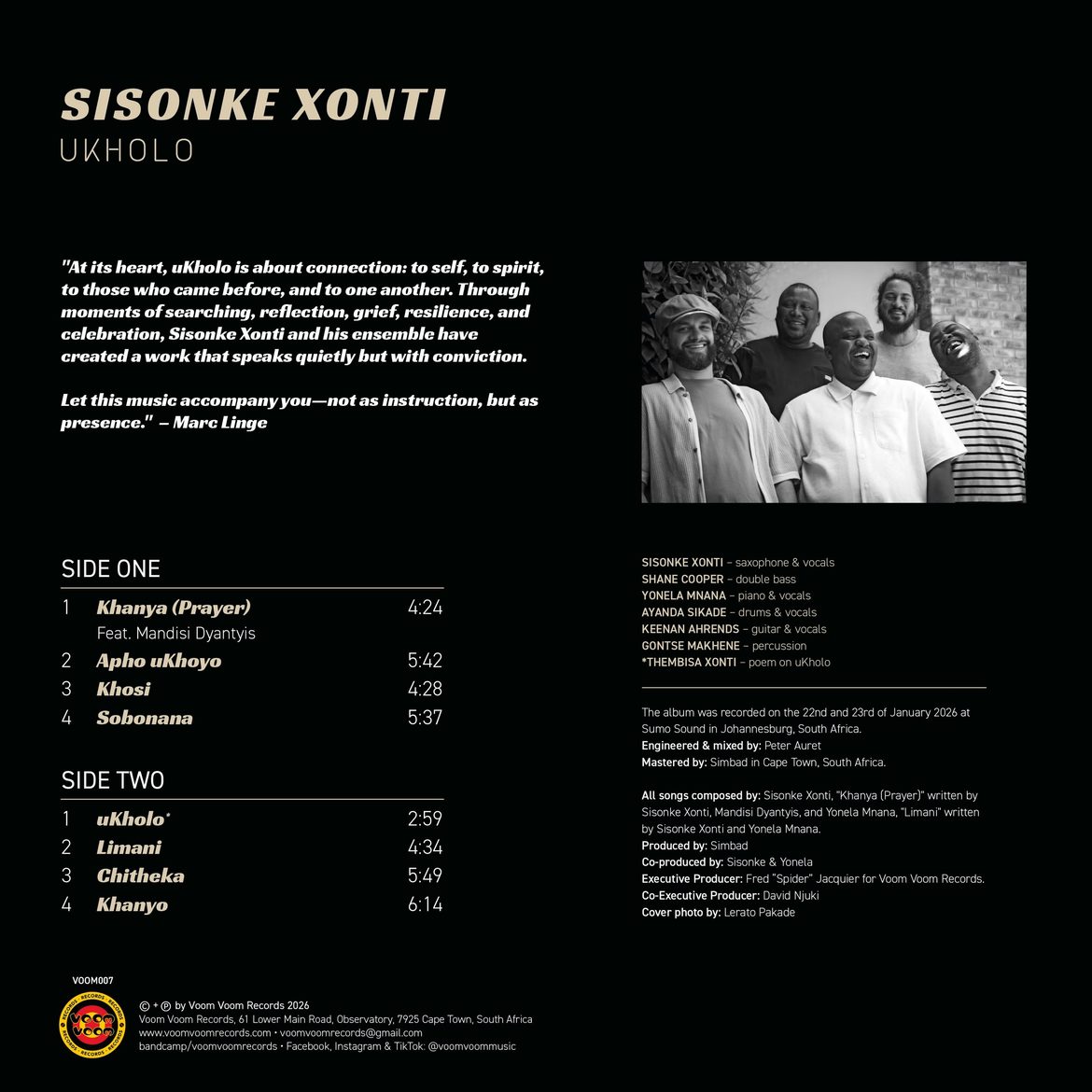
The most special part for me is the song “uKholo” itself, which features my mother through a spoken-word contribution. She wrote a poem about faith.
I’ve always wanted to feature her somehow because she’s such a brilliant writer, even though she’s not published or widely known.
As a family, we love her writing. Every morning, she’ll write something poetic and send it to the family. She also shares her writing as WhatsApp statuses.
I felt it was important to feature her in some form, and I finally got the opportunity to do that on this album.
You were named the Standard Bank Young Artist for Jazz in 2020, just as the pandemic was unfolding. How do you look back on that achievement now?
Sisonke Xonti: I sometimes feel like I received it at the wrong time because it was 2020, and then COVID happened. I couldn’t really do much with the music in terms of performing.
Performing live is such an important part of being a musician. I received a lot of recognition, but I couldn’t travel around the country or take my music around the world in the way previous recipients had the opportunity to do.
Having said that, I’m truly grateful to have been recognised, to have been seen and heard, and to be part of a list of artists who have gone on to do great things.
That award can give you an extra push and momentum to take yourself forward. I feel that only now, six years later, I’m really trying to take advantage of it.
What are you most nervous or excited for people to discover when they listen to uKholo?
Sisonke Xonti: I’m not nervous about anything. I’m not scared of what people think. I’ve grown in that sense.
I’ve put it out there, and I’m letting it live its own life.
What excites me most is that the more people listen to it, the more they understand it. I’ve received reviews from people saying they’ve listened to it five times in a row and are only now getting into it.
For me, that speaks to timelessness. I wanted to create an album that would be timeless and continue to live in the future of South African jazz.
Your musical journey began long before the recognition and the albums. How did you first discover jazz?
Sisonke Xonti: It started when I was about 10 years old. My parents moved me to a different school in Cape Town, the South African College Schools, commonly known as SACS.
At my previous school, we didn’t have the same kind of musical culture. At SACS, there was a band performing at every assembly, and I was fascinated by that.
My teacher noticed my talent and encouraged me to play the clarinet when I was 11. I began falling in love with music, particularly classical music.
The school also had a jazz band, and I really wanted to be part of it, but there were no clarinets in the band. They played saxophone, so my teacher encouraged me to switch instruments when I was about 12.
He was a great lover of African jazz and had played strings for Abdullah Ibrahim. He introduced me to musicians such as Abdullah Ibrahim and Winston Mankunku Ngozi.
I then realised that this was the same music my father used to play at home. That connection made me fall in love with the music even more.
When I was 15, I auditioned for the National Schools Band at the National Arts Festival in Grahamstown, now Makhanda, but I didn’t make it. I went back the following year and got in.
I also joined a youth band in Cape Town called The Little Giants, which was run by Bonga Mosola. We rehearsed every Saturday and focused mainly on South African jazz, so I was fortunate to study the music from a young age.
When I was 19, I was spotted by Jimmy Dludlu, joined his band and toured internationally with him. That’s when my professional career really took off.
You’re bringing uKholo to the stage with a special launch at Johannesburg’s Market Theatre. You have mentioned that performing there has always been a dream of yours. What can audiences expect from the show?
Sisonke Xonti: I’m super excited. The first launch will be in Cape Town at the Homecoming Centre on 1 November, followed by the Market Theatre in Johannesburg on 7 November.
Performing at the Market Theatre has always been a dream of mine. I’ve performed there many times with different artists, but I wanted to do my own show there.
I could have gone to a club, performed a normal gig and called it an album launch. Instead, I wanted to make it more of a production, with lighting, audiovisual elements, a projector and voice-overs.
I want it to be a whole experience, where we tell the story beyond just the music. It’s not your usual jazz album launch. It’s a proper production.
Finally, after everything these past six years have taught you, what does this new chapter mean to you?
Sisonke Xonti: I’m more patient and content with where I am. I still have goals and plans for the future, but there’s no rush.
With uKholo, I’ve put the music out there, and I’m allowing people to experience it in their own way. I hope it continues to resonate with people and stands the test of time.
Catch Sisonke Xonti live in Johannesburg
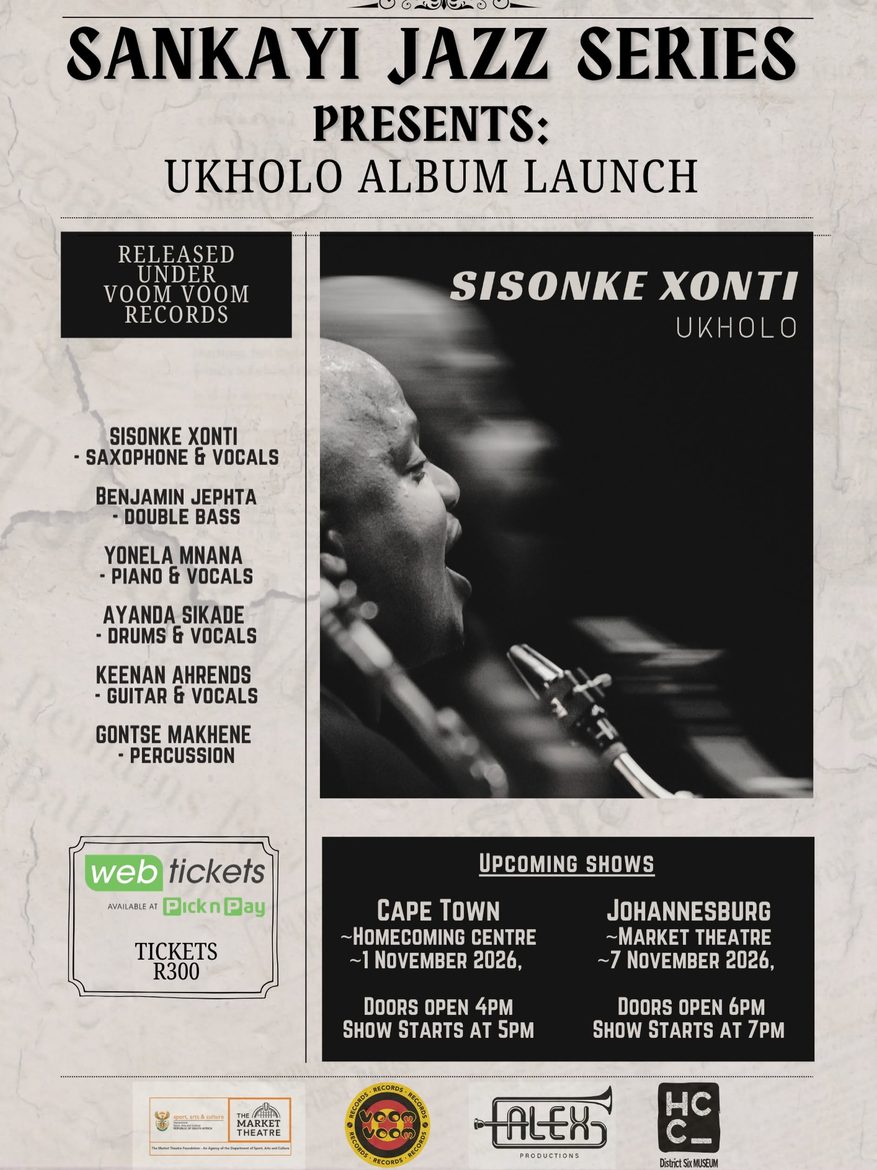
Sisonke Xonti will celebrate the release of uKholo with a live performance at the Market Theatre in Johannesburg on Saturday, 7 November 2026.
The show will feature Benjamin Jephta, Yonela Mnana, Ayanda Sikade, Keenan Ahrends and Gontse Makhene.
Combining South African jazz, storytelling and a carefully crafted theatre production, the evening will explore the themes and stories behind the album through live music and audiovisual elements.
Event details
- Date: Saturday, 7 November 2026
- Time: 19:00
- Venue: John Kani Theatre, Market Theatre, Johannesburg
- Tickets: R300
Book tickets via Webtickets.
READ NEXT: