
By Mapaballo Borotho
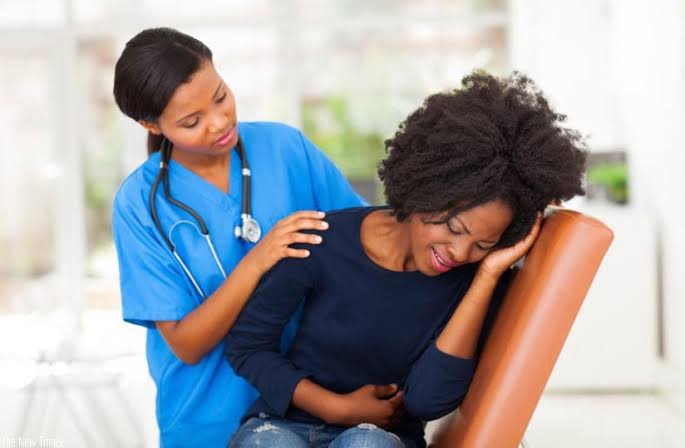
- Women continue to report having their pain dismissed or downplayed by healthcare professionals, particularly when it involves reproductive and gynaecological health.
- Three women share how years of being told their symptoms were “normal” delayed diagnoses and affected their lives.
- Their experiences highlight concerns around medical misogyny and the importance of women being listened to when they say something is wrong.
As a woman, have you ever gone to a medical practice to complain about excruciating pain related to diseases or infections that affect women, only to be dismissed and told that it is normal?
Even though you know and understand your body and can tell that the type of pain you are experiencing is not normal?
That can be defined as medical misogyny.
Medical misogyny occurs when doctors dismiss, misdiagnose or downplay women’s health symptoms.
Surveys show that roughly two in three women experience gender bias in healthcare, where severe pain is often wrongly labelled as stress, low pain tolerance or normal menstrual discomfort. It is also important to note that women of all ages experience being dismissed when seeking medical care.
In 2026, women still face this issue, years after women fought for, and continue to fight for, their rights.
These are the stories of real women, using fictional names, whose pain was dismissed at medical practices simply because they are women.
Anelisa’s story
Seventy-year-old retiree Anelisa said her pain started when she was 27, after the birth of her two daughters. She always had heavy periods as a teenager, but as she got older, the pain became so severe that she would end up on her knees.
When she tried to get a diagnosis, she was repeatedly dismissed and told that it was normal “period pain”.
“It was horrendous, and it was as if the health professionals didn’t want to know. I went from doctor to doctor and felt I was treated like a child. I was made to think the pain was all in my head and that I was going mad. I was even prescribed antidepressants,” she said with tears in her eyes.
She managed the pain by taking painkillers every day, using hot-water bottles and taking hot baths.
As a young woman in her 20s, the condition also affected her sex life.
About 15 years later, she underwent two laparoscopies. It was only after the second procedure that she was diagnosed with endometriosis and fitted with a coil.
Makgosi’s story
Makgosi, a 25-year-old from the east of Johannesburg, began experiencing severe period pains at the age of 14. The pain became so bad that she would often have to miss school.
Instead of having a thorough investigation by healthcare professionals into the cause of her severe period pain, she was prescribed a contraceptive pill at the age of 14 as a way of managing her periods.
“They just wanted to give me something quick so I was out of there and done with. It is appalling that the only option I had to stop my gynaecological pain was the pill.”
Nadia’s story
Nadia, a 35-year-old mother, was once told by a doctor that the extreme fatigue she was experiencing was due to the “stress” of being a busy mother.
However, further tests would later reveal that she had thyroid cancer.
“‘Oh, it’s nothing.’ I’ve heard that statement so many times… It’s really disheartening as a human being to keep hearing that,” she says.
She further explained that she only felt she was taken seriously by healthcare professionals when her male partner was by her side.
These three stories might just sound like any other stories to you, but they are real-life experiences of real women.
Their pain was dismissed, their concerns were downplayed, and in some cases, it took years before they received answers.
Women should not have to suffer for years before someone believes them when they say something is wrong with their bodies.
READ NEXT: