
By Mapaballo Borotho
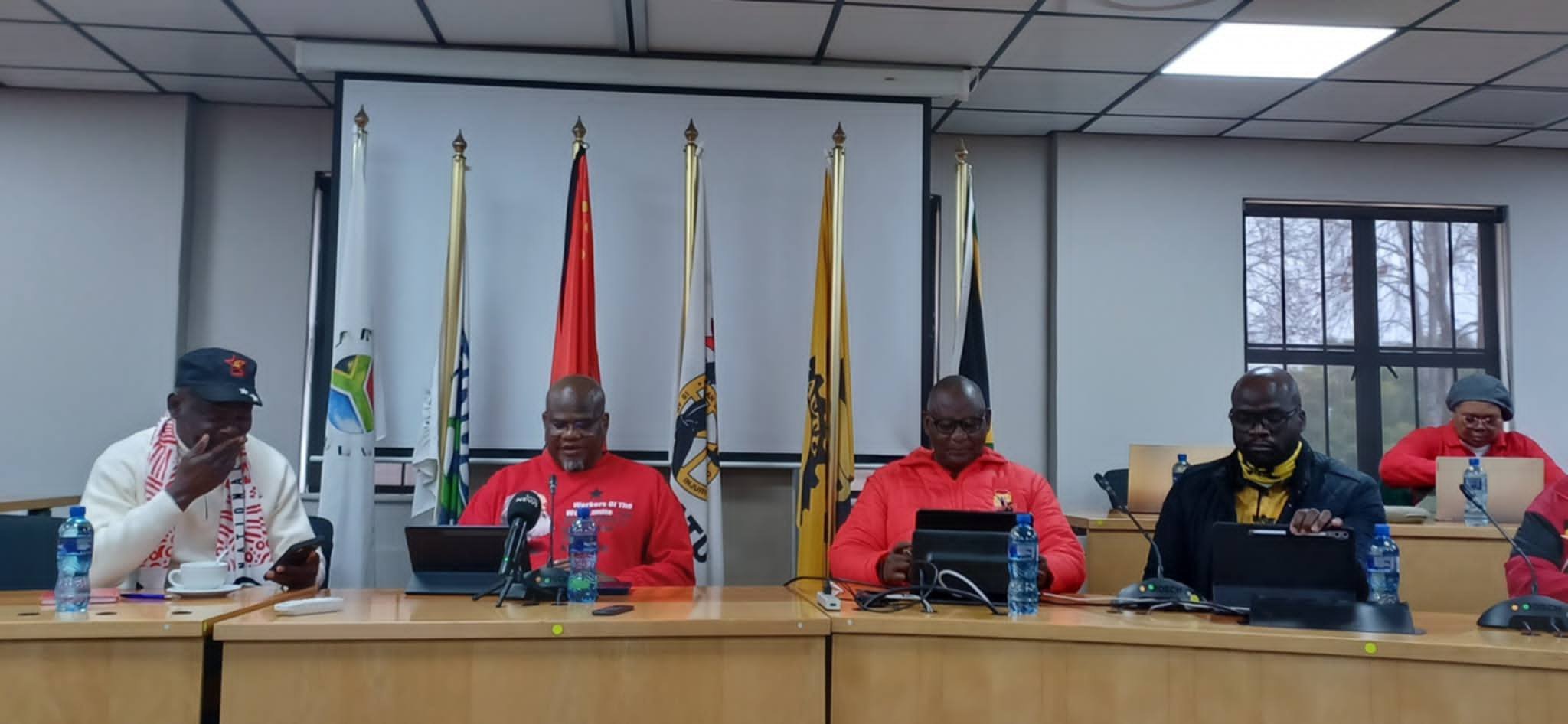
- Labour federations have urged workers not to participate in the planned 30 June anti-illegal immigration protest, saying it is not a recognised or protected labour action.
- Union leaders argue that South Africa’s economic challenges stem from corruption, poor governance and state failure rather than migration.
- Their comments have sparked backlash from some South Africans who believe undocumented migration places additional pressure on public services and job opportunities.
Organised labour has warned against blaming migrants for South Africa’s economic crisis, saying they should not be used as scapegoats for leadership failures.
Speaking at a joint press briefing at Nedlac in Rosebank on Wednesday, 17 June 2026, labour federations COSATU, FEDUSA, SAFTU and NACTU said poverty, unemployment and failing public services are rooted in corruption, weak governance and state incapacity.
The federations also raised concerns about what they described as coordinated anti-migrant sentiment, warning that it threatens working-class unity and could fuel xenophobia, tribalism and violence.
They said that while citizens have the right to demand effective immigration control, no individual or group has the right to stop people in the streets, demand identification documents, raid workplaces or block access to public services.
The organisations further condemned employers who knowingly hire undocumented migrants to pay lower wages, evade labour laws and weaken collective bargaining.
The federations are calling for stronger labour inspections, more effective border management, improved Home Affairs systems and the criminal prosecution of employers who exploit vulnerable workers.
“Workers’ solidarity is undermined and the principles of internationalism that have historically strengthened the labour movement then get weakened. The solution is not to blame migrant workers, who are also victims of economic hardship, but to address the structural conditions that force people to migrate and to build unity amongst workers,” said SAFTU General Secretary Zwelinzima Vavi.
The labour federations have also urged workers not to participate in the planned national action on 30 June, warning that it has not been called by recognised labour federations and does not constitute a protected strike.
These views echo comments made by former President Thabo Mbeki during HIS Africa Day address last month. Mbeki said South Africans are directing their anger at the wrong people for the social and economic challenges affecting the country, including unemployment, poverty and poor access to public healthcare.
He argued that the country’s leadership should instead be held accountable for the crisis facing the nation.
The comments have sparked strong reactions among many South Africans, particularly those from underprivileged communities, who argue that the country’s leaders are out of touch with the realities faced by ordinary citizens.
Many young South Africans have also taken to social media to express their views, arguing that privileged individuals should not dictate how disadvantaged communities address their challenges.
Some have claimed that public healthcare facilities are under pressure due to growing demand and migration-related issues.
Others argued that those opposing the 30 June 2026 action have never experienced the long queues at public healthcare facilities and are therefore commenting from a position of privilege.
Meanwhile, protests against undocumented foreign nationals continue in parts of the country, with residents in Ekurhuleni reportedly shutting down foreign-owned shops.
READ NEXT: Fears of xenophobic violence rise as undocumented migrants face 30 June deadline