
Ziyanda Yono
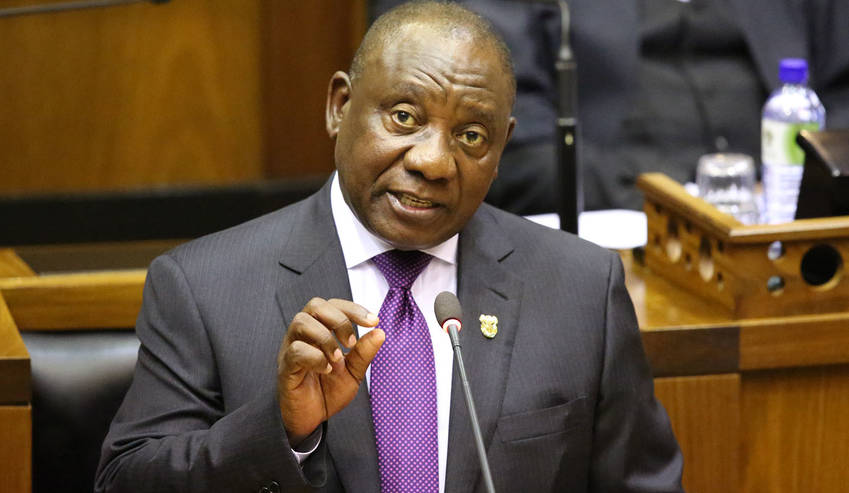
President Cyril Ramaphosa finally assented to sign the Preventing and Combating of Hate Crimes and Hate Speech Bill, following more than ten years of advocacy by LGBTQIA+ activists and local civil organisations to force the government to enact legislation that will help combat hate crimes and hate speech.
The Bill guarantees that anyone who commits hate crimes or hate speech will be prosecuted, making such actions illegal.
A media release by the Presidency states that, the bill provides a legislative measure and gives effect to South Africa’s obligations in terms of the Constitution and international human rights instruments concerning, racial discrimination, xenophobia and related intolerance.
The statement further adds, The Bill of Rights, in Section 9 of the Constitution, prohibits direct or indirect unfair discrimination against anyone on the grounds of race, gender, sex, pregnancy, marital status, ethnic or social origin, colour, sexual orientation, age, disability, religion, conscience, belief, culture, language and birth.
With South Africa having a history of racially motivated hate crimes and strong homophobia, with homosexuality previously punishable by up to seven years in prison from 1948 to 1994. The Bill comes at a time where even beyond the post-apartheid era, there have been several cases of racist hate crimes, including those committed against black lesbian women and black foreign nationals.
Although several lobbying groups have previously advocated for the enactment of a direct hate crime statute by government to improve the eradication of criminal activity motivated by cognitive bias and prejudice, there was minimal progress.
LGBTQIA+ civil rights organisation, Embrace Diversity responding to the Bill’s assent, hails it as a crucial development towards furthering the human rights of South Africa’s racially disadvantaged and marginalised communities.
Secretary General of the Embrace Diversity Movement Mpho Buntse says, “The passing of the Preventing and Combating of Hate Crimes and Hate Speech Bill is an important milestone not just for the LGBTQIA+ community, but rather for all South Africans and understanding at the helm that we are in one of the most unequal societies where our biases and prejudices are often found to be contradicting the constitution”.
“The role of civil society has always been central particularly towards lobbying towards the existence of this Bill. We know that civil society within South Africa, especially those working to promote LGBTQIA+ rights have constantly ensured that there is work around litigation and the justice project to ensure that many of the cases are recognised”, said Mbutse.
Mbutse has marked the president’s assent on the bill as a historic moment to creating an environment of equality before the law that will address issues of racism that have been prevailing in society for many years
“It was necessary to have a legal basis for regulating how we speak to each other, how we address each other. So, in essence, this Bill brings about a sense of criminalising what for the most part in history we have found really difficult, especially for those that are in the courts to actually ascertain whether crimes tend towards the LGBTQIA+ community or any other South African on the basis of hate, are they really or not. So, with this law, it will be easy for those presiding in many of these cases to be able to make a distinction”.
The new Prevention and Combating of Hate Crimes and Hate Speech Act provides for the prevention of hate crimes and hate speech, effective enforcement measures and the gathering and recording of data on hate crimes and hate speech.
South Africa has now joined the global list of countries that have special legislation recognising hate crime and hate speech as severe offences under the law, which includes Brazil, Canada, Chile, France, Germany, Spain, and the United States.
Embrace Diversity also notes that, they recognise that there has been precedent on the work that has be done so far, particularly around the Department of Justice and Constitutional Development’s National Task team on addressing issues of hate related crimes. “This has been ongoing work that has been existing in the absence of the hate crimes and hate speech bill. We believe that with the assenting of this bill, it will highlight the work of the National Task Team that is actually dealing directly with these cases.
The National Assembly and the National Council of Provinces (NCOP) approved the bill in March and November of 2018 after it was presented to parliament by the Department of Justice and Constitutional Development.
The Department of Justice and Constitutional Development, as a custodian of the government, will oversee or enforce the Prevention and Combating of Hate Crimes and Hate Speech Act, just like any other law. The court and justice system will subsequently carry out this task.
The Bill includes sanctions that shall apply when someone is found guilty or in violation of the bill.
What is considered hate crime and hate speech?
A hate crime is committed if a person commits any recognised offence under any law that is motivated by prejudice or intolerance on the basis of one or more characteristics or perceived characteristics of the victim, as listed in the legislation or a family member of the victim.
The definition of the crime extends to offences targeting the victim’s association with or support for a person with one or more of the listed characteristics or a group of persons who share these characteristics.
The offence of hate speech applies to any person who intentionally publishes, propagates, advocates, shares or communicates anything to one or more persons in a manner that could reasonably be construed to demonstrate a clear intention to be harmful or to incite harm and to promote or propagate hatred based on defined grounds.
The law also makes it an offence when speech material is intentionally distributed or made available in electronic communication, and the said person knows that such electronic communication constitutes hate speech.
The law excludes from the ambit of hate speech anything done in good faith in the course of engagement, such as:
* artistic creativity, performance or other form of expression;
* academic or scientific inquiry;
* fair and accurate reporting or commentary in the public interest;
* interpretation and articulating or espousing of any religious conviction, tenet, belief, teaching, doctrine or writings, that does not advocate hatred or constitutes incitement to cause harm.
The law also contains directives on training and other measures to be undertaken by the South African Police Service (SAPS) and the National Prosecuting Authority (NPA) to ensure effective processing of the newly defined crimes.
![[WATCH PODCAST] Kabelo Mabalane teams up with The Arrows for infectious comeback track ahead of 10th studio album](https://www.kaya959.co.za/wp-content/uploads/2026/10/KAYA-959-THUMBNAILS-1170x658.png)

![[WATCH PODCAST] Kabelo Mabalane teams up with The Arrows for infectious comeback track ahead of 10th studio album](https://www.kaya959.co.za/wp-content/uploads/2026/10/KAYA-959-THUMBNAILS-100x100.png)