
Katlego Sekhu
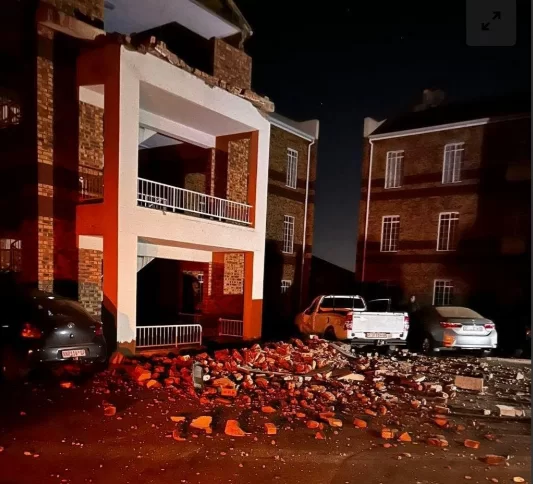
Parts of Johannesburg experienced yet another earth tremor on Wednesday evening, adding to a series of seismic events that have become increasingly common in South Africa, particularly in Gauteng. To shed light on this developing trend, 959 Breakfast welcomed Professor Ray Durrheim, an esteemed expert in Geosciences at Wits University.
The professor pointed out that monitoring instruments are in place to track these mining areas, and small earthquakes are a common outcome. “For underground mine workers in close proximity to such tremors, the shaking can be quite severe, resulting in numerous injuries and fatalities over the years.”
Fortunately, advances in technology and safety protocols have reduced the loss of life associated with larger mining-related earthquakes. Durrheim assured that the likelihood of these earthquakes causing widespread devastation is relatively low.
“These earthquakes are projected to persist for decades, and there are straightforward measures we can take to enhance the structural integrity of our buildings. Initially, we assess the ground conditions on which structures are built. For instance, structures built on firm or loose sand may experience amplified ground shaking,” he elaborated.
In terms of safeguarding homes, Durrheim recommended practical steps, such as securing geysers on rooftops. “Often, geysers are mounted on roofs without being securely fastened to roof beams. During tremors, this lack of fastening can cause geysers to topple, puncturing ceilings and damaging water pipes. Such issues can be easily rectified by securing them to the rafters,” explained the professor, emphasizing the importance of taking preventative measures to enhance safety.
Read Next: DA says City of Joburg failed to clamp down on illegally occupied buildings




![[WATCH PODCAST] Mr. Mercedes drops highly anticipated project, joining forces with Thabo Smol and Spice Drums](https://www.kaya959.co.za/wp-content/uploads/2026/10/KAYA-959-THUMBNAILS-79-100x100.png)
![[WATCH PODCAST] Tumisho Masha commands the screen as colonel Jack Phatudi in M-Net’s new must-watch series](https://www.kaya959.co.za/wp-content/uploads/2026/10/KAYA-959-THUMBNAILS-78-100x100.png)